
Democrats See New Openings in Senate Map Long Tilted to Republicans
Goldlaner.com – Republicans are confronting a more complicated Senate landscape than many expected as Donald Trump’s declining popularity converges with a group of Democratic candidates tailored to difficult states. The party’s hopes extend beyond a favorable national mood: Democrats believe several recruits are finding messages that can appeal to independents, rural voters and working-class communities that have drifted toward the GOP in recent elections.
Democrats need a net gain of four Senate seats to take control of the chamber. Their prospects have improved as they also enter the final stretch of the campaign with a strong chance to regain the House. Yet the Senate path remains demanding, particularly because the party itself continues to carry significant public-image problems.
A late-July CNN/SSRS survey showed Democrats holding an 8-point preference for the fall election. But both congressional parties remained broadly unpopular, and voters expressed limited confidence about what a Democratic majority could accomplish. That makes candidate quality unusually consequential in races where national labels alone may not be enough.
Different candidates, tailored appeals
In North Carolina, former two-term Gov. Roy Cooper has given Democrats a recognizable figure with appeal beyond their traditional base. Polling indicates he is well regarded by independents and competitive enough in rural parts of the state to cut into Republican advantages. His familiarity presents a major contrast with Michael Whatley, the former Republican National Committee chair who is known inside party circles but has struggled to equal Cooper’s statewide profile.
Iowa has emerged as an unexpected testing ground. State legislator Josh Turek has described himself in terms meant to evoke a practical, rural-minded politics:
“common sense prairie populist”
That approach is helping make the contest more competitive in a state Trump carried by 13 points in 2024. The environment has also complicated the outlook for Republican Rep. Ashley Hinson, a former television anchor viewed as an effective communicator with deep familiarity with Iowa issues. She would ordinarily appear well positioned to succeed retiring Sen. Joni Ernst. Instead, farm communities are facing pressure from Trump’s tariffs and elevated fuel prices, conditions that have given Democrats an opening.
Ohio offers another example of a Democrat seeking to turn economic frustration into a broader political argument. Former Sen. Sherrod Brown has long centered his politics on blue-collar voters and economic populism. That message may have added resonance in a state Trump won decisively in 2024, as the president’s associations with billionaires create an opportunity for Democrats to argue that working people have been left behind.
Georgia and Texas test broader Democratic ambitions
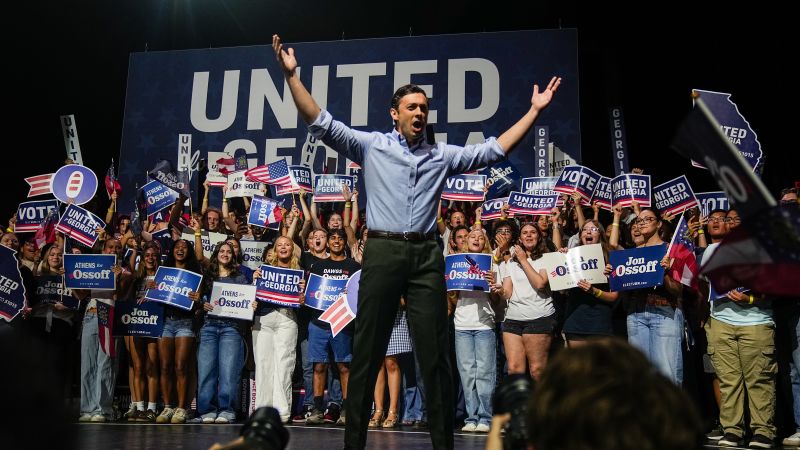
Georgia Sen. Jon Ossoff is pursuing reelection with a political identity that includes sharp criticism of Trump and an appeal associated with a younger generation of Democratic leaders. His performance in a pivotal state, coupled with his growing national visibility, has fueled talk about whether he could become a prominent figure in the party’s 2028 presidential contest.
His Republican opposition has also helped reshape the race. Rep. Mike Collins, a leading MAGA figure, received Trump’s backing despite concerns among more established Republican leaders. Democratic strategists see such nominations as an advantage when the GOP candidate’s profile is less suited to persuading voters outside the party’s core coalition.
Texas represents an even longer-term Democratic aspiration. James Talarico is combining economic populism with an emphasis on Christian faith, attempting to build an argument that reaches voters often skeptical of national Democratic politics. The state has not elected a Democrat statewide in three decades, but Talarico’s campaign is intended to test whether persistent demographic and political change can finally produce a breakthrough.
His potential Republican opponent, Attorney General Ken Paxton, arrives with his own liabilities after a scandal-filled political career. Trump supported Paxton despite resistance from segments of the Republican establishment, adding another example of a primary dynamic that may leave the GOP with candidates who excite loyal supporters while creating vulnerabilities in a general election.
A party trying to rebuild trust
The central Democratic challenge is larger than capitalizing on Trump’s weakness. The party is trying to repair years of losses in voter trust, especially among constituencies that once formed a more dependable part of its coalition. These Senate candidates are offering different versions of that repair effort: rural populism in Iowa, labor-focused economics in Ohio, faith-inflected messaging in Texas and state-level familiarity in North Carolina.
The strategy reflects an acknowledgment that the same national campaign language will not work everywhere. A candidate who can communicate plainly, remain disciplined and feel relatable to voters across ideological lines is particularly valuable in a polarized era. Democrats are attempting to prove that those qualities can expand their map even in states where the presidential results appear daunting.
Michigan may offer the clearest high-stakes illustration. Abdul El-Sayed, a 41-year-old epidemiologist, is the Democratic candidate with perhaps the greatest upside and the greatest risk. A victory over former Republican Rep. Mike Rogers would elevate El-Sayed as a leading voice for a new political generation and for the progressive movement. A loss, however, would intensify criticism from Democrats who believe progressive base voters made a costly choice when they rejected the more moderate Rep. Haley Stevens.
The consequences could reach beyond one seat. In a closely divided Senate, a defeat in Michigan could be blamed for denying Democrats the majority altogether.
Timing may matter as much as talent
Strong candidates can still be overtaken by national forces. Conversely, a favorable political climate can make a capable contender seem unstoppable. The fall campaign will test whether Democrats can combine their improved recruitment with a persuasive answer to voters who remain dissatisfied with both parties.
Maine Republican Sen. Susan Collins also faces a difficult environment. Collins has repeatedly survived challenging elections and built a reputation for independence, but this campaign may be her toughest reelection fight. The political pressures of the Trump era have strained that image and forced her into votes that can alienate either Republican loyalists or more moderate voters.
For Democrats, the opportunity is real but not automatic. Their most promising candidates are trying to do more than benefit from a backlash against Trump. They are seeking to show that a party often viewed as distant from everyday concerns can again compete in places where it has recently struggled to be heard.
Related Reading
Frequently Asked Questions
What is With a new breed of candidate?
With a new breed of candidate is the main topic of this guide. The article explains the context, practical details, and next steps readers should understand.
Why does With a new breed of candidate matter?
With a new breed of candidate matters because readers are looking for a useful answer, not just a short summary. Good content should match search intent and help them decide what to do next.