
Trump suggests he won’t take down UFC ‘Claw’ on White House lawn
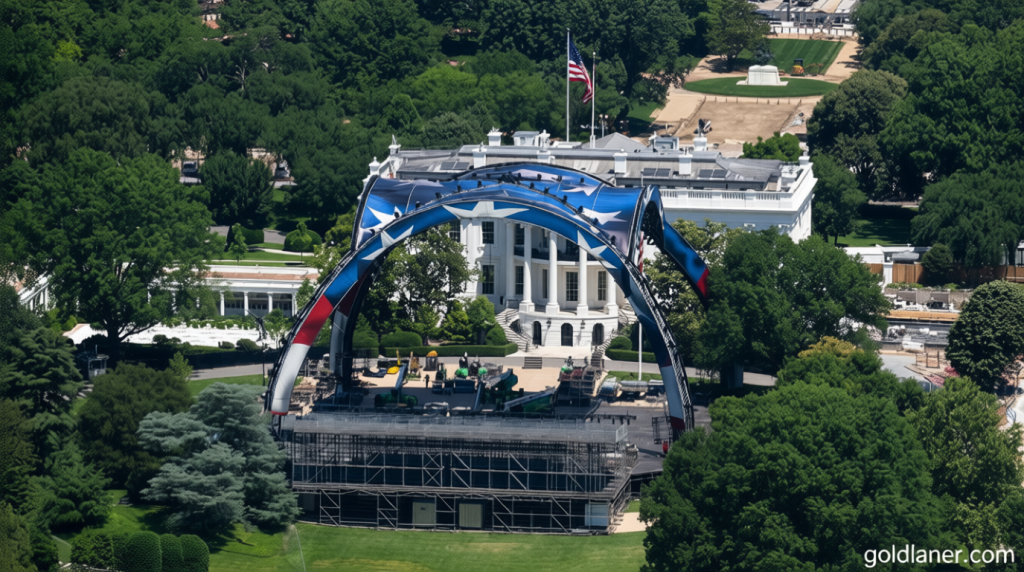
Trump Indicates UFC ‘Claw’ Structure Will Remain on White House Lawn Beyond June 14 Event
Trump suggests he won t take – President Donald Trump has hinted that the UFC lighting setup, dubbed “The Claw,” will stay on the White House South Lawn past the scheduled event on June 14. In a TikTok video posted Tuesday, Trump drew a parallel between the temporary installation and the Eiffel Tower, a structure that was once slated for removal after the 1889 World’s Fair. “Many don’t know that in Paris, France, the Eiffel Tower—built in 1889—was supposed to be taken down immediately after the World’s Fair, but they ended up keeping it,” he remarked. “And, you know, we’re building something in front of the White House that’s quite attractive to a lot of people. It’s going to have the big UFC fight on June 14, and I’m looking at it—maybe we’ll never, ever take it down.”
Logistical Hurdles and Social Media Tactics
The South Lawn, a traditional venue for presidential events, has seen its usual operations disrupted due to the UFC setup. Trump’s usual arrival and departure routes via Marine One have been temporarily altered, as the event area overlaps with the landing zone for the presidential helicopter. Instead, Trump has been using a motorcycle to travel between Joint Base Andrews and the White House, a shift that highlights the logistical challenges of hosting the fight there. This change has sparked speculation about whether the president is genuinely committed to keeping the structure or leveraging the situation to provoke public reaction.
“Because we’re going to f**k up the South Lawn, $700,000 just to replace the grass,” said UFC CEO Dana White in a recent interview with Sports Business Journal. The figure represents the cost to reseed the lawn, which will be occupied by the “Claw,” audience stands, and the Octagon during the event. White also noted that the total expenses for the project are estimated at $60 million, covering both the construction of the venue and the promotional efforts surrounding the fight.
The White House is heavily promoting the June 14 event, which coincides with Flag Day and Trump’s 80th birthday. The timing has been strategically chosen to maximize media attention and public engagement. A recent image shared on the White House’s X account features a muscular Uncle Sam on the South Lawn, emphasizing the patriotic angle of the occasion. This promotional push underscores the administration’s effort to position the event as a symbolic celebration of American values, despite its unconventional setting.
Trump’s Pattern of Unconventional Modifications
Keeping the “Claw” would align with a broader trend of Trump’s willingness to alter the White House’s appearance and function to suit his vision. From demolishing the East Wing to paving the Rose Garden and gilding the Oval Office, the president has consistently made changes that defy traditional norms. One of the most notable alterations was the transformation of the Lincoln Bedroom bathroom, a historically significant space, into a modernized version that reflects his personal style. Additionally, he introduced “The Presidential Walk of Fame,” a project that reimagines past presidents through the lens of his own controversial rhetoric.
These modifications are part of a larger effort to reshape Washington, D.C., in line with Trump’s agenda. The America 250 celebration, aimed at commemorating the nation’s 250th anniversary, has seen the White House take bold steps, such as repainting the Reflecting Pool in “American flag blue” and restoring fountains throughout the city. Such actions have often been met with mixed reactions, blending admiration from supporters with criticism from opponents who view them as symbolic gestures.
Uncertainty Over Trump’s Intent
While Trump’s comments about the “Claw” appear to be a lighthearted remark, the decision to leave it permanently is not without controversy. The structure, adorned with elements resembling the American flag, is a striking addition to the South Lawn. However, its presence raises questions about the balance between temporary event infrastructure and the White House’s role as a historic landmark. With the event set to take place on June 14, the administration has positioned it as a landmark moment, combining sports and politics in a way that aligns with Trump’s signature style.
Dana White’s visit to the West Wing on Monday, just a day before the TikTok video was posted, further illustrates the collaboration between the UFC and the White House. This partnership has been a key component of the event’s marketing, with the president actively endorsing the fight as a major national spectacle. The cost of $60 million, including the $700,000 allocated for lawn restoration, reflects the scale of the project and the White House’s investment in making the event a success. Whether this is a calculated move to enhance the presidential image or a genuine decision to keep the structure, the outcome remains uncertain.
Despite the logistical complexities, the “Claw” has become a focal point of public discourse. Its placement on the South Lawn challenges the notion of the White House as a pristine symbol of democracy, instead presenting it as a dynamic space open to modernization. Trump’s comparison to the Eiffel Tower suggests a long-term perspective, implying that the structure might endure as a beloved addition to the nation’s capital. This narrative, however, is likely to be scrutinized, especially as the event approaches and the implications of its permanence become more apparent.
As the June 14 fight nears, the White House continues to promote the occasion with a mix of enthusiasm and strategic messaging. The combination of Flag Day and Trump’s birthday has been framed as an opportunity to celebrate American pride, even as the “Claw” stands as a testament to the president’s ability to blend sports, politics, and spectacle. Whether this represents a lasting change or a temporary experiment, the White House’s decision to keep the structure in place has already sparked a range of reactions, from curiosity to concern about the preservation of historical spaces.
Legacy of a Bold Experiment
Trump’s approach to the South Lawn has set a precedent for future administrations, demonstrating his penchant for unconventional decisions. While some may argue that the “Claw” is an eyesore, others see it as a bold statement about the evolving role of the White House in modern culture. The president’s use of social media to amplify the event’s significance, coupled with the high-profile collaboration with Dana White, underscores the importance he places on creating a lasting impression. As the fight approaches, the debate over the “Claw’s” future is likely to intensify, with critics and supporters alike weighing in on its place in the nation’s history.
The decision to leave the structure up also raises questions about the broader impact of Trump’s alterations on the White House’s legacy. From reworking the Lincoln Bedroom to introducing the “Presidential Walk of Fame,” each change reflects a desire to assert a distinct identity for the presidential home. The “Claw” now joins this list, offering a unique blend of functionality and symbolism that may redefine how the public perceives the space. Regardless of its permanence, the event is sure to be a talking point, with its outcomes shaping the narrative of Trump’s tenure in the years to come.
