
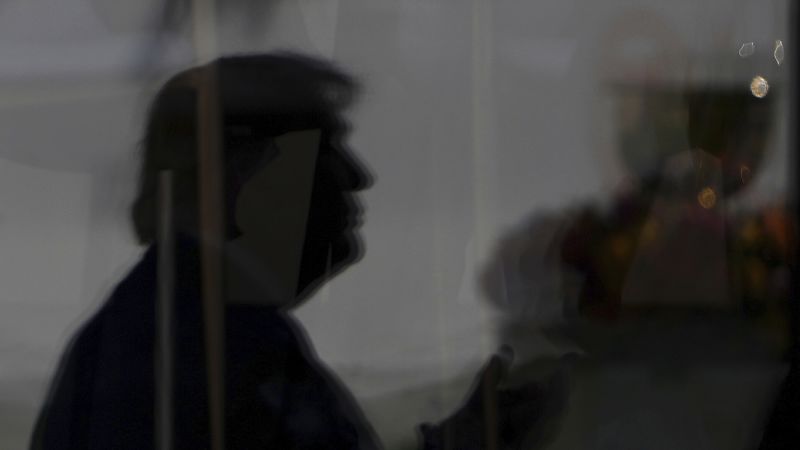
Taxpayer-Funded Trump Video Ignites Debate Over Politics and Public Messaging
Goldlaner.com – A 30-second television spot featuring President Donald Trump in stark black-and-white imagery has reopened a fierce argument over the boundary between government communication and political promotion. The ad, broadcast during NFL programming on Sunday, depicts Trump as an uncompromising national leader confronting communists, the “deep state” and the “fake news” media.
Its most controversial line appears at the end: “Paid for by the U.S. Government.”
That disclosure has prompted questions about whether public money is being used for a legitimate public service announcement or for a message designed to strengthen Trump’s political standing ahead of the midterm elections. The video’s dramatic presentation closely resembles material Trump used during his 2024 campaign, including a version he previously shared on social media.
A Message Built Around Conflict
The commercial presents Trump in the style of a cinematic strongman, with forceful narration and a visual emphasis on authority. In the voiceover, he promises “a final battle” against the political and cultural forces he portrays as threats to the country.
“A final battle”
Supporters of the administration can argue that the line between patriotic messaging and political communication is often subjective. Presidents have long appeared in public campaigns intended to encourage civic participation, address national emergencies or promote public policy goals. The White House has pointed to examples involving presidents George W. Bush, Barack Obama, Joe Biden, Woodrow Wilson and Franklin Roosevelt.
But critics contend that this case is different because of the ad’s target list, language and timing. A message focused on “communists,” “globalists,” the “deep state” and hostile media outlets is deeply intertwined with Trump’s own political identity. Those themes have been central to his campaigns and to his continuing portrayal of himself as an outsider confronting entrenched institutions.
Questions About Public Funds
Democrats have objected to this and similar government-funded videos, arguing that taxpayers should not be required to finance messaging that closely resembles campaign advertising. Public Citizen, a consumer advocacy organization, filed a complaint with government ethics watchdogs over the broader issue.
Republican Sen. John Kennedy of Louisiana also questioned the practice during an appearance on CBS News’ “Face the Nation.”
“No public official should spend public money on private ads for themselves.”
The dispute is especially notable because Trump has access to a political operation with hundreds of millions of dollars available for campaign activity. Critics say that raises a straightforward question: if the message is intended to energize his supporters, why should it be financed by the government rather than by political funds?
The timing has amplified those concerns. The spot arrived about five weeks before congressional elections in which Republicans are worried about losing control of both the House and Senate. Trump himself is not on the ballot, but his influence remains central to Republican turnout efforts. At a Texas event described as a “midterm convention,” he urged supporters to treat the election as personally consequential.
“Pretend that I’m on the ballot.”
That appeal makes it harder for critics to accept the administration’s position that the television spots are separate from electoral politics. Even without Trump’s name appearing on a ballot, the video delivers a familiar argument to his core supporters: the country is facing grave internal threats and he is the figure most capable of defeating them.
White House Calls Spot Patriotic
The White House has defended the videos as public service announcements intended to promote national pride and awareness of the country’s interests at home and abroad. Its response emphasized that the material is educational rather than electoral.
“Public service announcements are about reminding Americans to love their country and understand what makes it worth defending, at home, at our borders, and abroad.”
“The ad is educational and unapologetically patriotic. We should be proud of our country.”
Administration officials have also stressed that Trump is not a candidate in the midterm races. White House Communications Director Steven Cheung pushed back sharply against criticism on X, defending what he called the administration’s “epic Public Service Announcements.”
The central disagreement is not simply about whether presidents may use government communications to speak directly to Americans. It is about what purpose those communications serve and whether their content can fairly be separated from a president’s political interests.
Different From Traditional Emergency Appeals
Past presidential public-service campaigns often addressed immediate and widely recognized national threats. Franklin Roosevelt’s communications came during World War II, when the United States faced Nazi Germany and Japanese imperialism. Biden’s pandemic messaging focused on encouraging vaccinations during the Covid-19 crisis.
Those campaigns could still become politically contentious, particularly during the pandemic, but their stated goals were tied to concrete public-health or wartime needs. The present ad instead centers on ideological enemies and institutions that Trump has repeatedly attacked in political speeches and campaign events.
That distinction is likely to remain at the heart of the debate. The White House frames the spot as an expression of patriotism and national defense. Opponents see a taxpayer-backed effort to reinforce a partisan narrative at a pivotal point in the election calendar.
The controversy also fits a larger pattern in Trump’s political career. Confrontation with government institutions, ethics rules, the media and the political establishment has often strengthened his appeal among voters who see those institutions as hostile or disconnected from ordinary Americans. A conflict over the video itself may therefore serve the same broader political story the ad seeks to tell.
For voters, the issue reaches beyond a single commercial. It raises a lasting question about how public resources should be used when presidential communication carries both a governmental message and unmistakable political force.
Related Reading
Frequently Asked Questions
What is Trump stirs new storm by posing?
Trump stirs new storm by posing is the main topic of this guide. The article explains the context, practical details, and next steps readers should understand.
Why does Trump stirs new storm by posing matter?
Trump stirs new storm by posing matters because readers are looking for a useful answer, not just a short summary. Good content should match search intent and help them decide what to do next.