
This year could produce the largest loss of Black political representation ever. Here’s why
This Year Could Produce the Largest Loss of Black Political Representation Ever. Here’s Why
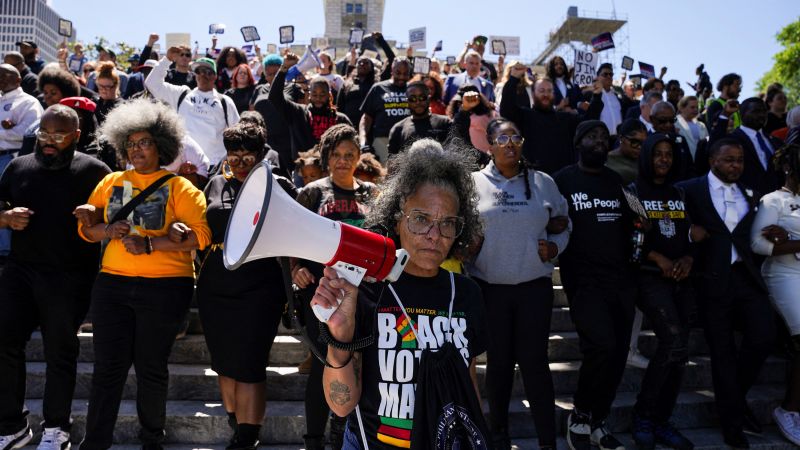
This year could produce the largest – Amid a surge in redistricting initiatives by Republican-led Southern states, concerns are mounting over a potential resurgence of racial disparities in American politics. These efforts, which aim to reshape electoral boundaries, are seen as a deliberate attempt to weaken the influence of Black voters, marking a significant departure from the party’s earlier assertions of progress in diversifying political representation.
A Return to Historical Patterns
Recent redistricting maneuvers in the South are creating a new chapter in a long-standing struggle to limit Black political power. By prioritizing the creation of districts favorable to White Republicans, these states are effectively marginalizing Black-majority areas that have historically been crucial for electing representatives who advocate for minority communities. This shift has raised alarms, as it echoes past injustices where the South leveraged its population of enslaved individuals and later free Black citizens to gain political leverage while denying them voting rights.
For much of the nation’s history, Southern states thrived on systemic barriers that suppressed Black suffrage. Before the Civil War, enslaved people were excluded from the electoral process, a situation that persisted even after emancipation. Union troops in the post-war era temporarily ensured Black citizens could vote, but this was often met with violent resistance from white Southerners. As Reconstruction waned, the South implemented legal mechanisms to exclude Black voters, effectively silencing them for decades. It was not until the Voting Rights Act of 1965 that these barriers were dismantled, allowing Black Americans to participate more fully in the political landscape.
Reversal of GOP Promises
Contradicting their post-2024 claims of broadening minority representation, current actions suggest a different priority within the Republican Party. Critics argue that the drive to reshape districts is rooted in partisan ambition rather than racial inclusivity. “The biggest threat to their movement is indeed Black and brown political and economic power,” remarked Cornell Belcher, a Democratic pollster. This sentiment highlights a tension between the party’s public rhetoric and private strategies.
Similarly, CNN commentator Shermichael Singleton noted that the party’s approach is motivated by maximizing political control rather than addressing racial equity. “Republicans in office aren’t focusing on race; they’re thinking about how to secure their political dominance,” he explained. These statements underscore the perception that the GOP’s redistricting efforts are a calculated move to consolidate power, even as the country becomes more diverse.
Broadening the Trump Agenda
Supporters of the redistricting initiatives see them as part of a larger strategy tied to former President Donald Trump’s vision. This agenda encompasses not only the reconfiguration of districts but also policies aimed at curbing the influence of minority groups. Among these proposals is the effort to abolish birthright citizenship, which would strip newly arrived immigrants of automatic U.S. nationality at birth. Additionally, discussions are ongoing about how to penalize states with high immigrant populations during the 2030 congressional reapportionment, potentially reducing their share of House seats.
Stephen Miller, a staunch immigration advisor under Trump, has explicitly connected census data adjustments to the fight against majority-minority districts. In a recent social media post, he argued that these changes could result in the loss of up to 40 House seats for Democrats. “This strategy is creating lines that will affect communities for generations,” said Nicole Austin-Hillery, president and CEO of the Congressional Black Caucus Foundation. “It’s a tragedy, especially as we commemorate the 250th anniversary of the nation’s founding. This outcome contradicts the spirit of this moment for all citizens.”
Structural Inequities and Their Legacy
The redistricting battle in the South represents a renewed front in a conflict that has shaped American history for centuries. The nation’s early political structure allowed Southern states to benefit from counting Black residents as part of the population tally, even when they were barred from voting. One of the most contentious aspects of this was the three-fifths rule, which counted enslaved individuals as three-fifths of a free person for congressional apportionment. This compromise effectively amplified the political clout of the South by including Black people in population calculations while excluding them from the democratic process.
After the Civil War, the South continued to reap political advantages by counting freed Black citizens as full equivalents to white voters in apportionment. Despite this, these individuals remained excluded from the voting process for much of the 19th century. It was the Voting Rights Act of 1965 that helped rectify these injustices, granting Black voters the right to influence elections. However, the impact of this act was not immediate, and the legacy of structural inequity persists in modern redistricting efforts.
Progressive political strategist Michael Podhorzer, a former AFL-CIO political director, has calculated how much Southern white voters gained from these historical arrangements. His analysis shows that prior to the Civil War, Southern states received about 1.5 times more congressional seats per vote compared to states outside the region. This discrepancy underscores the long-term effects of exclusionary practices, which allowed the South to maintain disproportionate political power despite the limited voting rights of its Black population.
Implications for the Future
These redistricting efforts are not just about reshaping the present political map; they are about influencing the trajectory of American democracy. By altering the distribution of seats in Congress, Southern states could significantly reduce the political clout of Black voters, who have been instrumental in shaping policies that benefit minority communities. The implication is clear: this strategy seeks to limit the ability of Black Americans to participate in the political process, reverting to methods used in the past to subjugate their voices.
As the nation moves forward with a growing minority population, the redistricting offensive highlights a deepening divide between the Republican Party’s stated goals and its practical actions. While the party has historically championed diversity, its current approach seems to prioritize maintaining the status quo. This contradiction raises questions about the sincerity of their commitment to inclusive governance. The stakes are high, with the potential for a major shift in representation that could reshape the political landscape for years to come.
