
Ted Cruz’s not-so-secret White House dreams have gotten JD Vance’s attention and annoyed Trump allies
Ted Cruz’s 2028 Presidential Ambitions Spark Tension Within the GOP
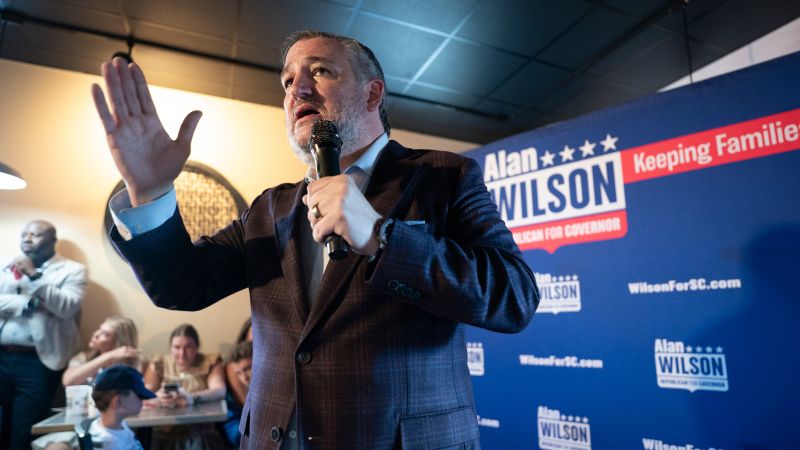
Ted Cruz s not so secret – As the 2028 Republican presidential race gains momentum, Texas Senator Ted Cruz’s persistent efforts to reposition himself as a top contender have rekindled debates about his long-term goals. While he recently campaigned for state Attorney General Alan Wilson in South Carolina, the event highlighted more than just a political strategy—it underscored the senator’s ongoing preparations for a potential White House bid. Despite his current focus on midterm elections, Cruz’s actions continue to signal his ambitions, drawing both support and skepticism from key figures within the party.
Revisiting Campaign Routines
Cruz’s Monday schedule in South Carolina echoed familiar patterns from his 2016 presidential campaign. He engaged in local events such as ice cream socials, veterans’ meet-and-greets, and discussions with sheriffs, all while managing a long line of supporters at a bustling barbecue rally. These activities, though seemingly routine, reinforce his presence in early primary states and his ability to mobilize grassroots energy. Yet, this time around, his goal isn’t to secure the nomination immediately—it’s to lay the groundwork for a future presidential run, even if it means challenging Vice President JD Vance or Trump’s preferred candidate.
The Republican Party appears divided on how to interpret Cruz’s actions. While some view him as a strategic player who can bridge generational and ideological gaps, others see him as a threat to Trump’s dominance. His recent endorsement of Wilson and another Georgia candidate, Rick Jackson, over Trump-backed rivals has already stirred controversy, but it’s his broader vision that has captured the attention of party insiders. “I would be shocked if he doesn’t run,” remarked Bob Vander Plaats, a prominent conservative leader in Iowa and former co-chair of Cruz’s 2016 campaign. Vander Plaats, who reunited with Cruz last month to support Republican efforts in Iowa, emphasized the senator’s enduring appeal among key demographics.
Building a New Political Infrastructure
Cruz has cultivated a distinct platform within the Republican Party, leveraging the new media landscape to amplify his message. His podcast, “Verdict,” which draws millions of listeners weekly, has become a central tool in this effort. On a recent episode, he launched a sharp critique of the US-Iran peace deal, arguing that Trump’s advisors were providing “very poor advice” and that the agreement risked ceding $300 billion to Iran. Such statements have positioned him as a vocal critic of the current administration, even as he maintains strong ties to Senate leadership.
“His profile has only risen,” said Vander Plaats, noting Cruz’s increasing visibility on Fox News and his effectiveness in engaging conservative audiences. This media strategy is part of a broader effort to reframe Cruz as a leader capable of uniting diverse factions within the GOP. Yet, his approach also highlights the growing tension between traditional conservative values and the more populist direction championed by Trump. While Cruz has consistently framed himself as a loyal ally to the White House, his criticisms of Trump’s policies—particularly the tariff strategy and the administration’s targeting of Jimmy Kimmel—have sparked concerns among his former supporters.
Testing the Party’s Ideological Divide
Cruz’s potential 2028 campaign would serve as a litmus test for the Republican Party’s ability to accommodate multiple visions of conservatism. For years, he has been a bridge between the pre-Trump GOP and the modern MAGA movement, blending fiscal conservatism with a strong emphasis on national sovereignty. This duality has made him both a valuable asset and a potential disruptor. His recent focus on the Iran deal exemplifies this shift: while Vance leads the US delegation in negotiations with Tehran, Cruz has emerged as one of the most vocal opponents of the agreement, arguing it weakens American interests.
“I will be on the road a lot campaigning for that [midterm elections], and there’ll be plenty of time to worry about future elections in the future,” Cruz said during a South Carolina interview. Yet, his words have done little to quell speculation about his ambitions. Texas Senator John Cornyn, a fellow Republican, recently stated to Semafor that Cruz “wants to be the next president,” a sentiment that aligns with the perception of many party observers. For Vance, Trump’s likely successor, the senator’s 2028 plans represent a direct challenge to the president’s influence over the GOP’s direction.
Trump Allies’ Concerns
Within Trump’s inner circle, Cruz’s 2028 campaign is seen as an inevitable move, though it has frustrated some White House allies. These critics worry that Cruz’s push for the presidency undermines Trump’s authority to shape the party’s future. “No one takes him seriously as a contender,” said Alex Bruesewitz, a Trump adviser and vocal opponent of Cruz’s ambitions. “Will he run? Absolutely, because his ego is 10 times bigger than the state he represents. He has no support. But he’ll have a war chest and an apparatus because he’s done this before.”
Bruesewitz’s comments reflect a broader anxiety among Trump’s supporters. Last week, the president’s eldest son, Donald Trump Jr., seized on Cruz’s Iran deal critique to accuse him of posturing for the 2028 race. “He’s trying to court voters who might not be ready to follow Trump,” Trump Jr. argued in a recent statement. This criticism has intensified as Cruz continues to engage with the same base that once rallied behind Trump, but now sees him as a potential rival. His recent address at the Road to Majority Conference—a gathering of Christian conservatives—underscored this dynamic. The event brought together former Cruz supporters who have since aligned with Trump, creating a unique opportunity for the senator to reassert his relevance.
Strategic Resilience and Future Prospects
Cruz’s ability to maintain influence despite his departure from the Trump orbit demonstrates his strategic resilience. He has remained a prolific fundraiser, drawing from the party’s largest donors and leveraging his reputation as a reliable campaigner. This financial backing, combined with his media presence, suggests he is well-positioned to mount a strong 2028 bid. However, his success will depend on navigating the party’s shifting priorities and proving that his vision can resonate with a broader electorate.
“He’s on Fox News a lot, he’s got a top-rated podcast. People hear of him, they see of him. They view him as a fighter for the agenda,” Vander Plaats added, highlighting Cruz’s ability to adapt to the modern political landscape. Yet, the senator’s critics argue that his focus on past issues—such as the Iran deal and Big Tech—risks alienating the base that has embraced Trump’s more aggressive policies. For now, Cruz remains a polarizing figure, but his persistence in the GOP primaries suggests he is prepared to weather the challenges ahead.
Conclusion
As the 2028 race looms, Ted Cruz’s activities in South Carolina and beyond have rekindled conversations about his role in the Republican Party’s future. While his current support for Wilson and Jackson showcases his ability to unite factions, his 2028 campaign could test whether the GOP can accommodate both Trump’s populist agenda and Cruz’s more traditional approach. The next few months will be critical in determining how his ambitions play out, and whether he can carve out a new space in the party’s evolving landscape.
