
Supreme Court Blocks Late Mail-Ballot Changes Ahead of Midterms
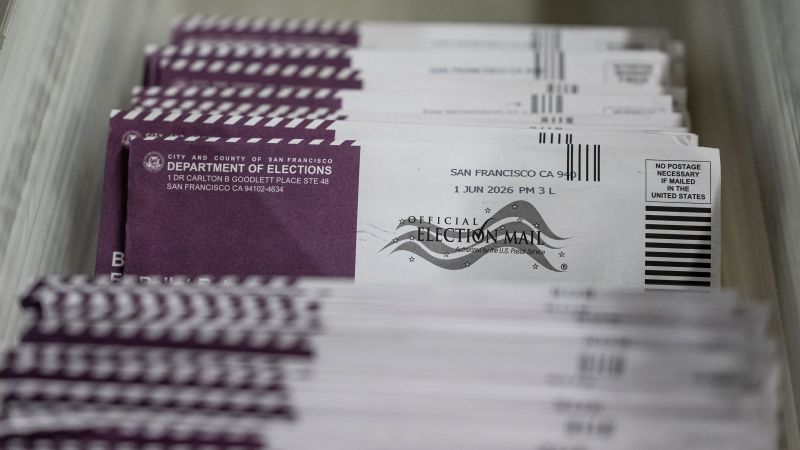
Goldlaner.com – The Supreme Court has stopped the Trump administration from imposing a new nationwide mail-ballot procedure shortly before this year’s midterm elections, siding with states and voting-rights organizations that warned the plan could disrupt voting preparations already underway.
In a brief unsigned order issued Monday, the court concluded that the administration was not likely to prevail in its legal challenge. The ruling prevents the proposed Postal Service procedure from taking effect for the 2026 midterms, avoiding what election administrators said could have been a sweeping and difficult-to-manage change to how mail ballots reach voters.
The dispute became one of the most consequential matters to reach the court’s fast-moving emergency docket in recent years. At issue was a proposal that could have allowed the US Postal Service to withhold potentially millions of ballots sent through the mail. Election officials, including some Republicans, had cautioned that implementing the system at this stage could create confusion for voters and risk widespread disenfranchisement.
A Major Setback for the Administration
The decision marks a significant defeat for President Donald Trump, who has repeatedly criticized voting by mail and made false claims of extensive fraud in mail-ballot systems. The administration characterized its approach as a limited adjustment to postal rules, arguing that it would strengthen ballot security and help ensure that only eligible voters receive mail ballots.
Opponents viewed the proposal very differently. Democratic-led states, voting-rights groups and a bipartisan group of election administrators argued that the measure represented an improper assertion of federal authority over election administration. They also emphasized that many states had already begun their election preparations, leaving little time to redesign procedures before voting starts.
Election administration is largely handled by states and local jurisdictions, which set many of the practical rules for ballot distribution, voter communication and election logistics. A late federal change can require new technology, revised instructions, updated envelopes and additional training for local officials. Those concerns were central to the case before the justices.
Implementation Concerns Influenced the Court
Justice Brett Kavanaugh, part of the court’s conservative bloc, wrote separately to explain his view. He suggested that the Postal Service might possess the authority to adopt a rule of this kind, but said election officials lacked adequate time to put it into operation before the midterms.
“State and local election officials do not have sufficient time to reasonably implement the rule before the elections.”
That reasoning reflects the arguments raised by state and local officials, who said the proposed system arrived too late in the election calendar. The rule would have required states to submit large quantities of voter information through an online portal that had not yet become available. It also would have forced changes to ballot envelopes that states had already bought and, in a growing number of cases, had already started mailing.
Kavanaugh’s concurrence may also have implications beyond the current election cycle. While he agreed that the changes should not be imposed now, his opinion indicated that he may be open to considering similar measures for a future election if they are introduced with sufficient lead time.
Two Justices Dissented
Justices Samuel Alito and Clarence Thomas dissented from the court’s action. Alito said the logistical problems described by the states and voting groups were serious, but he did not believe they justified blocking the administration’s plan.
“The government has a strong interest in enforcing the rule, and implementing it will also ‘enhance the visibility of Federal Ballot Mail’ in order to better detect election fraud,” Alito wrote.
Alito acknowledged the challenge of making changes near an election, yet concluded that concern did not outweigh the government’s position. He argued that the Postal Service has broad authority over the mail and compared the effort to a difficult late attempt in a football game.
“That Hail Mary pass is unlikely to be successfully completed here,” Alito wrote. “The Postal Service has broad authority to regulate the mail.”
The majority did not provide a detailed explanation of its reasoning beyond its conclusion that the administration was unlikely to succeed on the merits. Still, the practical effect is clear: states will continue using the mail-ballot systems and materials they have already prepared for the 2026 midterms.
States and Voting Groups Welcome the Ruling
The legal challenge was brought by Democratic-led states and voting-rights organizations, with additional warnings coming from a bipartisan coalition that included election officials and former governors. Their central argument was that a major change to ballot distribution procedures so close to an election would place both voters and election workers in an untenable position.
Colorado Secretary of State Jena Griswold, a Democrat, celebrated the outcome after the order was issued.
“Trump’s attempt to sabotage the 2026 elections has failed,” Griswold said.
California Attorney General Rob Bonta, also a Democrat, called the court’s intervention a victory for democratic institutions and legal limits on executive power.
The decision was a “victory for our democracy and a powerful affirmation of the rule of law,” Bonta said.
The ruling stands apart from several recent emergency-docket cases in which the court found that the Trump administration would be harmed when lower courts prevented it from carrying out contested policies. Here, the justices placed greater weight on the immediate election-related consequences of allowing the Postal Service measure to proceed.
For voters, the order means that existing state and local mail-voting procedures remain in place for the midterms. For election administrators, it removes the prospect of hurriedly replacing envelopes, transmitting extensive voter data and adapting to a federal portal that was not yet operational. The larger legal question over the Postal Service’s authority may remain unresolved, but the court has made clear that the proposed changes will not govern this year’s elections.
Related Reading
Frequently Asked Questions
What is Supreme Court rejects Trump s plan?
Supreme Court rejects Trump s plan is the main topic of this guide. The article explains the context, practical details, and next steps readers should understand.
Why does Supreme Court rejects Trump s plan matter?
Supreme Court rejects Trump s plan matters because readers are looking for a useful answer, not just a short summary. Good content should match search intent and help them decide what to do next.