
Trump’s Cultural Push Reveals a GOP Problem: No One Seems to Be Able to Say No
Goldlaner.com – No one seems to be able to tell President Donald Trump “no” — and that silence is becoming a growing concern for Republican leaders. With the 2026 midterm elections just 81 days away, GOP officials face a difficult dilemma. Despite the electoral threat looming on the horizon, few party members appear willing to challenge the president’s latest initiatives. Two recent actions have brought this dynamic into sharp focus.
On Friday, Trump petitioned the Supreme Court to keep authorization for building his coveted ballroom, a project already facing public skepticism. Before that appeal, the president and his personally chosen Kennedy Center board members tried again to attach his name to the prestigious performing arts venue. These coordinated moves highlight a persistent pattern: no one seems to be able to stop Trump from prioritizing personal legacy, even when such efforts risk alienating voters.
A Clever Workaround for the Kennedy Center Controversy
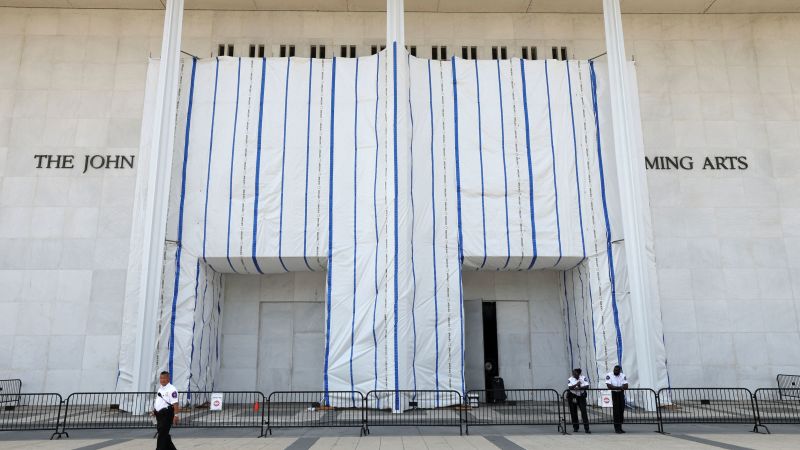
After a federal judge rejected the earlier attempt to officially rebrand the institution as the “Trump Kennedy Center,” the administration had to remove Trump’s name from the building’s exterior. The board then devised an alternative strategy. According to Democratic Representative Joyce Beatty, an ex-officio trustee who filed litigation challenging the initial naming attempt, the board voted on Thursday to install an inscription beneath the Kennedy Center’s existing signage. This new text will declare that the complex was “Restored and Renovated by President Donald J. Trump.”
The same vote also approved renaming the surrounding area the “President Donald J. Trump Plaza.” Additionally, the board is pursuing another attempt to close the center for renovations, following the failure of their previous effort. Legal challenges remain possible. The federal judge who previously opposed the administration’s position emphasized that federal legislation “makes crystal clear” that the center “cannot bear any other formal name or public memorial based on the Board’s unilateral say-so.” CNN’s Sunlen Serfaty observed that the statute does permit “an inscription on the marble walls in the north or south galleries, the Hall of States, or the Hall of Nations acknowledging a major contribution.” However, legal permissibility does not necessarily equate to political wisdom.
Voter Sentiment Runs Against the Administration’s Approach
The timing of these initiatives proves especially problematic. Republicans appear vulnerable heading into the 2026 elections, yet the administration continues advancing initiatives that contradict prevailing public opinion. Americans increasingly believe such efforts have exceeded reasonable boundaries, with many asserting that Trump and his team are concentrating on trivial matters while neglecting substantive concerns. No one seems to be able to convince the president to step back.
A CNN survey conducted last month revealed that 59% of respondents felt Trump had “gone too far” in “making changes to cultural institutions such as the Kennedy Center and the Smithsonian.” Notably, even 32% of Republicans and GOP-leaning independents—constituents who typically form Trump’s core support—agreed with this assessment.
Further polling data reinforces this trend. A Pew Research Center study from April indicated that merely 9% of Americans considered it appropriate to name government buildings after Trump while he remains in office. This represents an exceptionally rare practice for any sitting president. Approximately eight times as many respondents either rejected the idea entirely (50%) or accepted it only conditionally, contingent upon Trump completing his term (21%). Among Republicans specifically, only 17% endorsed placing Trump’s name on government facilities during his presidency.
The Broader Political Implications
One might argue that voters simply do not care deeply about cultural institutions or that the Kennedy Center holds limited significance for many citizens. Perhaps the public views these efforts as misguided but believes Trump’s name would eventually be removed upon his departure from office. These possibilities exist.
Nevertheless, the situation threatens to amplify a damaging narrative for both Trump and the Republican Party: that the president remains excessively self-absorbed while overlooking issues that genuinely matter to ordinary Americans. CBS News polling demonstrated that nearly 8 out of 10 Americans believed the Trump administration had focused “not enough” on reducing prices. The aforementioned CNN survey found that 73% of respondents felt Trump “hasn’t paid enough attention to the country’s most important problems”—a figure that has climbed approximately 20 points throughout his second term. No one seems to be able to redirect this momentum.
“The statute does permit an inscription on the marble walls in the north or south galleries, the Hall of States, or the Hall of Nations acknowledging a major contribution.” — CNN’s Sunlen Serfaty
Frequently Asked Questions
What is the Kennedy Center board’s new strategy for honoring Trump? The board voted to install an inscription declaring the center was “Restored and Renovated by President Donald J. Trump” beneath existing signage, while also renaming the surrounding plaza.
Why are Republicans concerned about these cultural initiatives? Polling shows 59% of Americans believe Trump has “gone too far” with cultural changes, including 32% of Republicans. Additionally, only 9% think naming government buildings after a sitting president is appropriate.
What are the legal limitations on the Kennedy Center naming? Federal legislation states the center “cannot bear any other formal name or public memorial based on the Board’s unilateral say-so,” though inscriptions in certain galleries are permitted.
How does this relate to broader voter concerns? While voters question cultural initiatives, 73% feel Trump hasn’t paid enough attention to the country’s most important problems, suggesting these efforts may seem misplaced to many Americans.