
Vance’s Request for Time Highlights a Tension in the GOP Message
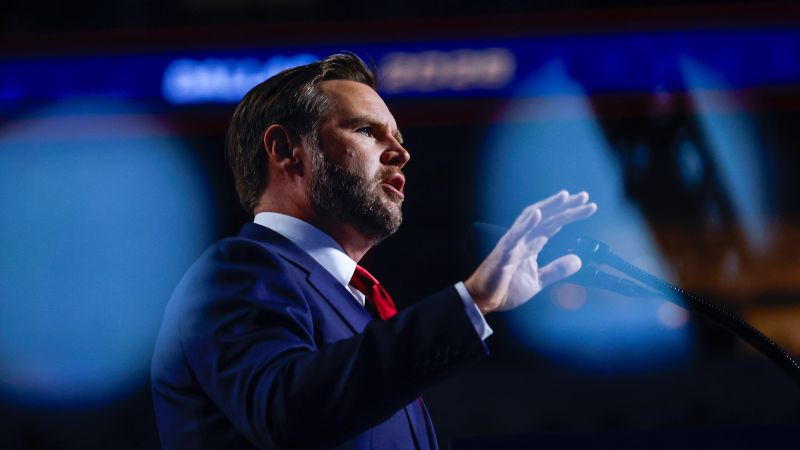
Goldlaner.com – Vice President JD Vance tried to make a case for continued Republican control this week, but a brief choice of words revealed the challenge facing the administration as it approaches the midterm elections. During an appearance on the “All In” podcast, Vance initially asked voters to give Republicans “another chance” before quickly reframing the appeal as a request for more time.
“Give us another chance — or, give us another couple of years to continue to work on the amazing things that we’ve been doing for the past two years,” Vance said.
The correction mattered. Asking for another chance can imply that the opportunity already granted has not produced the promised results. That is difficult to square with President Donald Trump’s upbeat description of the country as entering a “golden age,” a phrase meant to convey that the administration’s agenda is already succeeding.
Vance has chosen a somewhat different tone. Rather than insisting that every concern has been solved, he has shown more willingness to recognize the frustration felt by voters facing financial strain or questioning decisions such as the Iran war. His remarks at last week’s Republican midterm convention, his podcast comments, and his private meeting with House Republicans all pointed in that direction.
A More Cautious Appeal to Unhappy Voters
At the House Republican gathering, Vance urged lawmakers to speak candidly to people who believe the country is still heading in the wrong direction. He argued that dismissing those anxieties would be a mistake for a party seeking to hold power.
“Right now, we have a country where people are frustrated. You got to level with them,” he advised GOP lawmakers.
That instinct may be politically understandable. Midterm campaigns often become a referendum on the party in power, and voters who are dissatisfied with prices, foreign policy, or their own household finances are unlikely to be persuaded by broad declarations that everything is perfect. Acknowledging disappointment can create space for an argument that change takes time.
Still, there is a political difference between showing empathy and effectively asking the public for a do-over. Vance’s wording suggested that the administration needs additional time to fulfill its agenda, while Trump’s earlier campaign pitch was built around a far more immediate promise of repair.
During the 2024 campaign, Trump did not merely say he would eventually improve conditions after Joe Biden’s presidency. His message emphasized rapid, sweeping action. He repeatedly presented himself as someone who could quickly reverse economic and political problems, restore order, and produce tangible gains for ordinary Americans.
The Problem With Promises of Fast Results
Trump has long favored expansive pledges. In 2016, he told supporters, “I will give you everything.” Such rhetoric helped define his political appeal: a promise that entrenched problems could be overcome through forceful leadership and a break from conventional politics.
But grand commitments become harder to defend when voters believe the central concerns in their daily lives remain unresolved. The administration’s pledge to bring down prices immediately has become especially vulnerable. Each day that many Americans continue to feel pressure from costs makes the original promise more difficult to reconcile with public experience. Three-quarters of Americans say Trump has neglected the issue.
The Iran war presents another complication. Trump’s political identity was heavily tied to skepticism of prolonged foreign conflicts and criticism of leaders who drew the United States into wars abroad. The conflict therefore creates a sharper contrast between his past political image and the decisions associated with his administration now.
Vance’s comments may reflect an effort to navigate that reality. He pointed to specific achievements, including securing the border and the policy of “no tax on tips.” Those are concrete items that can be presented as accomplishments. Yet they are narrower than a broader claim that the administration has already transformed the economy or delivered a new era of prosperity.
An Unsettled Test for Trump’s Potential Heir
The episode also adds to scrutiny of Vance’s political communication. He is widely viewed as the leading contender for the Republican presidential nomination in 2028, but inheriting Trump’s coalition is not the same as inheriting Trump’s unusual ability to command a rally, dominate a news cycle, and turn simple phrases into political weapons.
Vance’s formulation showed the difficulty of serving both as a loyal advocate for the current administration and as a messenger trying to prepare voters for an argument about patience. The first role requires confidence that the program is working. The second requires recognition that many voters do not believe enough has changed.
Whether Vance says Republicans need “another chance” or “another couple of years,” the core message is similar: the work is unfinished. That may be a practical admission, but it clashes with the urgency of Trump’s 2024 campaign. For Republicans, the question is whether voters will accept a promise of more time after hearing years of assurances that results would come quickly.
For Vance, the larger test will be whether he can translate that more cautious message into a persuasive one without weakening the administration’s central claim of success. His brief verbal adjustment on the podcast exposed how narrow that path may be.
Related Reading
Frequently Asked Questions
What is JD Vance s telling give us another?
JD Vance s telling give us another is the main topic of this guide. The article explains the context, practical details, and next steps readers should understand.
Why does JD Vance s telling give us another matter?
JD Vance s telling give us another matters because readers are looking for a useful answer, not just a short summary. Good content should match search intent and help them decide what to do next.