
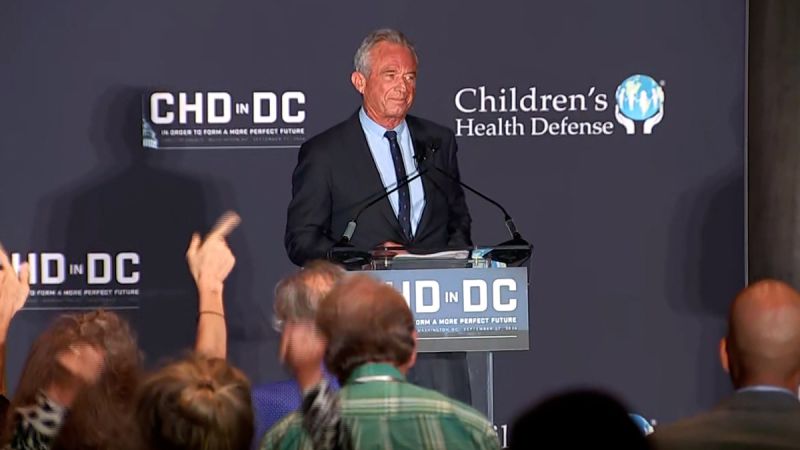
Kennedy Tells Anti Vaccine Group He Will Stay in Fight
Goldlaner.com – Kennedy tells anti vaccine group he previously led that he will “stay in this fight” as the United States experiences its largest measles surge in decades. Health and Human Services Secretary Robert F. Kennedy Jr. received a standing ovation Thursday while giving the keynote address at a Children’s Health Defense conference.
Kennedy helped found Children’s Health Defense and led the organization before leaving to pursue the presidency. The group has long challenged vaccine mandates, supported “medical freedom” legislation and promoted claims questioning vaccine safety.
His appearance came as measles cases have risen sharply alongside declining vaccination rates. More than 3,200 cases have been reported in the US this year, including four measles-related deaths in Pennsylvania: two infants and an 18-year-old.
Conference speakers promoted vaccine skepticism
At the event, MAHA Institute president Mark Gordon described himself as the “boldest antivaxxer at an antivax conference.” Andrew Wakefield also spoke. The British gastroenterologist and filmmaker was behind a 1998 paper claiming a connection between vaccination and developmental conditions including autism.
The study was withdrawn in 2010, and Wakefield later lost his medical license. Extensive research has found no credible evidence that routine vaccines cause autism.
Children’s Health Defense promoted Kennedy-related books at the gathering, including The Real Anthony Fauci and The Wuhan Cover-Up. Its online store also sells infant clothing with slogans including “No Vax No Problem” and “Unvaxxed Unafraid.”
Kennedy discussed food, farming and vaccine policy
Much of Kennedy’s roughly 40-minute address focused on the Trump administration’s chronic-disease agenda. He discussed food dyes, ultraprocessed food in government programs and regenerative agriculture, as well as planned research into possible health effects of electromagnetic fields and chemtrails.
Later, Kennedy praised President Donald Trump’s support for vaccine skeptics and told attendees that they had an ally in the administration.
“You have a strong and steadfast friend at the White House.”
Kennedy also said parents who question standard vaccine recommendations should not be stigmatized.
“President Trump will not allow the government to treat parents who question vaccine orthodoxies as lepers.”
He said the administration had preserved vaccine access while reconsidering longstanding questions about vaccine policy.
“We have not taken vaccines away from anyone. We have preserved access, but we have started asking the questions that you and millions of American parents have been asking for years.”
Claims raised questions about vaccine safety monitoring
When Kennedy tells anti vaccine group members that the administration will continue its work, he has also criticized vaccine safety and effectiveness. During his confirmation process and in social-media statements, the lawyer said he would not restrict vaccine availability.
“We’ll stay in this fight.”
Kennedy called the federal adverse-event reporting system “very bad.” He said vaccine injuries were likely “very rare,” but argued that the true number was unknown.
In the US, reports submitted to the federal system can come from patients, clinicians and manufacturers after a medical event following vaccination. A report does not establish that a vaccine caused the event; public-health agencies use the system with other monitoring tools to investigate possible safety signals.
Kennedy’s only direct reference to measles came as he argued that public attention should extend to all childhood illness and injury.
FAQ: Measles and Vaccine Safety in the United States
Does a report to the federal vaccine safety system prove a vaccine caused harm?
No. A submitted report identifies an event that occurred after vaccination, but it does not by itself establish a cause. Health agencies review reports alongside other data to identify and investigate potential safety concerns.
Why are measles cases rising in the US?
Measles was eliminated in the United States in 2000, but outbreaks can occur when vaccination coverage falls and the virus spreads among people without immunity. Public-health officials continue to monitor cases and encourage families to discuss vaccination questions with qualified medical professionals.