
Iran’s forever war: Deal or no deal, Iran’s challenge to America will outlast Trump
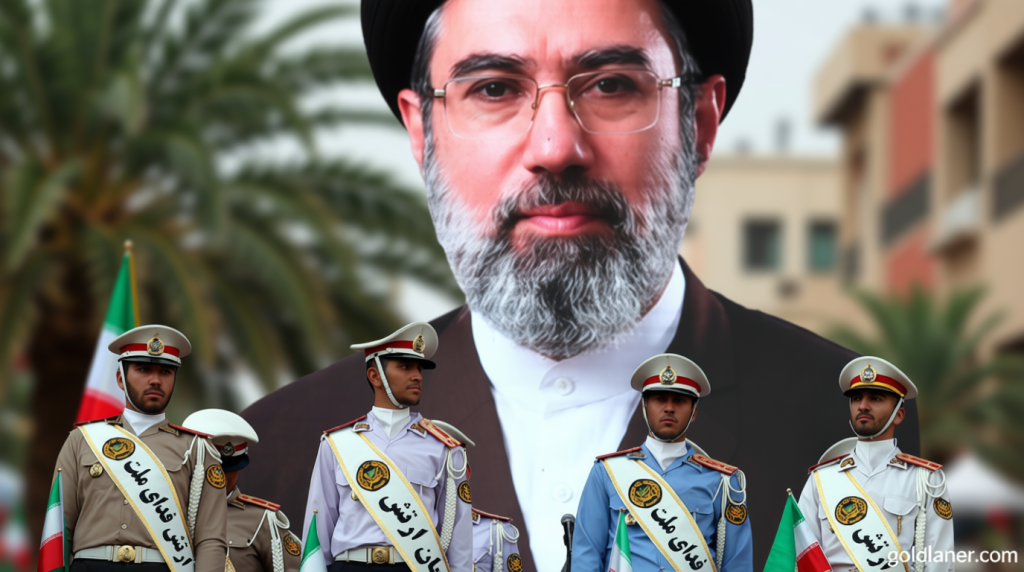
Iran’s Forever War: Outlasting Trump, the Conflict Continues
Iran s forever war – Iran’s ongoing struggle against American influence has been a defining feature of U.S. foreign policy for decades. Brett McGurk, a seasoned national security official with experience across four presidential administrations, highlights how this conflict transcends political cycles. His early work in Iraq, starting in 2004, exposed the growing ideological battle between Iran and the West. Upon arriving in Baghdad, McGurk witnessed a critical moment in the global fight against terrorism, as U.S. intelligence revealed a letter from Ayman al-Zawahiri to Abu Musab al-Zarqawi outlining a vision for an Islamic caliphate. This document emphasized the ambition of groups like al Qaeda to establish governance across the Middle East, a goal that would later resonate in Iran’s own strategic objectives. Despite the U.S. sharing this information, many underestimated the long-term threat posed by such movements. McGurk’s later return to Baghdad underscored how far Iran’s influence had spread, with its proxy forces shaping the region’s power dynamics long after the initial conflict.
The Persistence of Ideological Conflict
Washington’s approach to Iran has evolved, yet the core of the nation’s strategy remains unchanged. The U.S.-Iran rivalry, rooted in the 1979 Islamic Revolution, has persisted through multiple administrations. While diplomatic efforts and economic sanctions have varied, Iran’s pursuit of regional dominance and resistance to Western hegemony has remained consistent. The country’s constitution assigns the Islamic Revolutionary Guard Corps (IRGC) a dual mission: national defense and the promotion of an ideological jihad. This mandate has enabled Iran to cultivate alliances with militant groups across the Middle East, from Hezbollah in Lebanon to the Houthis in Yemen. The IRGC’s Quds Force has played a pivotal role in this network, ensuring that Iran’s influence extends beyond its borders. Whether through proxy warfare or direct intervention, the regime has demonstrated an unyielding resolve to reshape the geopolitical landscape.
Iran’s foreign policy is driven by a vision that dates back to its revolutionary origins. The 1979 seizure of the U.S. embassy in Tehran marked the beginning of a long-standing confrontation, characterized by attacks, hostage crises, and proxy wars. This ideological conflict has grown alongside U.S. military presence in the region, with Iran positioning itself as a counterweight to American power. Even as political leaders change, the underlying motivations of the Islamic Republic remain constant. The focus on countering Western influence has led to sustained efforts to challenge U.S. allies, support militant movements, and assert control over key strategic regions. These actions reflect a broader strategy that has evolved over decades, ensuring that Iran’s role in the Middle East continues to expand.
Shifting Tactics, Unchanging Goals
Throughout its history, Iran has adapted its methods to maintain pressure on the United States. While the 2015 nuclear deal sought to curb its atomic ambitions, it did little to address the country’s long-term ideological goals. The agreement, which imposed nuclear restrictions, allowed Iran to redirect resources toward military and regional initiatives. This flexibility, however, has not diminished its ambitions. Instead, it has reinforced the idea that Iran’s conflict with America is not confined to a specific period or administration. The regime’s ability to leverage diplomatic successes while continuing its military and political campaigns demonstrates a strategic approach that prioritizes enduring influence over short-term gains.
Republican and Democratic strategies have alternated in their emphasis on diplomacy versus pressure, but both have acknowledged the necessity of countering Iran’s expansion. The current administration’s engagement with Iran, such as efforts to reopen the Strait of Hormuz, reflects a transactional mindset that may not fully address the nation’s long-term objectives. Meanwhile, Iran’s revolutionary ideology continues to drive its actions, ensuring that its conflict with the West remains a defining feature of global politics. Whether through economic sanctions, military alliances, or ideological propaganda, the Islamic Republic has maintained a presence that challenges U.S. interests. This persistence underscores the idea that Iran’s forever war is not a temporary phase but a sustained effort to reshape the region and global order.
The Ideological Backbone of Iran’s Strategy
The foundation of Iran’s conflict with the U.S. lies in its revolutionary ethos. Since 1979, the country has positioned itself as a guardian of Islamic values against Western encroachment. This ideology has justified actions such as supporting militant groups, intervening in regional conflicts, and challenging U.S. allies. The Islamic Revolutionary Guard Corps (IRGC) serves as the primary instrument of this vision, operating both as a military force and a cultural envoy. Its role in exporting revolution has enabled Iran to build a network of proxies that sustain its influence across the Middle East. This strategy has proven resilient, as successive U.S. administrations have struggled to contain it. The result is a conflict that remains deeply entrenched, regardless of shifting political priorities.
McGurk’s analysis emphasizes that Iran’s challenge to the U.S. is not bound by individual leaders or political cycles. The regime’s commitment to ideological warfare has created a self-sustaining dynamic that ensures its long-term relevance. Whether through proxy forces or direct engagement, Iran continues to project power in ways that align with its revolutionary goals. This consistency has allowed it to outlast the policies of leaders like Trump, whose administration focused heavily on bilateral relations. The broader implications of Iran’s forever war suggest that the conflict will endure, shaped by the interplay of ideology, military capability, and geopolitical strategy. As long as these elements remain intact, the struggle between Iran and the United States will persist.
