
House Oversight panel subpoenas billionaire investor with Epstein ties for deposition and information on NDAs
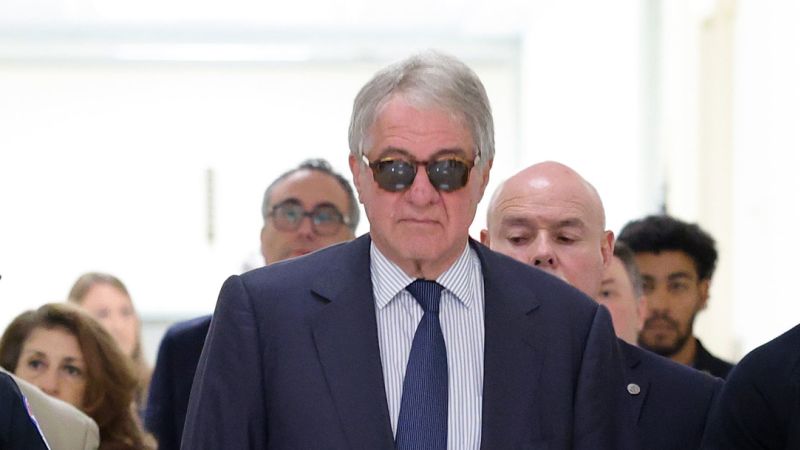
House Oversight Panel Subpoenas Billionaire Investor with Epstein Ties for Deposition and Information on NDAs
House Oversight panel subpoenas billionaire investor – Following intense scrutiny over his connections to the late sex offender Jeffrey Epstein, the House Oversight Committee has taken a significant step by issuing subpoenas to billionaire investor Leon Black. The move, which occurred during a closed-door session with lawmakers on Capitol Hill, aims to compel Black to provide detailed testimony and documents regarding non-disclosure agreements (NDAs) linked to Epstein’s alleged misconduct. This action has reignited debates about the transparency of high-profile individuals involved in the Epstein case and their willingness to cooperate with congressional investigations.
Subpoenas Target NDAs and Epstein’s Role
Chairman James Comer of the House Oversight Committee announced the subpoenas on Friday, emphasizing the need to uncover the full scope of Epstein’s influence. “The NDAs are between him and other women,” Comer stated in a press briefing. “We want to know whether Jeffrey Epstein was involved in drafting them, or if he played a role in funding the women who signed them. What was the rationale behind these agreements?” The committee’s decision to issue two separate subpoenas—one for a deposition and another for written testimony—marks a pivotal moment in the bipartisan probe into Epstein’s crimes.
“We had very important questions about Leon Black’s past with Jeffrey Epstein,” said Democratic Rep. Suhas Subramanyam, a member of the panel. “This is the first time someone has walked out in the middle of a deposition.”
Black, who appeared before the committee earlier on Friday, initially declined to answer several questions about the NDAs. His refusal to elaborate prompted the lawmakers to issue the formal demands. While Black’s legal team described the subpoenas as a “planned political stunt,” the committee insists the move is necessary to ensure accountability. The focus on NDAs highlights the central role these agreements played in shielding Epstein’s alleged victims from public scrutiny.
Black’s Defense and Claims of Innocence
In his opening remarks, Black asserted that he had no knowledge of Epstein’s “heinous conduct” until after the latter was charged with trafficking in July 2019. “I gave Epstein a second chance five years after his 2008 conviction for soliciting prostitution from a minor,” he stated. “I wish I had not.” Black also claimed he had never abused women, engaged in sexual relations with minors, or paid Epstein for access to female victims. “I have never abused a woman,” he told the panel. “I have never been with an underage woman. I have never engaged in sex trafficking.”
“I want to be clear, as Mr. Black said in his opening statement: He never abused a woman, he never was with an underage woman, he never engaged in sex trafficking, he never paid Epstein for access to women, he was never blackmailed by Epstein, and Mr. Black had no knowledge of any of Mr. Epstein’s heinous conduct,” said Susan Estrich, an attorney for Black.
Estrich’s defense underscores the tension between the committee’s demand for transparency and Black’s insistence on his own innocence. She argued that the committee’s questions were insufficient, noting they had not probed the legitimate payments Epstein received for professional services, which could have provided insight into his financial motivations. However, Rep. Robert Garcia, the committee’s top Democrat, countered that the subpoenas were a natural progression of the inquiry. “Both the minority and majority had hours of questions for Black,” Garcia said, emphasizing the thoroughness of the committee’s approach.
Political Stakes and Public Perception
The timing of the subpoenas has sparked criticism from some lawmakers and advocates, who view the action as an attempt to create political pressure. “Congress needs to depose key individuals from Epstein’s circle rather than letting them sit for transcribed interviews,” said one survivor’s advocate, reflecting a broader call for more direct accountability. Black’s departure during the session further fueled speculation about his reluctance to fully cooperate. As he left the committee room, he did not confirm whether he would comply with the subpoenas, leaving questions about his commitment to transparency unanswered.
Black’s voluntary appearance before the panel was the 16th closed-door interview conducted in the committee’s investigation. The process has targeted numerous wealthy figures with ties to Epstein, including business partners and associates. His case, however, has drawn particular attention due to his prominent position as a billionaire and his role in Apollo Global Management, a private equity firm that faced scrutiny in 2021 amid allegations of its connection to Epstein.
Legacy of Epstein and the Role of NDAs
Epstein’s 2008 conviction for soliciting prostitution from a minor was a major turning point, but it was his 2019 trafficking charges that brought renewed attention to his alleged activities. Black’s testimony, which echoes his previous statements, suggests he believed Epstein’s actions were isolated until the latter’s crimes became more widely known. “With the benefit of hindsight,” he said, “I regret having any involvement with Epstein.” This sentiment aligns with a letter he wrote to investors in 2020, expressing remorse for his dealings with the sex offender.
Black’s relationship with Epstein, as detailed in the Justice Department’s release of millions of files, has been a focal point of the investigation. The documents reveal a web of connections between Epstein and prominent figures, including frequent social and business interactions. Black’s legal team has highlighted these ties, arguing that his past association with Epstein was a result of professional partnerships rather than personal misconduct.
Broader Implications for the Investigation
The subpoena of Black adds to the pressure on other individuals linked to Epstein, including those who have already testified under oath. The committee’s strategy of using formal legal measures has been seen as a way to force more detailed and binding responses from witnesses. “This is not just about one person,” Comer said in a statement. “It’s about ensuring that all parties involved are held accountable for their roles in this scandal.”
As the investigation progresses, the focus on NDAs is expected to deepen. Lawmakers are eager to determine whether Epstein’s network used these agreements to conceal abuse or if they were a standard part of their business dealings. Black’s testimony, while defensive, may provide critical evidence about the extent of Epstein’s influence and the complicity of his associates. The committee’s pursuit of this information highlights the ongoing efforts to unravel the full narrative of Epstein’s crimes and their impact on the individuals connected to him.
In the wake of the subpoenas, the debate over political motives versus investigative necessity continues. While some critics argue the move is a publicity stunt, others see it as a necessary tool to ensure transparency. As the House Oversight Committee prepares to extract more details from Black, the case remains a key example of how high-profile figures are being scrutinized for their roles in Epstein’s network. The outcome of these proceedings could shape the future of the investigation and the broader understanding of the scandal’s reach.
