
From New York to Seattle to DC, more cities are picking democratic socialist leaders
From New York to Seattle to DC, More Cities Embrace Democratic Socialist Mayors
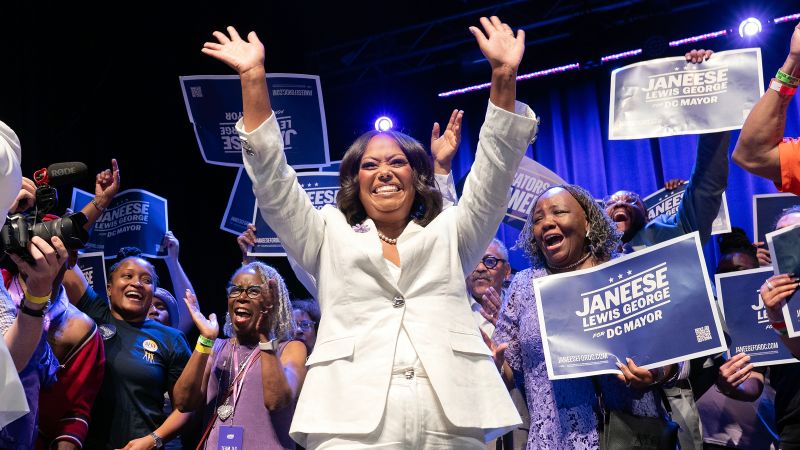
From New York to Seattle to DC – On June 20, 2026, the Democratic primary for Washington, DC’s next mayor brought renewed attention to the city’s shifting political landscape. Janeese Lewis George, a Black candidate running on a progressive platform, faced skepticism about her ability to attract broader support. Critics speculated that her base was primarily composed of wealthier, White voters and residents who had relocated to the nation’s capital. However, the election results defied expectations, with Lewis George securing a diverse coalition that spanned multiple demographics. Her victory, after 12 years of governance under Democratic Mayor Muriel Bowser—a leader often associated with business-friendly policies—signals a growing influence for democratic socialists in urban politics.
Building a Coalition Beyond Traditional Lines
Lewis George’s campaign emphasized grassroots engagement, uniting organizers, environmental advocates, nurses, transit workers, and janitors. “This election showed that our coalition is as broad as the city itself,” she said, highlighting how the movement transcended racial and socioeconomic divides. Her message resonated with voters who saw her as a representative of working-class priorities, including affordable housing and childcare access. The win is particularly significant for the Democratic Socialists of America (DSA), a progressive group that has increasingly sought to shape local elections through a focus on economic equity and social justice.
“We are Democrats, independents, and democratic socialists,” Lewis George stated, underscoring the diverse political spectrum her campaign attracted. “Our message is simple: people need to feel that their voices matter.”
Meanwhile, democratic socialist leaders in other cities continue to expand their reach. In November, Zohran Mamdani of New York City and Katie Wilson of Seattle secured mayoral victories, reinforcing the idea that left-leaning candidates are gaining traction in major urban centers. This trend has not gone unnoticed in Los Angeles, where city councilmember Nithya Raman, also a DSA member, advanced to the general election despite incumbent Mayor Karen Bass’s attempt to elevate a Republican contender, former reality show star Spencer Pratt. Raman’s campaign focused on community-driven policies, aiming to challenge the status quo in a city where progressive ideas are often tested against mainstream political forces.
Challenges and Optimism in Democratic Socialism
For democratic socialists like Mamdani, the recent wins are part of a larger strategy to reshape the Democratic Party’s identity. “The party is stuck in an outdated model,” he argued during a rally with his primary slate on Thursday. “If we don’t change course, we’ll lose the next wave of elections.” Mamdani’s remarks pointed to concerns about the party’s ability to adapt to evolving voter concerns, particularly in early presidential primary states like South Carolina and New Hampshire. “The old Democratic way won’t secure the 270 electoral votes we need,” he said, framing his efforts as a critical test for the movement’s viability.
“If we are to offer a positive vision, we must show people that elected officials care about working-class struggles,” added Aparna Raj, a democratic socialist leading her primary bid for a council seat in Northwest Washington. “Our goal is to create a tangible alternative to authoritarianism and the current administration’s failures.”
Yet, moderate Democrats caution against overestimating the movement’s nationwide impact. Matt Bennett, executive vice president of public affairs at Third Way, a center-left think tank, emphasized that DSA’s successes are often concentrated in the nation’s most liberal areas. “These wins reflect strong support in blue regions, but they don’t necessarily translate to broader national appeal,” Bennett noted. He warned that Democrats risk misreading local trends as indicators of a larger shift, potentially undermining the party’s ability to secure swing districts.
Diverging Strategies in Progressive Hubs
While democratic socialists are making gains, other heavily Democratic cities are adopting different approaches to leadership. In San Francisco, voters rejected both the moderate incumbent, London Breed, and the prominent progressive candidate, Aaron Peskin, in 2024. Instead, they chose Daniel Lurie, a Levi Strauss heir and philanthropist, who ran as an outsider with a focus on improving street conditions, public safety, and government efficiency. Lurie’s bipartisan appeal has allowed him to maintain support across ideological lines, despite his progressive agenda.
Contrast this with Chicago, where Mayor Brandon Johnson, a non-DSA figure, has faced persistent challenges since taking office in 2023. Johnson, initially celebrated by labor organizers for his pro-worker stance, has struggled with a protracted budget crisis and contentious battles over property taxes. Simultaneously, internal disputes between teachers’ unions and service employees’ groups have further complicated his administration’s efforts. “The city’s political landscape is more fractured than ever,” said one observer, noting how these struggles have weakened key support bases for progressive policies.
The Path Forward for Democratic Socialists
Despite these hurdles, the DSA remains optimistic about its electoral prospects. Ashik Siddique, co-chair of the group’s national political committee, told CNN that the movement’s approach is rooted in grassroots development. “Our strategy is to build a strong foundation at the local level,” he explained. “By winning smaller races, we create a pipeline of leaders who can carry the DSA’s message to higher offices.” This method has already yielded results, with Raman’s campaign in Los Angeles and Mamdani’s efforts in New York serving as case studies for the movement’s expanding influence.
As the DSA consolidates its presence in key cities, the question remains: can its message resonate beyond the blue states? The answer may lie in how effectively candidates address shared concerns like inflation, healthcare costs, and climate change. In Washington, DC, Lewis George’s coalition has already demonstrated that a progressive platform can unite voters across different backgrounds. If this trend continues, it could signal a deeper shift in urban politics—one that challenges traditional party divides and redefines what it means to be a “progressive” candidate in an increasingly polarized nation.
For now, the movement’s focus remains on local victories, with eyes on the 2026 midterms and the upcoming presidential election. As more cities embrace democratic socialist leaders, the broader Democratic Party faces a pivotal moment: to either adapt to this new wave of progressive energy or risk losing momentum to a more radicalized left. The path forward will require balancing bold policies with pragmatic messaging, ensuring that the DSA’s vision remains both appealing and achievable for a wider electorate.
Ultimately, the rise of democratic socialist mayors reflects a broader transformation in American politics. From the streets of Seattle to the corridors of Washington, DC, these leaders are challenging the status quo and offering a distinct alternative to traditional liberalism. Whether this movement can sustain its momentum beyond local elections will depend on its ability to address the concerns of voters in regions where progressive ideas have yet to fully take root.
