
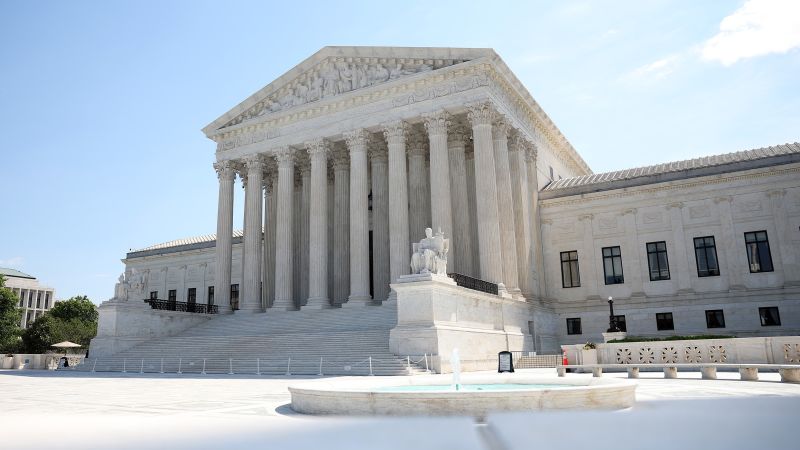
Supreme Court May Decide Whether Prediction Markets Can Operate as They Currently Do
Goldlaner.com – The fate of a fast-growing financial industry built on wagering real money against real-world outcomes now hangs in the balance at the nation’s highest court. New Jersey filed a petition on Wednesday asking the justices to invalidate prediction-market platforms operating within its borders, setting the stage for what could become a defining constitutional and regulatory showdown over whether Congress effectively pre-empted state gambling law when it placed these platforms under federal derivatives oversight.
This marks the first time the sprawling, multi-front legal war over prediction sites has climbed to the Supreme Court. The state’s move follows a cascade of adverse rulings for the industry, most notably a federal appellate decision that sided with New Jersey’s regulator. The justices are expected to weigh whether to grant certiorari later this autumn; if they accept the case, a ruling would likely arrive before the summer term concludes next year.
The New Jersey Petition
Attorney General Jennifer Davenport, a Democrat, framed the state’s appeal as a matter of legislative intent and consumer protection. In a statement issued Wednesday, she declared:
“We’re calling on the Supreme Court to resolve this issue and recognize that Congress did not silently make the sports-betting industry immune from state law.”
The underlying dispute traces back to last year, when Davenport’s office moved to shut down Kalshi’s sports-betting operations in New Jersey. Kalshi responded with a lawsuit, and a federal district judge issued an injunction preventing the state from enforcing its gaming statutes against the platform. The Philadelphia-based Third Circuit Court of Appeals then affirmed that injunction in a 2-to-1 split decision handed down in April.
A Circuit Split Over the Nature of the Product
The legal architecture of the fight turns on a single question: are prediction markets a form of gambling subject to state regulation, or are they federally regulated financial instruments beyond state reach? The answer has diverged sharply between two federal appellate courts, creating the kind of circuit split that typically draws Supreme Court attention.
The Third Circuit concluded that platforms like Kalshi offer what it called “event contracts” for trading, making them legally distinct from traditional sportsbooks and therefore subject to exclusive federal oversight. The Ninth Circuit, by contrast, rejected that characterization in a unanimous 3-to-0 ruling issued Friday — less than a week before New Jersey’s Supreme Court filing. The panel wrote:
“Kalshi’s sports event contracts have the hallmarks of sports betting.”
That Nevada-based decision gave the state a significant victory in its own parallel challenge and crystallized the split. Regulators in Nevada, Michigan, and Washington state have each obtained court orders shutting down Kalshi or, at minimum, its sports-betting offerings within their borders.
What Prediction Markets Actually Are
Platforms such as Kalshi and Polymarket allow participants to buy and sell contracts tied to the outcome of real-world events: sporting results, election outcomes, entertainment awards, weather readings, and a growing catalog of other measurable occurrences. Structurally, they are organized as financial derivatives markets rather than casinos. The Commodity Futures Trading Commission, the federal agency that oversees derivatives trading, exercises regulatory authority over them. Weekly trading volume across the sector now runs into the billions of dollars.
Despite that federal framework, a bipartisan coalition of 44 states contends the platforms are, in substance, unlicensed sportsbooks. Those states argue the companies are circumventing gaming regulations designed to protect consumers and to generate billions in annual tax revenue for state treasuries. The disagreement is not merely academic; it determines whether a state can impose licensing requirements, consumer-protection rules, and tax obligations on the platforms operating within its borders.
Federal Regulatory Posture
The Trump administration has signaled a clear preference for letting prediction markets flourish. CFTC Chairman Mike Selig, a Trump appointee, has publicly championed the industry and asserted that his agency holds exclusive jurisdiction over its regulation. Under his leadership, the commission has sued several states that attempted to ban prediction platforms outright. In June, the agency proposed new federal rules that would preserve most of the existing industry structure, including the majority of sports-event markets.
That proposal effectively rebuffed calls for tougher oversight coming from state officials, dozens of members of Congress, addiction researchers, and major sports organizations including the NCAA and the NBA. The CFTC did not intervene in the New Jersey litigation, though it did file arguments in the Nevada case, contending that state laws cannot reach prediction sites.
The President’s Personal Stake
Hovering over the entire dispute is President Donald Trump’s financial and familial entanglement with the industry. His social-media enterprise, Trump Media & Technology Group, announced last year that it would launch its own prediction platform called Truth Predict, though those plans have been scaled back in recent months. His eldest son, Donald Trump Jr., serves as an investor and adviser to Polymarket and as an adviser to Kalshi. A spokesman for Trump Jr. has previously stated that he does not lobby federal officials on behalf of either company.
Trump himself has spoken publicly about prediction markets only a handful of times. In April, he remarked:
“The whole world, unfortunately, has become somewhat of a casino.”
By May, his tone had shifted, though the full extent of that shift was not captured in available reporting. The juxtaposition of his personal investments, his administration’s regulatory posture, and the pending Supreme Court question raises questions about recusal and institutional independence that commentators are likely to raise should the justices take the case.
What Stakes Are at Play
If the Supreme Court sides with New Jersey and the state coalition, prediction markets would face a patchwork of state-level licensing, taxation, and consumer-protection regimes that could fundamentally reshape how the platforms operate — or force them to exit certain states entirely. If the court sides with Kalshi and the federal framework, states would be barred from regulating the industry as gambling, consolidating oversight in Washington and preserving the current operational model.
Either outcome will carry consequences well beyond the trading floor. State budgets that have begun counting on gaming-tax revenue from prediction platforms would be affected. Consumer-protection advocates who have pushed for age limits, deposit caps, and problem-gambling interventions would see their regulatory pathway either opened or closed. And the broader question of where federal derivatives law ends and state police power begins would receive a definitive answer that ripples through adjacent financial products.
For now, the industry continues to operate at scale, weekly volumes climbing, while the legal ground beneath it shifts with each appellate ruling. The Supreme Court’s docket, when it next convenes to consider whether to hear the New Jersey petition, will determine whether that ground stabilizes — and in which direction.
Related Reading
Frequently Asked Questions
What is First challenge to prediction markets reaches?
First challenge to prediction markets reaches is the main topic of this guide. The article explains the context, practical details, and next steps readers should understand.
Why does First challenge to prediction markets reaches matter?
First challenge to prediction markets reaches matters because readers are looking for a useful answer, not just a short summary. Good content should match search intent and help them decide what to do next.