
California, and the dangerous sudden resurgence of GOP voter fraud fever
California, and the dangerous sudden resurgence of GOP voter fraud fever
California and the dangerous sudden resurgence – On a quiet Sunday afternoon, Fox Business Network’s Charles Gasparino took to X to voice his frustration with the “stolen election” rhetoric from President Donald Trump. “I hate the ‘stolen election’ stuff from the president,” he remarked. Yet just two hours later, the same commentator was revisiting the idea that an election might be manipulated. This shift came after former Republican congressman Adam Kinzinger highlighted Trump’s assertions that the California election was “rigged,” prompting Gasparino to concede, “Maybe it is.”
The Resurgence of Voter Fraud Claims
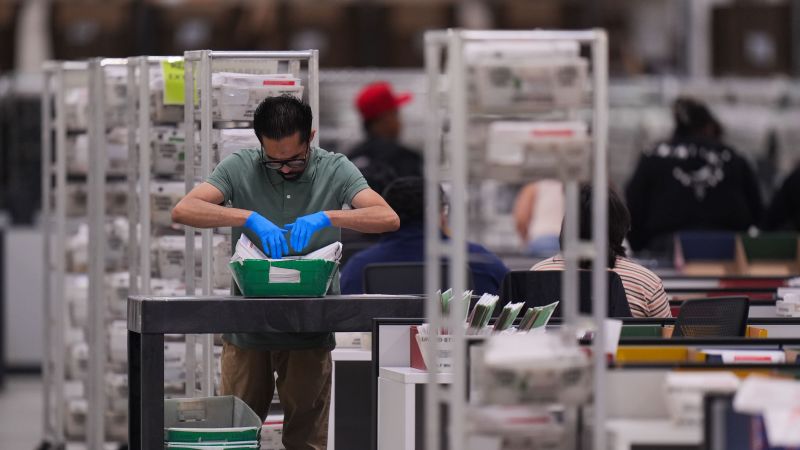
While there is no concrete evidence of fraud in California’s election results, the narrative has gained traction on social media. The state’s ballot-counting process, which takes considerable time due to its methodical procedures, has been framed as an opportunity for manipulation. Late-counted mail ballots, which have historically leaned Democratic, are now being scrutinized more intensely. This phenomenon, fueled by a combination of disinterest in technical details, algorithmic echo chambers, and political motivations, has led to widespread belief in the idea that Democrats are altering the outcome of key races.
The claims have even reached Republicans who once dismissed such theories. After five years of voter fraud fever on the right fading into dormancy, the issue is once again dominating conversations. This revival is notable, as it echoes the chaos that followed the January 6, 2021, Capitol riot, where similar rhetoric led to significant political unrest. Florida Governor Ron DeSantis, who was once a moderate voice in the debate, now represents this shift. Earlier in the 2024 GOP presidential primaries, he challenged Trump’s stolen election claims, stating, “All those theories that were put out did not prove to be true.” But recently, DeSantis has suggested that new votes in California “always seem to go one way,” implying a deliberate effort to skew results.
California’s Electoral Process Under Scrutiny
California’s voting system is designed to ensure accuracy and transparency, yet it has become a focal point for skepticism. The state’s lengthy ballot-counting procedures, which allow for meticulous verification, have been interpreted by some as a vulnerability. However, these delays are a feature of California’s electoral structure, not a flaw. Mail ballots, which account for a substantial portion of votes, are often counted after the initial tabulation, and this process has consistently favored Democrats in recent elections.
Yet, this dynamic has been leveraged by Republicans to question the integrity of the system. Trump’s consistent attacks on mail voting, which he argues disproportionately benefits Democrats, have inadvertently created a climate of distrust. Even as California’s election officials have debunked numerous claims, the narrative persists. For instance, in the Los Angeles mayoral race, conspiracy theories about the addition of thousands of votes without proper attribution have circulated widely, despite being disproven by the local US attorney’s office.
Law Enforcement and Political Motivation
The US Department of Justice has played a role in amplifying these concerns. On the weekend, the Los Angeles US attorney’s office announced “multiple election fraud investigations,” citing “serious structural vulnerabilities” in the process. While these investigations are not yet conclusive, they have contributed to the perception that California’s elections are compromised. Jay Clayton, the US attorney for the Southern District of New York, further stoked this sentiment during a CNBC interview. Though he refrained from outright accusing California of fraud, he suggested the state had created “the opportunity for fraud,” a phrase that blurs the line between observation and accusation.
Clayton’s remarks were particularly striking when he was asked about viral claims of mass vote addition in the Los Angeles mayoral race. Despite the local US attorney’s office having already refuted these assertions, Clayton did not challenge the narrative. His hesitation underscores the growing influence of political narratives over factual analysis. Similarly, House Speaker Mike Johnson has claimed that proving fraud in California is “impossible,” describing the situation as “stinks to high heaven.” He argues that some efforts to uncover discrepancies are so “diabolical” that they operate “so far upstream” it’s hard to trace.
Social Media and the Amplification of Doubt
Social media platforms have accelerated the spread of these theories, creating a feedback loop that sustains skepticism. Users are increasingly convinced that Democrats are systematically altering outcomes, even as data shows otherwise. Trump, ever the catalyst, has capitalized on this by repeatedly emphasizing California’s “big lead” for Democrats after primary day. On Truth Social, he declared, “Rigged Elections!” in response to the Los Angeles mayoral race results, where Republican Spencer Pratt fell behind.
While the situation in California is unique, the broader implications are alarming. The state, often an afterthought in national politics, has become a battleground for ideological battles. The influx of attention from right-wing figures, including former Fox News host Steve Hilton, has transformed California into a symbolic target. This focus has allowed minor disputes to be magnified into major crises, reminiscent of the 2020 election’s aftermath. The question now is whether this renewed fervor will lead to actionable changes or simply deepen partisan divides.
A Legacy of Distrust
The resurgence of voter fraud claims in California is not an isolated event but part of a larger pattern. Since the 2020 election, the GOP’s focus on fraud has shifted from a specific narrative to a broader strategy. Trump’s struggle to convince his own Justice Department of the validity of his claims led to the appointment of Jeffrey Clark, a former attorney general, to champion his theories. Today, the DOJ appears to be aligning with these suspicions, raising concerns about the politicization of law enforcement.
While California’s election process is robust, the current climate of doubt is shaping public perception. The state’s deep-blue electorate and its historical tendency for late-counted votes to favor Democrats have made it a prime example of the “stolen election” narrative. However, the speed at which these claims have resurfaced suggests a deeper issue: the erosion of trust in institutions and the prioritization of political narratives over evidence. As the debate over California’s elections intensifies, the challenge will be to distinguish between legitimate concerns and manufactured conspiracies.
For many on the right, the idea that California’s elections could be “stolen” has become a rallying cry. Meghan McCain, a conservative commentator, noted this shift when she responded to a clip of Trump’s remarks. “For whatever it’s worth, people in my life who have never ever spoken about stolen elections in any capacity are now saying this about California,” she observed. This sentiment reflects a growing willingness to accept skepticism as a norm, even when the underlying evidence is lacking.
As the California elections draw closer, the focus on fraud may overshadow the actual candidates and issues at stake. The state’s voters, who have long supported Democratic candidates, are now being framed as the perpetrators of a larger scheme. This rebranding of distrust is a reminder of how quickly political narratives can evolve and how deeply they can influence public opinion. Whether this will lead to meaningful reforms or just heightened polarization remains to be seen. But one thing is clear: the idea of a stolen election is no longer confined to the past—it is resurfacing with renewed intensity.
