
After 40 years in Congress, Nancy Pelosi to help create institute to train leaders of the future
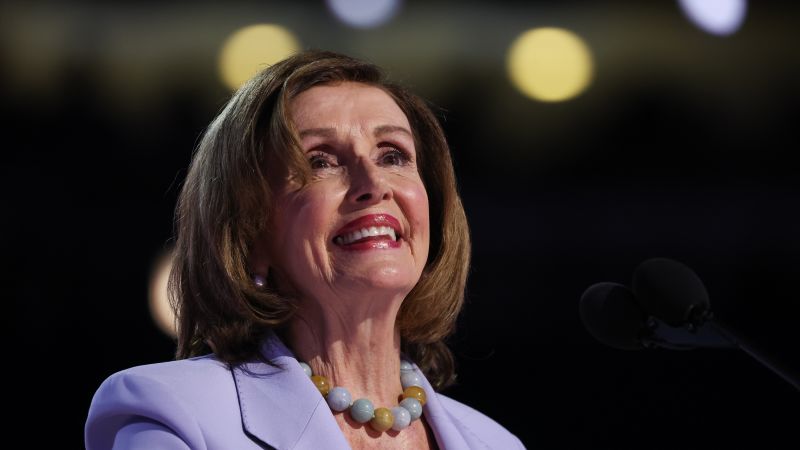
After 40 Years in Congress, Nancy Pelosi to Help Create Institute for Future Leaders
After 40 years in Congress Nancy – As her 40-year congressional career draws to a close, Nancy Pelosi, the Democratic representative from California, has announced her next chapter. No longer will she be returning to Capitol Hill in January, a milestone she has not reached since 1985. Instead, the former House speaker has chosen to channel her vast experience into a new endeavor: the Nancy Pelosi Institute at the University of California, Berkeley. The institute, set to open in January 2027, aims to cultivate the next generation of leaders through research, education, and civic engagement.
A New Vision for Leadership Development
Pelosi’s transition from political office to academia reflects her desire to focus on broader societal goals. In a recent phone interview, she shared her perspective on the institute’s purpose, stating, “I believe that public servants who have the chance to act should use their expertise to prepare leaders for the future.” She highlighted the institute’s mission as being rooted in the values of the Constitution’s founders, emphasizing its role in fostering dialogue about democracy’s challenges and opportunities.
“I viewed this as a liberation for me from the political, not politics, but partisanship. Because you’re going to an academic institution. It’s about what our founders had in mind with our Constitution, and it’s a beautiful story to tell,” Pelosi said.
The idea for the institute emerged from a group of Berkeley administrators and eight faculty members who approached her nearly a year ago. Pelosi described the proposal as both flattering and captivating, though she admitted being initially taken aback by the concept. “I was surprised, and it took me some time to decide to move forward,” she revealed, adding that the bipartisan nature of the project was particularly appealing.
A Bipartisan Focus on Global Issues
What resonated most with Pelosi was the institute’s commitment to neutrality and collaboration across party lines. “I loved it because they talked about human rights in the US and in the world, addressing the challenges to our democracy, and tackling climate change and economic inequality,” she explained. These themes align closely with the priorities she championed during her decades in Congress, from healthcare reform to civil rights advancements.
Pelosi’s agreement to fund the institute came with a personal touch. She raised $25 million before the official announcement, a feat she said was “quite easily” achieved thanks to her reputation as a skilled fundraiser. The university’s press release confirmed a $50 million campaign for the institute, underscoring its scale and significance.
A Technology-Driven Approach
Contrary to traditional academic institutions, the Nancy Pelosi Institute will not be a physical building. “It’s not going to be a brick-and-mortar thing,” Pelosi clarified, noting that the focus will be on programmatic initiatives. When asked if the institute’s name would appear on a structure, she chuckled, “I hope not.”
“They have classrooms, they have auditoriums, they have theaters. But the real value lies in the ideas and technologies that bring these spaces to life,” she said.
Pelosi envisioned the institute as a dynamic hub where innovation and education converge. She emphasized that technological tools would enable the presentation of historical and legislative milestones in engaging ways. “It’s about technology. Anything you want to convey, you can convey technologically,” she noted. While physical artifacts like awards and legislative documents will be displayed, she argued that the emphasis should be on storytelling and understanding the “how” behind these achievements.
Legacy and Future Engagement
Despite stepping down from her political role, Pelosi remains deeply connected to the issues that shaped her career. Her papers, including records from her time as House speaker, are currently housed at the Library of Congress. However, the institute will feature a dedicated exhibit showcasing her accomplishments, such as pivotal legislation she co-authored and accolades she has received over the years.
“It doesn’t mean you don’t want physical evidence so that people have excitement about seeing the original … but people want to know how these things happened more than what they were exactly,” Pelosi said.
She also mentioned that the exhibit might include some “personal effects” to create a more relatable and interactive experience for visitors. This component is expected to debut in the spring of 2027, coinciding with the institute’s full launch. Pelosi’s goal is to make the institute not just a repository of her work, but a living institution that inspires new ideas and dialogue.
Bridging Generations and Partisan Lines
Looking ahead, Pelosi plans to leverage her influence to bring together leaders from both parties. She aims to invite high-profile figures for lectures and discussions, fostering a cross-partisan exchange of perspectives. Her collaboration with Professor Eric Schickler, a renowned expert on Congress, will include co-teaching a course, blending academic rigor with real-world political insight.
“If you’re trying to engage another generation to prepare them for the future, you must listen to them. That’s the exciting part of it,” Pelosi said.
While the institute represents a shift in her focus, Pelosi has not abandoned her political ambitions. She remains vocal about the upcoming November elections, expressing confidence in the Democratic Party’s ability to retain control of the House. “We’re going to win the House,” she stated, reflecting her enduring commitment to advocacy. Yet, she also acknowledged the importance of leaving a legacy that transcends individual victories.
Her decision to create the institute signals a strategic move to ensure her impact endures. By investing in education and civic engagement, Pelosi hopes to empower future leaders to address complex challenges like climate change, economic disparity, and the preservation of democratic values. The institute’s bipartisan ethos is designed to mirror the collaborative spirit she believes is essential for progress.
As the project gains momentum, Pelosi’s transition from politician to academic leader has already sparked interest. The Nancy Pelosi Institute will serve as a testament to her long-standing dedication to public service, offering a platform for dialogue, learning, and innovation. With its launch approaching, the institute promises to play a vital role in shaping the next chapter of American leadership.
