
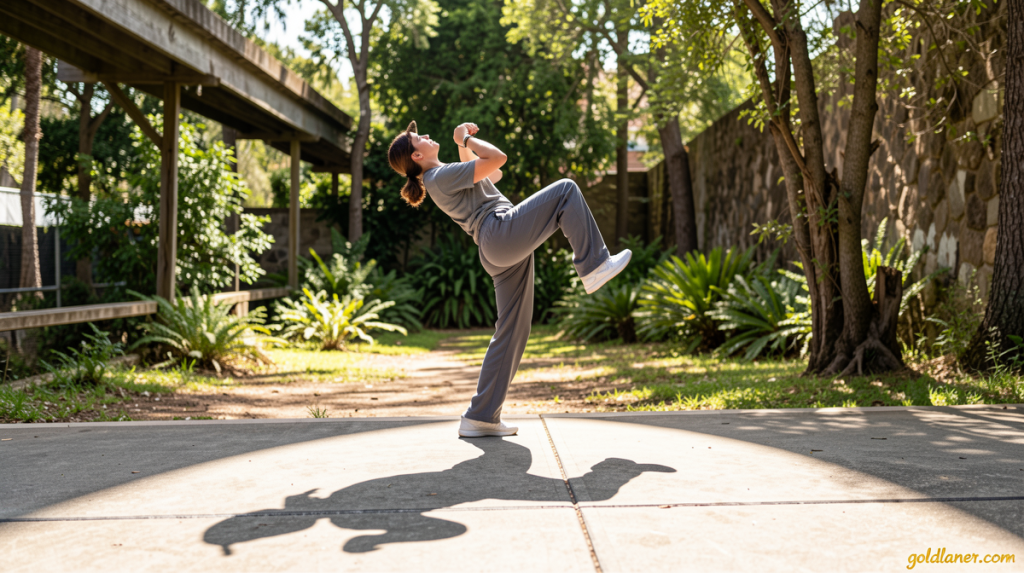
Two Years After Paris, Australia’s Raygun Steps Out of the Viral Spotlight
Goldlaner.com – Breakdancing made its Olympic debut at the Paris Games in 2024, and almost overnight the sport’s newest global face became a 24-year-old Australian named Rachael Gunn — better known to the internet as Raygun. Her routine, which wove in distinctly Australian flourishes like the sprinkler dance and a kangaroo hop, did not win medals. It won something far more persistent: a permanent place in the world’s collective memory of viral embarrassment. Now, with two full years of distance behind her, Gunn is finally prepared to tell the story on her own terms.
A Documentary Built Around One Question
Netflix will premiere Untold Raygun: Breaking Badly on September 1, a feature-length film that traces Gunn’s journey into breakdancing, the turbulent road that led her to the Paris competition floor, and the psychological aftershock of becoming the most-mocked athlete on the planet within hours of finishing her set. The project was not conceived as a rebuttal or a revenge narrative. Gunn frames it more as a reckoning — a chance to process, in public, what she privately described as feeling like she was
“falling into a dark pit.”
Speaking from her Sydney home ahead of the film’s launch, Gunn emphasized that the decision to go public came only after sustained therapeutic work. She credits therapy sessions with giving her the emotional architecture to revisit footage, interviews, and public reactions without reliving the acute distress of the moment.
The Paris Performance and Its Immediate Aftermath
Gunn competed against three other breakdancers in Paris. Her choreography was an act of cultural self-expression: she wanted the audience to see Australia in her movement vocabulary, not just another technically polished routine. The sprinkler dance, a homegrown Australian street-dance form, and the kangaroo hop were deliberate signatures. The judges, however, scored her 18-0 across all three rounds. The result was decisive, and the internet’s response was instantaneous.
Within days, Gunn’s clip had migrated far beyond sports coverage. She appeared on TMZ and on Joe Rogan’s podcast. Rachel Dratch performed a parody sketch on The Tonight Show. Adele paused a live concert to reference the moment. Each new appearance compounded the previous one, and the narrative hardened into something Gunn did not choose: a cautionary tale about athletic inadequacy, amplified by false conspiracy theories alleging that she and her husband-and-coach Samuel Free had manipulated the qualification process.
What Gunn Says She Learned
In conversation ahead of the documentary’s release, Gunn walked through how the two-year gap changed her relationship to the Paris footage. She acknowledged that watching her own performance for the first time after the event produced a small, surprising relief — a quiet realization that the routine was not as catastrophic as her memory had insisted.
“Oh, it’s not as bad as I thought!”
She was candid about the documentary’s depiction of her pre-competition state: visible anxiety, a panic attack in the Olympic Village, and a clear-eyed awareness that her physical conditioning did not match the other finalists. None of that, she insists, would have changed her decision to compete.
“It was important to me to go out there and be myself, to be creative and to not be afraid to be different. No regrets.”
On the question of whether she can simply be a meme, her answer is blunt:
“I can’t just be a meme.”
Gender, Scrutiny, and the Broader Conversation
Gunn also addressed what she perceives as a gendered dimension to the backlash. As a woman in a physically demanding, traditionally male-coded dance form, she believes her performance attracted a sharper, more personalizing critique than a male dancer delivering a similar routine might have faced. The documentary does not present this as a grievance but as a lens through which she now understands the intensity of the response she received.
Why Now, and Why This Format
Asked why she waited two years before telling her side, Gunn pointed to the practical value of temporal distance. The noise — misinformation, speculation, conspiracy threads — needed time to dissipate before a measured account could land. She described the documentary as something she watched with a glass of champagne, noting that the elapsed time made the material feel less raw, less immediate.
“Paris is now just a part of my story. For me, it’s more about radical acceptance of everything that’s happened and just one foot in front of the other, just trying to move ahead.”
For audiences who remember only the clip, the documentary offers a fuller portrait: a dancer who chose creative authenticity over technical conformity, who lost decisively, and who spent twenty-four months rebuilding her relationship with her own body, her own ambition, and the public’s appetite for spectacle. The September 1 release arrives at a moment when breakdancing is still finding its footing as an Olympic discipline, and Gunn’s story — whatever one thinks of the scoring — has already reshaped how the sport is discussed outside the competition floor.
Related Reading
Frequently Asked Questions
What is After lots of therapy Raygun is ready?
After lots of therapy Raygun is ready is the main topic of this guide. The article explains the context, practical details, and next steps readers should understand.
Why does After lots of therapy Raygun is ready matter?
After lots of therapy Raygun is ready matters because readers are looking for a useful answer, not just a short summary. Good content should match search intent and help them decide what to do next.