
Uber and Wayve team up to launch driverless cars in London this summer
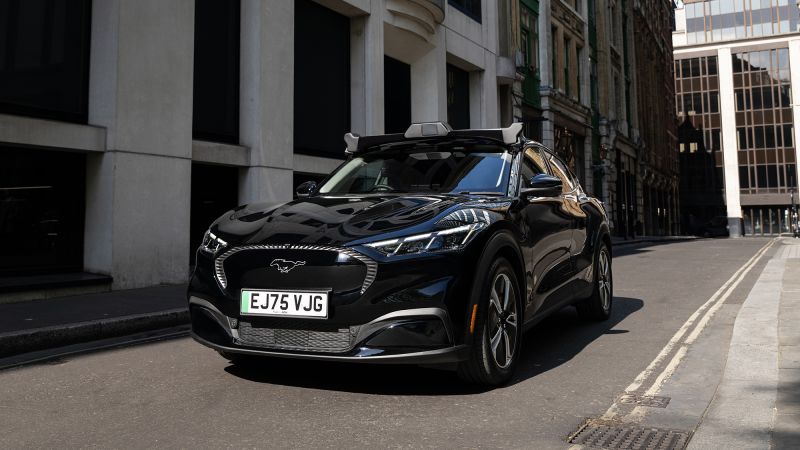
Uber and Wayve Collaborate to Introduce Autonomous Vehicles in London
Uber and Wayve team up to launch – London is set to welcome driverless cars this summer, marking the first time the city will host AI-powered vehicles in public service. The partnership between Uber and British-based Wayve aims to transform transportation in one of the world’s most traffic-choked metropolises. This milestone represents the beginning of Wayve’s global expansion, with plans to deploy robotaxis in over 10 cities, including Tokyo, by the end of 2026. The initiative highlights the rapid evolution of self-driving technology, which is now transitioning from experimental phases to real-world implementation.
The Global Expansion of Robotaxis
Wayve, founded in 2017, has been refining its autonomous vehicle systems since 2018, with London serving as a critical testing ground. The company’s recent announcement to launch a limited public service in the city underscores its confidence in the technology’s readiness. Fischer, Wayve’s vice president of operations, emphasized the significance of the move, stating, “We’re really excited to launch this imminently and get public riders into our (vehicles).” The rollout will initially feature dozens of cars, not hundreds, reflecting a cautious but ambitious approach to scaling the service.
A Safety-First Approach to Deployment
Wayve’s strategy includes a phased implementation, beginning with human-supervised rides. Licensed Uber drivers will oversee operations during the early stages, ensuring safety while the system gains public trust. Fischer explained, “This approach would ‘prove safety’ and ‘build trust’ among the public.” The company plans to gradually remove human monitors as its technology demonstrates reliability. However, she clarified that the timeline for full autonomy is flexible, prioritizing thorough testing over rapid deployment.
While the focus is on London, the rise of self-driving vehicles has sparked broader attention globally. In the U.S., companies like Waymo have already introduced autonomous taxis, yet recent reports by CNN reveal incidents such as cars running red lights and colliding with oncoming traffic. These events have raised questions about the safety of fully autonomous systems. Fischer, however, defended the technology, arguing that autonomous vehicles are “never drowsy, never distracted” and can process environmental data with greater precision than human drivers. She noted, “The stats speak for themselves,” highlighting the potential for improved road safety.
Technological Innovation and AI Integration
Wayve’s technology is rooted in what is termed “Embodied AI,” or AI embedded within physical systems. Unlike competitors that retrofit existing vehicles with autonomous hardware, Wayve’s system is built directly into the car during manufacturing. This integration allows the vehicle to function as a self-sufficient “robot brain,” learning and adapting to real-world conditions. Fischer acknowledged that this approach was once considered unconventional, stating, “Back when Wayve was founded (in 2017), nobody thought automotive would put AI on a car.”
Recent advancements in artificial intelligence and cloud computing have accelerated the development of such systems. Fischer pointed out that the growing public awareness of generative AI, like ChatGPT, has also played a role in shaping the narrative around autonomous vehicles. “Wider public awareness of generative AI systems has helped,” she said, underscoring the synergy between technological progress and consumer acceptance.
Legal and Policy Support in the UK
The UK government’s proactive stance on self-driving technology has been a key enabler for Wayve’s expansion. Fischer praised the country’s “clear legal approach” to autonomous vehicles, specifically referencing the Automated Passenger Services framework. This regulatory environment provides a structured pathway for testing and deployment, which she believes has given the industry a competitive edge. “The UK government has also really doubled down on investing in AI,” she added, noting that such investments are crucial for sustaining innovation in the sector.
As Wayve prepares for its London launch, the company is positioning itself as a leader in the autonomous vehicle space. The collaboration with Uber not only leverages the ride-hailing giant’s infrastructure but also taps into its existing network of drivers and passengers. This partnership could serve as a model for other cities, demonstrating how AI-driven solutions can be tailored to urban environments. Yet, challenges remain, including navigating complex legal frameworks, ensuring public confidence, and addressing concerns about safety and reliability.
Future Implications and Industry Growth
Wayve’s entry into London is part of a larger trend of autonomous vehicles reshaping global mobility. With more than 10 cities in the pipeline, the company is optimistic about its ability to scale the service. Fischer described the transition to fully driverless operations as a “gradual process,” emphasizing the importance of building a robust safety case before removing human oversight. “Our technology equips vehicles with a ‘robot brain’ that can learn from and interact with real-world environments,” the company states on its website, highlighting its commitment to innovation.
Despite the progress, the journey to full autonomy is not without hurdles. The recent CNN investigation into Waymo’s incidents in the U.S. has brought scrutiny to the sector, but Fischer sees these challenges as opportunities for improvement. “The sudden proliferation of self-driving vehicles has heightened scrutiny,” she noted, adding that the technology’s evolution is now a present-day reality rather than a futuristic dream. As cities like London and Tokyo prepare to embrace this change, the balance between innovation and safety will remain central to the success of autonomous transportation.
Conclusion: A New Era of Mobility
The launch of Wayve’s driverless cars in London signals a pivotal moment in the automation of urban transport. By combining Uber’s operational expertise with Wayve’s cutting-edge AI, the project aims to set a new standard for mobility solutions. Fischer’s emphasis on safety and gradual implementation reflects a broader industry trend of prioritizing public trust. As the technology continues to mature, the potential for autonomous vehicles to reduce congestion, lower emissions, and enhance accessibility becomes increasingly tangible. However, the path forward will require ongoing collaboration between companies, governments, and communities to ensure that the benefits of this innovation are realized without compromising safety.
