
Britain hopes this man will save its economy. We went to Manchester to find out why
Manchester’s Rising Star Eyes the Top Job
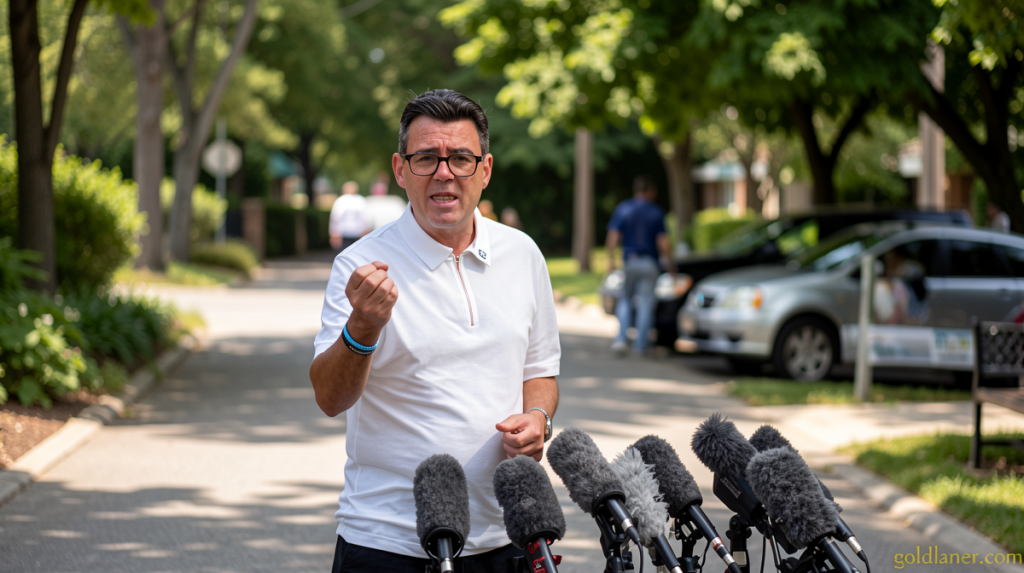
Britain hopes this man will save – Britain is searching for renewed vitality. Economic headwinds persist, public services face mounting pressure, and progress in everyday living standards has stagnated over recent decades. Political turbulence has become routine, casting a somber tone over the nation. Could Andy Burnham provide the optimism the country craves? The former mayor of Greater Manchester in northern England is set to assume the role of the United Kingdom’s seventh prime minister within ten years this Monday, succeeding Keir Starmer as head of the governing Labour Party. He envisions “a new era of possibility” for the nation.
Where his predecessor struggled with personal magnetism, Burnham possesses natural communication skills and a relaxed demeanor that energizes crowds. People find him approachable and amusing—particularly through his fondness for “dad jokes”—while his smart-casual wardrobe choices help him connect with ordinary citizens. His political resume runs deep, encompassing years as an elected representative and cabinet minister before he relocated from London to Manchester in 2017. His ambition now centers on exporting “Manchesterism”—his distinctive model of socially democratic policies that welcome business while empowering local communities—across the capital and throughout Britain.
“I am going to give Britain the circuit breaker it needs,” he declared during a recent address, marking his third attempt over sixteen years to lead the Labour Party.
During his nine-year tenure as mayor of Greater Manchester, Burnham guided a metropolitan area whose economic expansion outpaced the national average by approximately double. The transformation has been so profound that Lucy Ellison, now thirty-three and managing a café, barely recognizes the place where she spent her childhood. After spending twelve years working in hospitality across the United States and Amsterdam, she returned home two years ago. “It feels like a different city,” she explained to CNN, highlighting the “quirky wine shops and independent bakeries we never used to have.”
Today, wine bars, specialty coffee establishments, and upscale cafés dot the landscape, creating an atmosphere of optimism and ambition. Condé Nast Traveller recently crowned Manchester as the UK’s “brightest foodie destination.” This thriving hospitality sector has benefited local enterprises like Hip Pop, a soda and kombucha producer. Emma Thackray launched the venture from her kitchen in 2019, initially peddling products at markets across northern England. The company now occupies shelves in most major British supermarkets and reaches consumers in multiple European nations. “Build a global brand, from the heart of Manchester,” Thackray told CNN, expressing enthusiasm about the numerous positive developments in the city where she studied as a university student more than twenty years ago.
On Deansgate, a downtown thoroughfare, thirty-two-year-old artist Helen Davies works within a shop window on paintings titled “Love Notes to Manchester,” celebrating a location she “continues to fall for,” according to a display in the window. Brightly colored steps nearby ascend to Deansgate Mews, home to a diverse array of dining establishments. Young professionals enjoy meals outdoors or type diligently on laptops, representing a growing wave of recent arrivals, many relocating from London. Financial powerhouse J.P. Morgan established its inaugural British office here in 2023.
Manchester offers lower costs than London while maintaining excellent restaurants, lively nightlife, and superior arts programming. Roughly ten minutes on foot from Deansgate Mews stands Aviva Studios, a massive cultural facility inaugurated in 2023 that currently presents a significant exhibition by Chinese artist Ai Weiwei. This venue represents the UK’s most substantial investment in a cultural undertaking since the Tate Modern opened at the century’s beginning.
“Manchester is something else,” Fraser Millward told CNN. “It’s got an energy about it that’s unlike anything else in the UK. It’s got a really exciting buzz.”
Millward knows both venues well, having departed a two-decade career in London’s theater and live events sector in 2021 to work as a technician for Factory International, the organization managing Aviva. The city’s current prosperity contrasts sharply with its past. Once a dominant force during Britain’s nineteenth-century industrial revolution, Manchester entered “almost terminal decline” by the 1980s, according to Richard Leese, who directed Manchester City Council from 1996 through 2021. The city’s prolonged recovery stemmed from an extended strategic framework featuring collaborations between commercial enterprises and government to channel investment into infrastructure, workforce development, and educational institutions. A comprehensive city center reconstruction formed a crucial component of this revitalization effort.
