
The fight for Michigan: How a marquee Senate primary became the Democrats’ latest proxy war
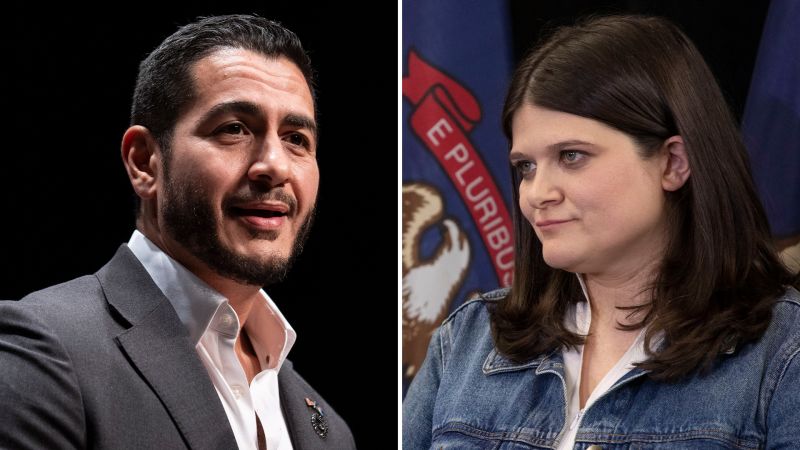
Michigan’s Senate Race: A Battleground Within the Democratic Party
Internal Struggles Take Center Stage
Goldlaner.com – When Senate Democratic Leader Chuck Schumer summoned retiring Senator Gary Peters to his office in late June, he wasted no time getting to the heart of the matter. The conversation centered squarely on Michigan’s upcoming primary contest, with Schumer expressing concern that Abdul El-Sayed’s polling strength had diminished from earlier peaks. This presented an opportunity, Schumer thought, to defeat the former health director for Wayne County. Ideological differences and electoral fears combined in Schumer’s reasoning—he worried El-Sayed, who positions himself away from both the Bernie Sanders movement and anti-Israel factions, would struggle against former Representative Mike Rogers in November.
According to Schumer’s assessment, the three-way Democratic contest had devolved into chaos. State Senator Mallory McMorrow, despite her efforts, appeared unlikely to secure victory. While never explicitly stated, Peters understood his assignment: convince McMorrow to withdraw and allow Representative Haley Stevens to face El-Sayed in a head-to-head battle.
A Microcosm of National Divisions
Tuesday’s primary has evolved into something far greater than a simple local contest. It now represents a broader examination of Democratic Party tensions playing out on a national scale. With McMorrow’s departure from the race, Stevens has emphasized her tenure working under former President Barack Obama alongside her commitment to addressing manufacturing concerns and other Michigan-specific issues. Her campaign has benefited enormously from external financial support exceeding fifty million dollars.
Meanwhile, El-Sayed has constructed his campaign message around Medicare for All while simultaneously directing criticism toward the American Israel Public Affairs Committee and other organizations attempting to undermine his candidacy. Regardless of the outcome, this contest in a pivotal purple state—historically crucial for determining White House victories and potentially decisive for Senate control this year—stands as the most compelling demonstration yet of a party fractured into competing factions, with its establishment leadership struggling to maintain cohesion.
“There are a lot of very strong, intense feelings right now, and we have to bring people together because we have to remember what the November election is about. It is about winning the House and the Senate, so we cannot lose the Senate seat,” said Rep. Debbie Dingell, one of the few Michigan Democrats who have not taken sides in the Senate primary.
“Nobody can like the kind of brutality, the ugliness that we have seen,” she said. “That makes it harder to come together. But we have no choice.”
The Establishment Pushes for Stevens
Schumer’s initial preference for Peters’ successor was term-limited Governor Gretchen Whitmer, reflecting his consistent pattern of favoring candidates with prior statewide electoral victories. Whitmer, however, firmly declined Schumer’s overtures. For months, Schumer and Senator Kirsten Gillibrand of New York, who chairs the Democratic Senatorial Campaign Committee, had signaled their unofficial support for Stevens through invitations to donor gatherings and coordinated financial backing.
Gillibrand went further, reportedly warning several donors that McMorrow had belonged to the Democratic Socialists of America—a characterization that proved inaccurate. Her spokesman, James Singer, later told CNN that Gillibrand felt confident Democrats were positioned to defeat Rogers and maintain their three-decade hold on the seat.
Peters’ Quiet Mission
While Schumer managed numerous complex races across the country during spring, his concerns about Michigan never wavered. His personal consultation with Peters reinforced his belief that the National Republican Senatorial Committee’s efforts to strengthen El-Sayed’s campaign were well-founded, targeting genuine vulnerabilities. Encouraged by his wife, Peters embarked on his mission using his characteristic understated approach.
MCMorrow’s frustration became evident after a Wall Street Journal article published on June 26 referenced Peters’ suggestion that she consider withdrawing. The two did not communicate again until McMorrow provided advance notice on July 5 that she would suspend her campaign. Advisers convinced her that remaining in the race risked painting her as a spoiler should she pursue future political office.
Stevens viewed McMorrow’s exit as fortunate timing, though she initially struggled to determine her next strategic moves, according to two individuals familiar with her thinking. The race now enters its final hours with both campaigns acknowledging that regardless of victory, the internal wounds inflicted could prove costly in November’s general election.
Related Reading
Frequently Asked Questions
What is The fight for Michigan?
The fight for Michigan is the main topic of this guide. The article explains the context, practical details, and next steps readers should understand.
Why does The fight for Michigan matter?
The fight for Michigan matters because readers are looking for a useful answer, not just a short summary. Good content should match search intent and help them decide what to do next.
