
Russia’s new target: Ukrainian civilians filling up at gas stations
Ukraine’s Fuel Stations Under Siege: A New Front in the War
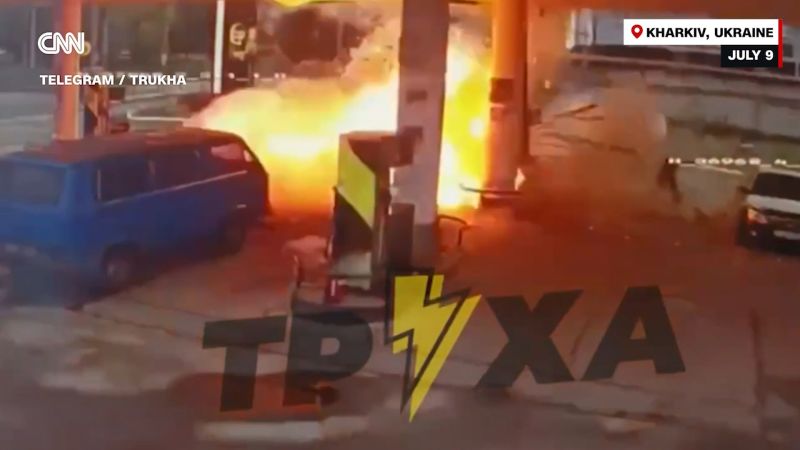
Goldlaner.com – Mykhailo Tsypliakov was among the first responders when flames engulfed a local gas station. As he and fellow officers rushed toward the blaze, the distinctive hum of an approaching drone grew louder. He dropped to the ground just in time. “I saw a flash, then got up right away,” Tsypliakov recalled. “I saw that my arm, legs and torso were injured.” His experience represents just one chapter in Russia’s expanding campaign against Ukrainian civilian infrastructure, specifically targeting fuel distribution centers.
A Growing Assault on Civilian Life
Ukrainian authorities report that more than 200 gas stations have suffered damage during June and July alone. This translates to approximately three facilities struck each day. According to Tsypliakov, the strategic objective extends beyond physical destruction. “They’re aimed, to intimidate, to sow fear and panic,” he explained. “Panic is the scariest thing right now. Because when a person panics, they lose control of themselves.”
While many attacks concentrate on stations positioned near active combat zones—making them accessible to Russian attack drones—other weapons systems have also contributed to the mounting casualties. Long-range airstrikes, extended-distance drones, and compact close-range UAVs have all played roles in damaging facilities, including those located near Ukraine’s capital city.
Mirroring Russian Chaos
Ukrainians interpret this Russian offensive as an attempt to replicate the disorder witnessed at Russian fuel stations. Repeated Ukrainian strikes on Russian refineries created massive queues for gasoline across Moscow and other major urban centers. The parallel is not lost on either side.
This escalation coincides with warnings from Western officials about potential intensification from Russian President Vladimir Putin. The response comes as Kyiv’s sustained drone campaign against Russian industrial facilities continues to exact a heavy toll. Overnight into Saturday, at least nine individuals lost their lives while more than thirty others sustained injuries during Russian ballistic missile strikes targeting Kyiv, according to Mayor Vitali Klitschko.
Seven districts within the capital experienced fires and structural damage. The Solomyanskyi district in the western part of the city saw a five-story residential building partially collapse. This event followed a devastating aerial assault earlier in the week that also utilized powerful ballistic missiles.
Expanding Geographic Reach
Visual evidence has emerged showing Russian delivery warehouses and refineries burning, challenging Moscow’s narrative of security after four years of conflict. The United Nations has documented that June marked the deadliest month for Ukrainian civilians since 2022. Russia has deployed record quantities of ballistic missiles during recent weeks.
A CNN investigation identified and verified at least thirty video recordings documenting attacks on Ukrainian gas stations throughout June and July. Regina Kharchenko, who serves as acting mayor of Zaporizhzhia, reported that her city endured fifty-four strikes on fuel stations within a twenty-four-day window ending July 27. These attacks resulted in four deaths and twenty-nine injuries.
“This is deliberate terrorism targeting civilian infrastructure and civilians,” said Kharchenko. “Russia is deliberately targeting facilities that have no military significance, but… are essential to the daily functioning of a big city.”
Zaporizhzhia’s proximity to Russian drones has increased significantly. These aircraft now operate beyond the traditional frontline “kill zone,” allowing Moscow to harass and eliminate targets within major population centers. Kramatorsk, situated in the Donbas region and increasingly close to Russian territorial advances, and Kharkiv, positioned nearer to the Russian border, both face substantial pressure.
More Than Just Fuel
With commercial aviation suspended across Ukraine and the nation connected by extensive road and rail networks, gas stations serve critical functions beyond refueling. They provide spaces where evacuees, military personnel, and commercial drivers can rest and recover.
“Gas stations became these key points of refuge as people fled the war. Then Russia tried to cause an intentional blackout, cutting off electricity and heating to freeze us out in the winter,” said Yaroslav Starovoitenko, president of the Ukrainian Oil and Gas Association.
Starovoitenko noted that fuel stations maintained continuous generator operation. “These were places where people could drink hot tea, fill up their cars, warm up, and even prepare milk for their babies.”
Despite the ongoing violence, panic has not become universal. Serhiy, a man recently discharged from military service after sustaining serious wounds on the front line, expressed remarkable resilience. “If a strike comes here, what’s the difference?” he remarked. “It didn’t kill me on the front line, so it won’t kill me here.”
Vladyslav, a delivery driver navigating the uncertain landscape, captured the prevailing sentiment: “No one knows where the attack will strike, and no one knows what will happen next.”
Related Reading
Frequently Asked Questions
What is Russia s new target?
Russia s new target is the main topic of this guide. The article explains the context, practical details, and next steps readers should understand.
Why does Russia s new target matter?
Russia s new target matters because readers are looking for a useful answer, not just a short summary. Good content should match search intent and help them decide what to do next.
