
Historically low water level in two crucial US reservoirs threatens water and power millions
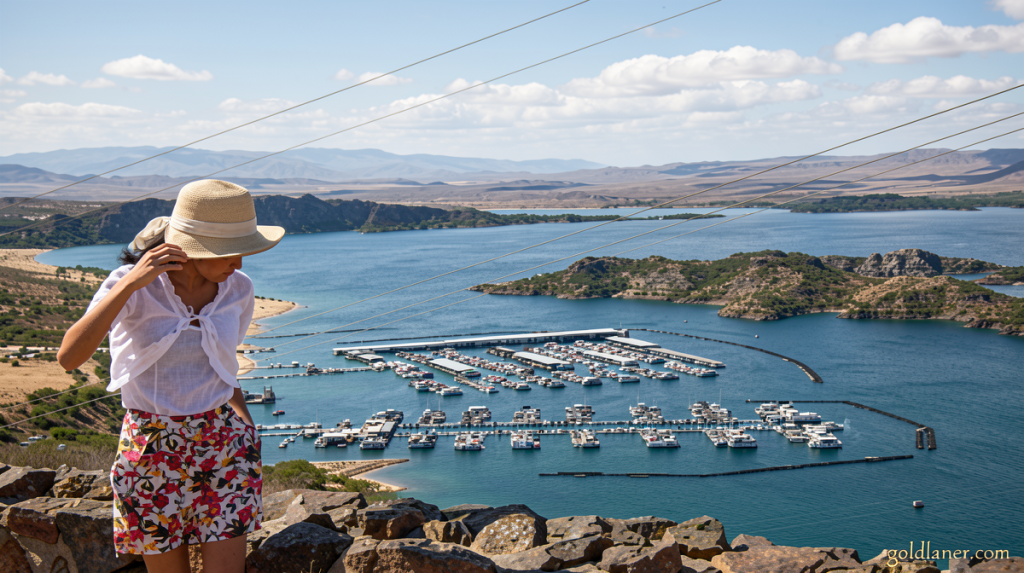
Historically Low Water Level in Two Reservoirs Threatens Southwest
A Record-Breaking Decline
Goldlaner.com – The Colorado River Basin has reached a critical threshold as historically low water level in two major reservoirs—Lake Powell and Lake Mead—has set new records. As of July 12, 2026, these twin lakes sit at their lowest combined elevation in nearly seven decades. Lake Powell measured 3,524 feet while Lake Mead dropped below 1,043 feet, surpassing the previous March 2023 record. This marks the first time since 1957 that both reservoirs have been this low simultaneously.
Jack Schmidt, director of the Center for Colorado River Studies at Utah State University, called this development “a milestone in the history of water storage in the Colorado River Basin.” He noted that the record demonstrates “the seriousness of the uniquely small amount of water that is presently stored in the basin’s reservoirs.”
The Colorado River’s Vital Role
Stretching 1,400 miles from the Rocky Mountains to the Gulf of California, the Colorado River sustains the American Southwest. The river irrigates over five million acres of farmland, generates electricity for approximately 700,000 households, and provides drinking water for 40 million residents across seven states.
Lake Powell and Lake Mead function as a single massive reservoir divided by the Grand Canyon. Together, they hold slightly less than 60 percent of all water in the Colorado River Basin. However, this critical reserve has been shrinking rapidly over the past 25 years. Rising demand combined with climate change—bringing hotter temperatures, drier conditions, and diminishing snowfall—has dramatically reduced the river’s flow.
Currently, 95 percent of the entire basin experiences drought conditions. Last winter proved particularly harsh for the western United States, which endured one of its warmest and driest seasons on record. This combination created what experts call a “snow drought,” where insufficient snowpack fails to act as the natural water tower that typically replenishes reservoirs throughout the spring and summer months.
What Comes Next
Since the record was first established last week, water levels in both lakes have continued their downward trajectory. Lake Powell, currently sitting at 23 percent capacity, has reached its lowest July level ever recorded. Based on present decline rates, the reservoir could hit its all-time minimum within the coming month. Meanwhile, Lake Mead holds 27 percent of its capacity and remains less than one foot away from its record low of July 2022.
Researchers project that Lake Mead and Lake Powell will establish a new combined record low every single day from this point until next spring, when winter snowpack runoff begins restoring water levels. A July report from the Bureau of Reclamation warns that Lake Powell could drop to “minimum power pool” status by spring 2027, a threshold at which the dam loses its ability to generate hydropower.
Sarah Porter, director of the Kyl Center for Water Policy at Arizona State University, explained that low reservoir levels signal “that the system is at risk of crashing, meaning reservoir levels so low that water cannot be delivered from them.”
State Negotiations Intensify
The crisis is reshaping negotiations among the seven states governed by the 1922 Colorado River Compact. Under this agreement, the four Upper Basin states—Colorado, New Mexico, Utah, and Wyoming—receive 7.5 million acre-feet annually, while the three Lower Basin states—California, Arizona, and Nevada—receive an equal allocation. As the river shrinks, all parties must accept reduced supplies, though the practical implementation remains unresolved.
A federally mandated February deadline for agreement passed without resolution. Porter noted that states face the difficult task of “agreeing to deep cuts and potentially new and complex management strategies that they have to go back to their states and ‘sell’ to their water users and decision makers.” Nevertheless, she suggested that “the new low may be a catalyst” for progress.
