
California AG Rob Bonta says a CNN spin-off wouldn’t resolve Paramount–WBD lawsuit
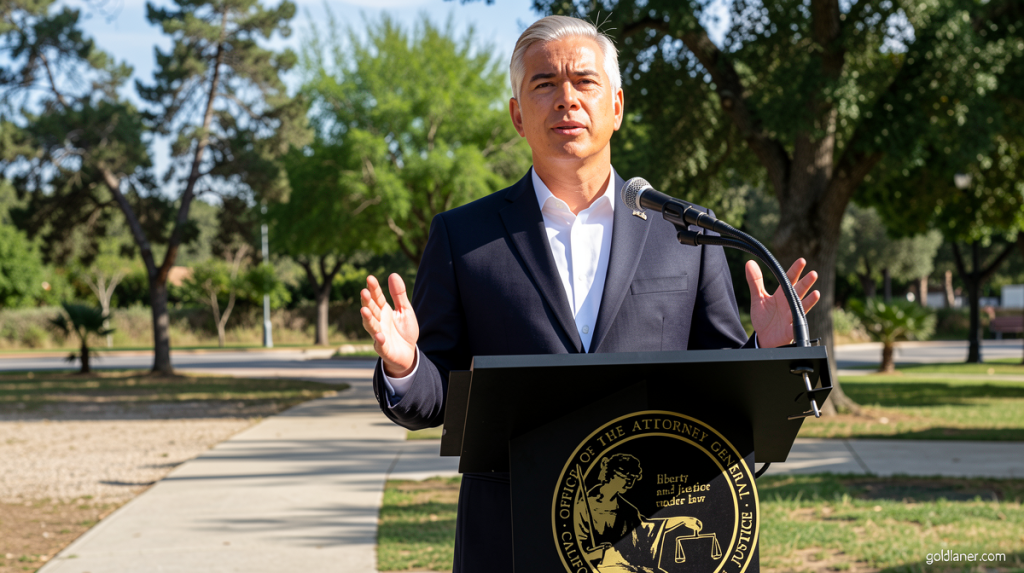
California Attorney General Addresses Paramount-WBD Merger Concerns Amidst Court Proceedings
California AG Rob Bonta says a CNN – Legal representatives for a coalition of twelve states working to prevent the Paramount and Warner Bros. Discovery merger presented their case in court on Friday. Their central argument emphasized that a temporary restraining order remains essential to halt the corporate combination. Judge Araceli Martínez-Olguín simultaneously considered Paramount’s counterarguments against implementing such a restriction. According to earlier CNN coverage, both parties anticipate the judge will grant a TRO, which would effectively suspend the merger proceedings for approximately two weeks while litigation continues.
Ultimately, Judge Martínez-Olguín chose not to deliver an immediate decision on Friday. She indicated that her formal ruling regarding the temporary restraining order would arrive by Wednesday, July 22. Prior to Friday’s courtroom session, I had the opportunity to speak with California Attorney General Rob Bonta, who serves as the primary leader of the Democratic attorneys general coalition opposing Paramount’s actions.
Bonta’s Perspective on the Legal Timeline
Bonta expressed optimism that the court would grant the TRO, though he recognized the process might require additional time. He stated he was “hopeful” regarding the outcome but acknowledged “it could take a few more days too.” The conversation naturally turned toward recent media speculation surrounding CNN, the associated financial obligations, and potential relocation of Paramount operations out of California.
Bonta noted that certain adversaries were “trying to take things out of context and create confusion.” He emphasized that “our complaint couldn’t be clearer” in its objectives and reasoning. Below are lightly edited excerpts from our discussion:
Are there any negotiations taking place with Paramount about a possible settlement?
“There are no negotiations. We are suing. We are in litigation. We have sued and sought a TRO and a preliminary injunction seeking to block the merger. That’s it. That’s full stop. That’s where we’re at.”
“Of course, if Paramount–Warner Bros. want to come forward in good faith and sincerely want to make a settlement offer, we’ll always consider a settlement offer. And it would have to include structural remedies. We’re not interested in behavioral remedies — empty promises, self-serving promises, promises that are unenforceable, that won’t be kept, that history shows won’t be kept. So we’ll consider what they propose, but they haven’t proposed anything.”
Structural Remedies and the CNN Question
When asked about the significance of seeking multiple structural remedies rather than a single solution, Bonta explained his reasoning. He stated, “Yeah, I don’t see how one single structural remedy [would be sufficient], unless that structural remedy is the two companies don’t merge, which is what we’re seeking.”
Media outlets have extensively covered speculation regarding one particular structural remedy: divesting CNN from Paramount. When questioned whether a CNN-only divestiture would resolve the lawsuit, Bonta’s response was unequivocal. He declared, “Absolutely, 1,000%, no. Not yesterday, not today, not tomorrow. Hell no.”
“It’s not adequate to address the concerns we set forth in our complaint.”
Bonta addressed recent comments by Brendan Carr and various news organizations suggesting otherwise. He clarified that while others have attempted to attribute certain positions to him or his associates, he has consistently maintained his stance. He emphasized, “I’ve never said that. I’ve never thought that. I will never think that or say that.”
He reiterated that a CNN spin-off alone would never resolve the case. “A divestiture of CNN, a spinoff of CNN, a structural remedy that just applies to CNN will never, ever, ever, ever, ever resolve this case,” he stated firmly. While the coalition would consider a broader package including CNN divestiture, it remains secondary to their primary objectives.
Bonta identified the coalition’s true focus areas: “the wide-release theatrical film market, the blockbuster theatrical release market, the cable channel market.” He characterized Paramount’s CNN narrative as part of an aggressive public relations effort designed to influence public perception rather than address substantive antitrust concerns.
“But it’s part of this Paramount PR campaign that’s in overdrive. I think they’re trying to play to the court of public opinion.”
He dismissed attempts to frame the lawsuit as purely political, noting that the antitrust analysis is thorough and well-founded. He observed that the merger appears presumptively unlawful across the three identified markets. Bonta concluded that characterizing the complaint as a Democratic AG initiative seeking to free CNN from Ellison family influence was “ridiculous” and disconnected from the actual legal arguments presented.
When asked whether avoiding Paramount ownership of CNN would be desirable but insufficient, Bonta confirmed this characterization. He explained, “We’re just not seeking it. It’s not the focus of our complaint. If they want to do that, I value it at more than zero. But it is very far from being close, even in [theoretical terms].” The coalition remains committed to comprehensive structural solutions that address the full scope of their antitrust concerns rather than accepting partial remedies that fail to resolve the underlying issues.
