
Venezuelan cemetery expands burials for earthquake victims, many of whom remain unidentified
Venezuelan Cemetery Expands Burials for Earthquake Victims
Venezuelan cemetery expands burials for earthquake – Workers at La Esperanza cemetery in Venezuela’s La Guaira state have been excavating fresh trenches to accommodate hundreds of victims from devastating twin earthquakes that struck nearly two weeks ago. The Venezuelan cemetery expands burials for earthquake victims as staff members in blue protective suits transport coffins into prepared graves. Despite ongoing operations, many of the deceased remain unidentified, leaving families in uncertainty.
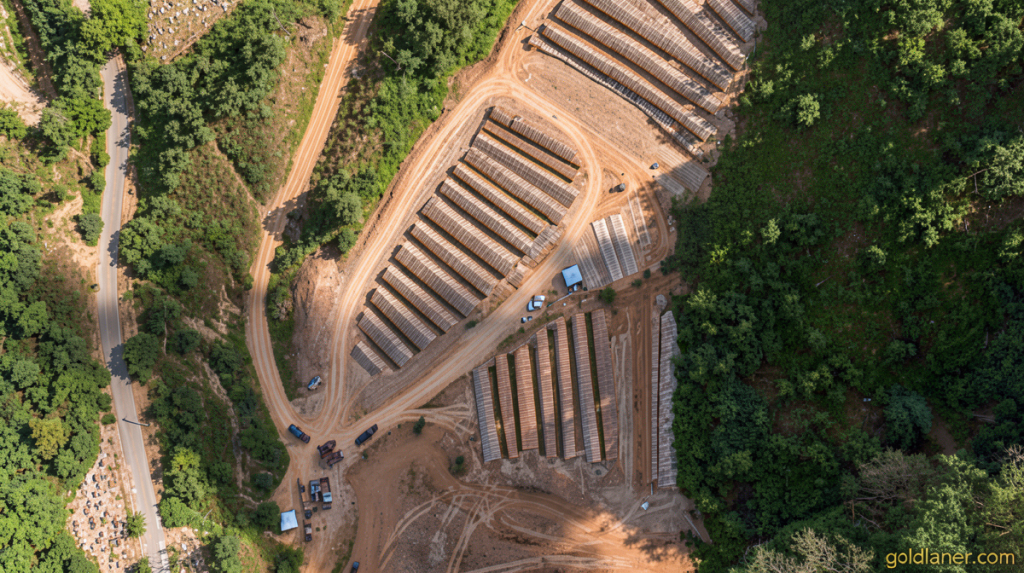
Satellite Images Show Grave Expansion
Satellite imagery from spatial intelligence firm Vantor reveals the cemetery now contains more than twenty rows of newly excavated trenches. Each trench holds several caskets positioned side by side. A cemetery employee told CNN that approximately five hundred new burial plots have been created, with a dedicated section containing roughly one hundred fifty graves for unidentified victims.
Photographs captured by Reuters show certain burial locations outlined using small stones. CNN analysis determined that hundreds of individuals could potentially be interred within these marked areas. The extensive rows of fresh graves at La Esperanza serve as a visual testament to the severity of last month’s catastrophic event.
Recovery Efforts Continue
The earthquakes resulted in at least 3,685 fatalities, 16,740 injuries, and 17,907 people displaced from their homes, according to government statistics. While recovery operations continue across affected regions, numerous families remain uncertain about the fate of their relatives. The latest count released on Tuesday did not specify how many individuals are still missing.
Within the designated section for unidentified victims, each body receives its own individual grave. These plots are separated from one another and marked with identification codes to help families locate their loved ones more easily in the future, according to local authorities and community representatives speaking with Reuters.
They are buried in the designated area so that when the city begins pouring concrete, each mourner can come and identify their loved ones.
Nicolás Rivas, who serves on the Chaparral Los Pinos community council, shared these observations with Reuters. Video footage captured on Monday showed dozens of coffins lined up at a cemetery in northern Venezuela as workers interred victims from the two powerful earthquakes that hit the nation in June. Local media outlets reported that many bodies recovered from the rubble have not yet been identified.
Organized Terraced Layout
The graves are systematically arranged on terraces that have been labeled with letters and distinguished from the rest of the cemetery using white stones. Elis Zabala, a community leader in the vicinity, explained to Reuters that this organizational system will enable families to visit their deceased relatives and pay their respects.
These terraces A, B, C, D, F and G have been in use for just a week. We can see that they are well organized, and the deceased are being given the dignified burial they all deserve.
Throughout Monday, several trucks arrived carrying coffins, according to the cemetery worker who spoke with CNN. Staff estimated that at least eighty bodies were transported to the cemetery during those hours alone. Police officers were observed by CNN personnel guarding the cemetery entrance, with additional agents arriving throughout the day as burial work progressed.
The combination of satellite imagery, ground observations, and official statistics paints a comprehensive picture of Venezuela’s response to this tragedy. The cemetery’s expansion efforts demonstrate both the scale of the loss and the community’s commitment to providing proper burials for all victims, whether identified or not. As recovery continues, the organized terraced layout ensures that families will have a clear place to honor their loved ones once identification processes are complete.
Michael Rios contributed to this report.
