
Venezuela’s acting president is facing her worst crisis yet. Could it help her stay in power?
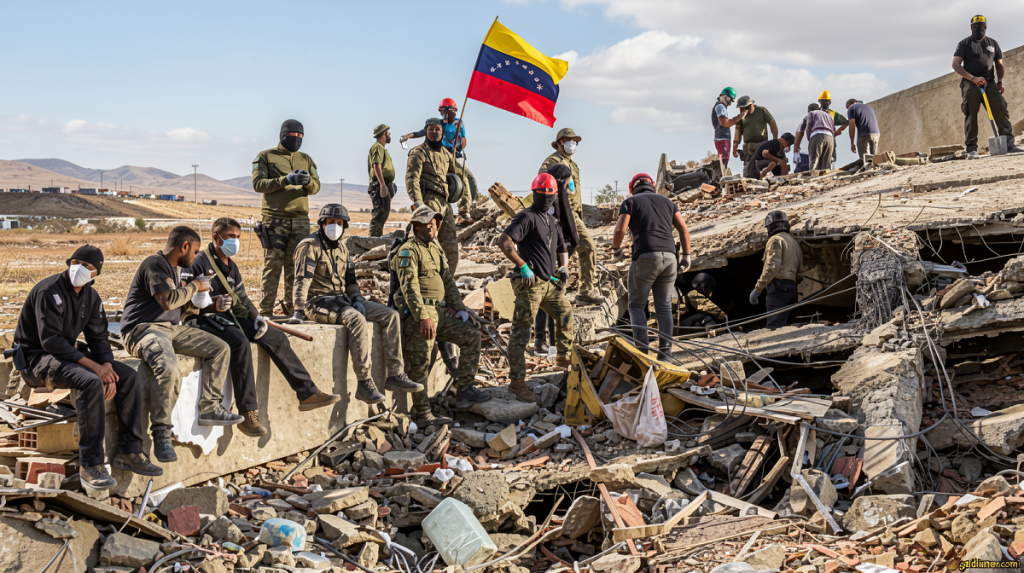
Venezuela’s Acting President Faces Crisis After Deadly Quakes
Venezuela s acting president is facing her most severe political challenge yet. The devastating earthquakes that struck the nation last month have intensified scrutiny of Delcy Rodríguez’s leadership at a critical juncture. These tremors arrived just six months after the capture of Nicolás Maduro, transforming a natural disaster into a defining moment for the interim government. Public frustration over the state’s response has grown significantly since the initial quakes.
Two powerful earthquakes hit on June 24, killing more than 3,000 people according to official counts—a figure many experts believe is substantially underreported. Citizens and international observers have questioned whether officials responded quickly enough to the scale of the tragedy. Rodríguez has rejected these criticisms, defending her administration’s efforts.
A Critical Test for Leadership
CNN analysts describe the earthquakes as a pivotal moment for Venezuela’s transitional government. The disaster has exposed political vulnerabilities while testing the administration’s emergency capabilities. Experts note that the final outcome remains uncertain, with Washington’s involvement expected to influence developments significantly.
“Delcy Rodríguez is now facing the greatest test of her leadership,” said Imdat Oner, a scholar at Florida International University. “At the same time, public anger is rising over poor management and the slow response. But in authoritarian regimes, crises like this often strengthen those in power.”
Oner suggested that Rodríguez could leverage emergency powers to consolidate control, expand security operations, and postpone political reforms while emphasizing stability and reconstruction.
“The disaster has exposed the weakness of the state,” Oner said, “but in the short term it gives the government more room to hold on to power rather than being forced to relinquish it.”
Massive Recovery Demands
Beyond political implications, the government confronts enormous reconstruction challenges. Immediate humanitarian needs are vast, and economic recovery will demand resources that remain limited.
“The immediate challenge is enormous, but so is the task of economic recovery and rebuilding the devastated region,” said Phil Gunson, a Caracas-based analyst with the International Crisis Group. “That will require a great deal of money the government simply does not have.”
The June 24 earthquakes rank among Venezuela’s deadliest natural disasters. Official figures show 3,685 deaths, over 16,000 injuries, and more than 17,000 displaced people. Hundreds of buildings were damaged, while the UN Development Programme estimates economic losses at approximately 6 percent of GDP.
Such a catastrophe would test any administration, but Venezuela’s situation is particularly challenging given twenty-five years of rule by followers of the late President Hugo Chávez.
“The state simply lacks the capacity to respond,” said Gunson. “It doesn’t have the budget, personnel, planning, leadership, equipment, or heavy machinery.”
Disputed Response Accounts
Ground reports reveal widespread dissatisfaction with government efforts, with many people still missing or trapped under debris. During a press conference last Thursday, Rodríguez countered these concerns by noting that 4,000 personnel were deployed within the first twenty-four hours, eventually reaching 19,000 with international assistance.
“Anyone who wants to verify the reality is welcome to do so,” she said. “That is the instruction to the national government: deploy and work tirelessly, save lives, and care for the survivors as we are doing and will continue to do. Despite the challenges, we have received both national and international support.”
Opposition groups have intensified their criticism of the administration. Before the earthquakes, some opposition leaders showed optimism after meetings between top officials and Dinorah Figuera, the former National Assembly president elected in 2015—the last Venezuelan legislature recognized internationally. Opposition organizations suggested these talks could signal an initial step toward negotiating a political transition with American support.
However, Venezuelan academic Carlos Torrealba told CNN that the earthquakes have interrupted whatever process was underway, potentially reshaping the political landscape for Venezuela’s acting president is facing critical decisions about the future of the nation’s governance.
