
Netanyahu’s emerging challenger represents his polar opposite, and that may be his appeal
Netanyahu’s Emerging Challenger Represents His Polar Opposite, and That May Be His Appeal
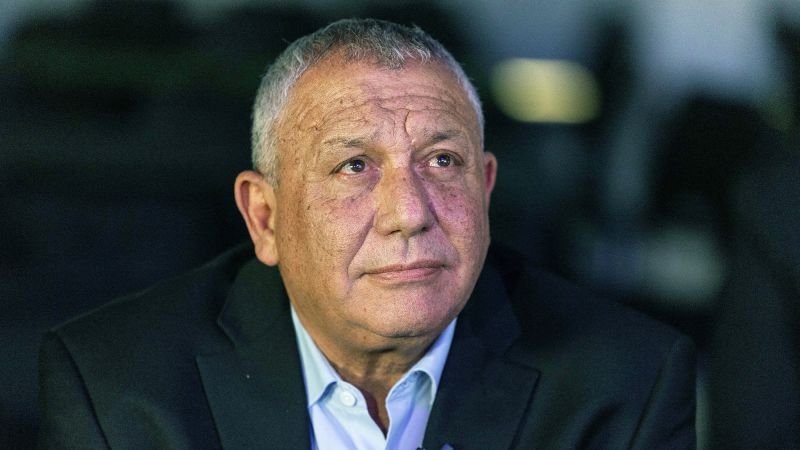
Netanyahu s emerging challenger represents his polar – On June 8, the Likud party’s official X account shared a brief statement that carried symbolic weight: “Gadi Eisenkot cannot govern without Arab support.” The accompanying video, crafted with AI, depicted the former military chief and prominent Arab politician Ahmad Tibi standing beside each other as dark clouds gathered over the Knesset, Israel’s parliament. The clip highlighted a recurring theme in Likud’s electoral strategy, emphasizing their reliance on anti-Arab rhetoric while framing Eisenkot as Netanyahu’s most formidable political adversary. This contrast between the two leaders is now central to the upcoming parliamentary elections, scheduled for late October, and has reshaped the dynamics of the race.
Netanyahu’s Strategic Messaging
Likud’s campaign has increasingly positioned Eisenkot as its primary rival, shifting focus from earlier contenders like Naftali Bennett. The party’s messaging, which blends traditional themes with a new emphasis on collaboration with Arab lawmakers, aims to rally support by framing Eisenkot as a unifying figure. Yet, the same rhetoric that once defined Likud’s approach—highlighting division between Jewish and Arab communities—now underlines Eisenkot’s threat to Netanyahu’s decades-long dominance. An adviser to the prime minister hinted at the scale of this challenge, noting that Eisenkot’s image has become a focal point in over 400 campaign videos, each designed to underscore his potential to disrupt the status quo.
Shift in Polling Dynamics
Eisenkot’s Yashar party, meaning “straight” or “honest” in Hebrew, was once a minor force in Israeli politics, rarely breaking into the double digits in public opinion polls. But recent shifts have altered this trajectory. Surveys now suggest the party is on track to secure a significant share of parliamentary seats, narrowly trailing Likud in key races. This newfound momentum has outpaced the joint list of Bennett and Yair Lapid, who had previously attempted to consolidate opposition forces under a unified platform. Eisenkot’s decision to run independently, rather than align with Bennett’s faction, has allowed him to carve out a distinct identity, appealing to voters who seek a different political direction.
A Contrasting Political Persona
While Netanyahu has long been associated with dramatic flair and calculated communication, Eisenkot presents a starkly different image. His quiet demeanor and measured approach have drawn comparisons to a political style that prioritizes substance over spectacle. This contrast is evident in how their campaigns are perceived: Netanyahu’s polished international presence, shaped by years of media training, contrasts with Eisenkot’s understated, homegrown appeal. Analysts suggest that this divergence may resonate with voters disillusioned by the former leader’s combative tactics and long-standing alliances.
“Under your command, Gadi, the IDF carried out great work,” Netanyahu said during Eisenkot’s 2019 retirement ceremony. “We salute you, for your many merits as fighter and commander.”
Netanyahu’s praise for Eisenkot during his military tenure underscores the deep ties between the two men, even as their political paths diverge. Eisenkot’s leadership in the IDF, from 2015 to 2019, was marked by strategic decision-making and a focus on procedural precision, qualities that now define his political persona. Meanwhile, Netanyahu’s career has been defined by charismatic public performances, a mastery of political theater that has sustained his influence for over 30 years. This duality—Eisenkot as the calm strategist, Netanyahu as the showman—has become a defining narrative in the current electoral landscape.
Biographical Underpinnings
Their contrasting backgrounds are reflected in their political philosophies. Netanyahu, the son of a historian, was raised in Jerusalem’s elite circles and graduated from high school in the U.S. His early exposure to Western politics and his military service in the Sayeret Matkal commando unit have shaped his approach to governance, blending ideological conviction with pragmatic diplomacy. Eisenkot, 66, was born to Moroccan immigrants and grew up in Tiberias and Eilat, communities that have historically been less central to Israel’s political power. His upbringing in these areas has given him a distinct perspective, one that aligns with the concerns of voters from the periphery.
From Military Leadership to Political Challenge
Eisenkot’s rise to prominence began in 2022, when he joined forces with Benny Gantz, another former military chief, to form a critical bloc within Netanyahu’s emergency war cabinet following the October 7 attacks. Initially aligned with the government, Eisenkot gradually became a vocal critic of its handling of the conflict, particularly its lack of clear strategy regarding hostages in Gaza. In a February 2024 letter to Netanyahu and the war cabinet, he argued that the war had been driven by tactical victories rather than long-term objectives, a critique that has gained traction among war-weary citizens.
Their shared military experience has also fueled the debate over their leadership styles. While Netanyahu’s commando background is often cited as a source of his aggressive foreign policy, Eisenkot’s tenure as IDF chief of staff was characterized by a focus on process and preparation. This difference in priorities—Netanyahu’s emphasis on immediate results versus Eisenkot’s commitment to measured planning—has become a point of contention in the campaign. Critics of Eisenkot argue that his preference for cautious diplomacy may leave Israel vulnerable to external pressures, but supporters see this as a refreshing departure from the leader’s polarizing tactics.
Controversy and Campaign Impact
Eisenkot’s time in the IDF was not without controversy. One of his most notable decisions came in 2016, when he oversaw the prosecution of Elor Azaria, a combat medic who had killed a wounded Palestinian attacker in Hebron. The case sparked nationwide debate about military ethics and the application of rules of engagement, with Eisenkot standing firm in his support for the legal process despite pressure from right-wing factions, including Netanyahu himself. This episode has been used in recent campaign materials to highlight Eisenkot’s commitment to justice, even as his opponents paint him as a moderate who lacks the resolve to confront Iran.
Meanwhile, Likud’s efforts to portray Eisenkot as a weak leader have intensified. Campaign videos now focus on his heavily accented English, contrasting it with Netanyahu’s smooth, international delivery. The phrase “Gadi wouldn’t strike Iran” has become a recurring attack line, suggesting that Eisenkot is less capable of decisive action than his rival. Yet, this very contrast—between a leader who has mastered the art of political showmanship and one who prioritizes analytical rigor—may be the key to Eisenkot’s growing appeal. Voters increasingly view his measured approach as a counterbalance to Netanyahu’s unyielding stance, particularly in an era of shifting public sentiment and prolonged conflict.
A New Political Landscape
The evolving political climate in Israel has created an opportunity for Eisenkot to emerge as a viable alternative. While his party remains a relatively new entity, its rapid ascent reflects a broader dissatisfaction with the traditional parties and their policies. The latest Channel 12 poll projects that Yashar could secure 21 seats in the Knesset, just behind Likud’s projected 23. This projection has fueled speculation about the future of Israeli governance, with 38% of respondents in recent surveys favoring Eisenkot as prime minister, compared to 36% for Netanyahu. Such numbers suggest that the old guard may be facing a serious challenge from a figure who embodies a different vision for the country’s direction.
Eisenkot’s ability to bridge divides while maintaining his own distinct identity has been a key factor in his rise. In a country where political discourse often hinges on tribalism and ideological rigidity, his appeal lies in his willingness to engage with Arab communities and his focus on pragmatic solutions. This balance between unity and independence has positioned him as a symbol of hope for voters seeking a leader who can navigate the complexities of Israel’s internal and external challenges without the same level of polarization. As the election approaches, the contrast between Eisenkot and Netanyahu is expected to shape not only their campaigns but also the future of Israeli politics.
