
Venezuela’s deadly ‘doublet’ earthquakes may have been a single big one. Here’s why it matters
Venezuela’s Doublet Earthquakes: A Single Tremor or Two?
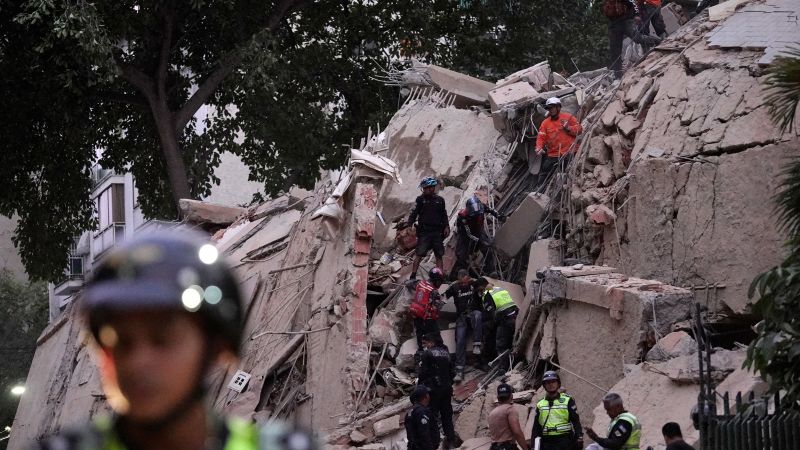
Venezuela s deadly doublet earthquakes may have – On Wednesday evening, Venezuela experienced its most severe seismic activity in over a century, triggering a cascade of destruction that claimed more than 100 lives. The event, cataloged by the US Geological Survey (USGS), has sparked debate among geologists about whether it was a rare “doublet” or a single massive earthquake. The confusion stems from the timing and magnitude of two tremors that struck the northern part of the country within 39 seconds of each other, raising questions about their origin and impact.
Understanding the Doublet Phenomenon
Doublet earthquakes are a phenomenon where two significant quakes occur in rapid succession, often within minutes. These events are distinguished by their similar energy release, which can lead to compounded damage. According to Raul Perez-Lopez, a geologist at Spain’s Institute of Geological and Mining Sciences, such quakes are particularly destructive because their overlapping energy can amplify the effects on structures and the ground.
“Double earthquakes are very destructive,” Perez-Lopez noted. “The main difference is that double earthquakes have similar energy, whereas a single earthquake and smaller aftershocks are lesser in energy.”
The Quakes That Shook the Region
The first tremor registered a magnitude of 7.2, while the second followed shortly after with a magnitude of 7.5. This sequence, though brief, is notable for its intensity. The two quakes occurred along the boundary of the Caribbean and South American tectonic plates, which have been slowly shifting at approximately 20 millimeters annually. This movement builds up stress until it is abruptly released, causing the ground to shake.
While the doublet is rare, this region is not unfamiliar with such occurrences. In September 2025, a weaker doublet—consisting of 6.2 and 6.3 magnitude earthquakes—was recorded, underscoring the area’s susceptibility to complex seismic activity. However, the recent event has pushed the boundaries of what scientists can predict, prompting further analysis.
Scientists Weigh in on the Debate
Despite the rapid succession of the quakes, some experts believe the data might reveal a single, larger rupture instead of two separate events. Judith Hubbard, a seismologist at Cornell University, explained that the distinction between a doublet and a single quake may not be clear-cut. “It’s going to take probably some days or longer for the seismologists to really piece out the event,” she said. “Then they may not have a conclusive idea of, ‘was it one earthquake or two earthquakes?’”
“The seismic data is ambiguous,” Hubbard added. “You can’t tell the difference between these two fault orientations and slip directions until more data comes in.”
Challenges in Seismic Analysis
Confirming whether the event was a doublet or a single quake depends on the accuracy of the data collected. Initial readings suggest two distinct tremors, but Hubbard pointed out that the quick timing could make it difficult to discern their origins. “A large 7.5-magnitude earthquake doesn’t typically happen all at once,” she explained. “Such a major quake starts at one location and propagates along the fault, rupturing different parts at different times.”
In Venezuela’s case, the first pulse might have initiated a chain reaction, leading to the second quake. The USGS initially reported the quakes as separate, with a distance of 5 to 10 kilometers between their epicenters. However, this could be due to the overlapping nature of the seismic waves rather than two distinct faults. Hubbard speculated that if the quakes were part of a single rupture, their combined energy might equate to a magnitude-7.6 event.
Historical Context and Regional Vulnerability
Although doublet earthquakes are uncommon, northern Venezuela has a history of significant seismic events. Over the past century, the region has seen only seven earthquakes of magnitude 6 or higher, making this week’s tremors particularly alarming. The area’s geological features, including its sediment-rich terrain, may have exacerbated the damage. Sediments can both slow and amplify seismic waves, increasing the destructive power of quakes in the region.
Additionally, the sinking ground—a phenomenon known as subsidence—has left many buildings with weakened foundations. This makes them more susceptible to collapse, even during smaller tremors. The lack of an extensive seismic network in the region further complicates efforts to monitor and predict such events. Power outages in major hubs like Caracas have also delayed data collection and analysis.
The Role of Aftershocks in Clarity
Following the initial quakes, several less intense aftershocks have been recorded near Caracas. These smaller tremors could provide critical insights into whether the event was a doublet or a single rupture. If the aftershocks exhibit similar patterns to the main quakes, it may support the idea of a single, larger earthquake. Conversely, distinct patterns could confirm the doublet hypothesis.
Researchers are closely examining the aftershocks to determine their source. “If the aftershocks are rupturing in similar ways as the initial tremors, it could confirm if the proposed fault orientations are accurate,” Hubbard said. This analysis is essential for understanding how such events unfold and improving future predictions.
Why the Classification Matters
While the difference between one large earthquake and two smaller ones may not drastically alter the human toll, it has profound implications for scientific understanding. Doublets challenge existing models of fault behavior and energy release. Hubbard emphasized that the region’s lack of frequent doublet events means scientists have limited data to work with. “We don’t really have a good sense of which faults produce doublets and which ones don’t—or whether there even is a fault type that does,” she said.
This ambiguity highlights the need for more comprehensive seismic monitoring. With better data, researchers could develop more accurate rules for predicting such events. The recent quakes in Venezuela serve as a reminder of the complexities involved in studying earthquakes and the importance of continued research in seismology.
As the situation unfolds, experts remain cautious. The preliminary data, while informative, may not tell the full story. The USGS and other institutions will need to analyze satellite imagery and additional seismic readings to clarify the event’s origin. In the meantime, the community in northern Venezuela continues to recover from the aftermath, with the hope that understanding the true nature of the quakes will help prepare for future disasters.
For now, the debate over whether the tremors were a doublet or a single quake persists. This uncertainty underscores the dynamic and unpredictable nature of tectonic activity, reminding us that even in a region with a history of earthquakes, each event can offer new insights into the Earth’s behavior. The scientific community will undoubtedly be watching closely as more data emerges, eager to unravel the mystery behind Venezuela’s deadly shaking.
