
Hunting a ghost through Sherwood Forest: On the elusive trail of the real Robin Hood
Hunting a Ghost in Sherwood Forest: The Real Robin Hood Story
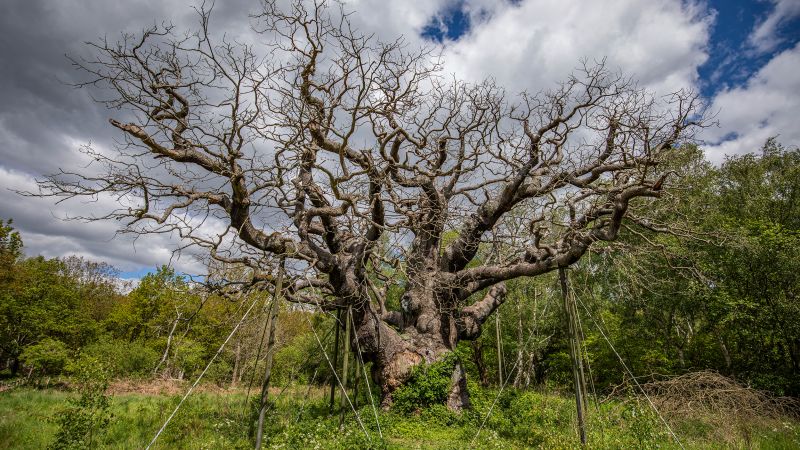
Hunting a ghost through Sherwood Forest has always been more than a quest for folklore—it’s a journey into the heart of England’s most enduring legend. The forest, steeped in mystery, continues to draw adventurers and historians alike, with the recent fall of the Major Oak sparking renewed interest in the stories that have shaped its identity. For decades, the tree stood as a towering symbol of Robin Hood’s mythos, but its demise has not dimmed the allure of the outlaw’s tale. Instead, it has rekindled curiosity about the real-life roots of this timeless hero.
The Enduring Symbol of Sherwood
The Major Oak, a 1,000-year-old tree, has now succumbed to the passage of time, leaving behind a legacy that transcends its physical form. As a resting spot for the legendary outlaw and his companions, it became a focal point for centuries of storytelling. While its actual role in Robin Hood’s life remains uncertain, the tree’s presence in Sherwood Forest has long been tied to the myth. The forest itself, though reduced to 800 acres from its original 100,000, still preserves the essence of the medieval era, offering a tangible link to the past.
Historian and actor Ade Andrews, who has spent over 30 years interpreting the forest’s history, describes the experience as “a leap back in time.” The greenwood paths, shaded by 400 towering century-old oaks, create an atmosphere where imagination runs wild. This connection between the forest and the legend of Robin Hood is not accidental—it is a product of generations of cultural memory. The tree’s fall, however, has forced a reevaluation of how this story is told and experienced today.
From Bandit to Hero: The Legend’s Transformation
The story of Robin Hood first emerged in late medieval England, with early references in works like the 1370s poem “Piers Plowman.” Initially portrayed as a rogue, the outlaw’s reputation shifted over time to that of a noble figure fighting injustice. This evolution reflects the changing values of society, as the legend adapted to serve new narratives. By the 19th century, Robin Hood had become a symbol of chivalry and rebellion, cementing his place in folklore.
Historical records provide faint traces of real-life figures who may have inspired the legend. In 1262, a “William Robehod” was accused of theft in Reading, a city 120 miles south of Nottingham. While this name could be a precursor to the more famous Robin Hood, it underscores the possibility of a historical basis. Andrews, who has embodied the outlaw in modern times, argues that the story is as much about the forest’s identity as it is about the man himself, blending myth and history into a singular experience.
“The forest is a living archive of the past. When you walk its paths, you’re not just visiting a place—you’re stepping into the world of a legend that has shaped England’s cultural imagination for centuries.”
The Forest’s Role in Shaping the Legend
Though the Major Oak has fallen, Sherwood Forest remains a cultural beacon, its ancient trees and landscape inspiring generations of storytellers. The 800-acre expanse, with its dense canopy of century-old oaks, still evokes the image of a secret hideout where outlaws roamed. This connection between the physical environment and the mythos of Robin Hood is a key factor in the forest’s enduring appeal. Even as the tree’s life ended, the forest’s role as a backdrop for the legend persists, inviting new interpretations and discoveries.
Andrews’ work as a heritage ranger highlights the interplay between history and myth. By living as Robin Hood, he brings the legend to life, bridging the gap between the medieval past and modern fascination. This immersive approach underscores the idea that the forest itself is a character in the story, shaping the narrative as much as the heroes within it. Whether as a real person or a symbol, Robin Hood’s tale is inseparable from the land that has long been associated with his exploits.
Rediscovering the Roots of a Legend
The fall of the Major Oak has prompted a deeper exploration of Robin Hood’s origins, revealing a complex tapestry of historical and literary influences. While the tree’s symbolic role is well-documented, its actual historical significance remains a subject of debate. Some historians argue that the outlaw’s story was built on a foundation of real events, while others see it as a product of medieval storytelling traditions. This duality enriches the legend, making it a timeless and adaptable tale that resonates across centuries.
As the forest continues to attract visitors, the question of Robin Hood’s reality remains open. The Major Oak’s legacy, though ending, has ensured that the legend endures. With new films and interpretations, the story of the outlaw is finding new life, proving that the spirit of Sherwood Forest lives on. Whether or not Robin Hood was a real person, the forest’s role in his story is undeniable, offering a unique glimpse into the past that captivates the imagination. The quest to hunt a ghost through Sherwood is far from over—it is an ongoing journey through history and myth.
