
Japan isn’t quite where it once was. Scientists say a newly recognized seismic event is to blame
Japan Isn’t Quite Where It Once Was. Scientists Say a Previously Unseen Seismic Event Is to Blame
A Hidden Shift Beneath the Surface
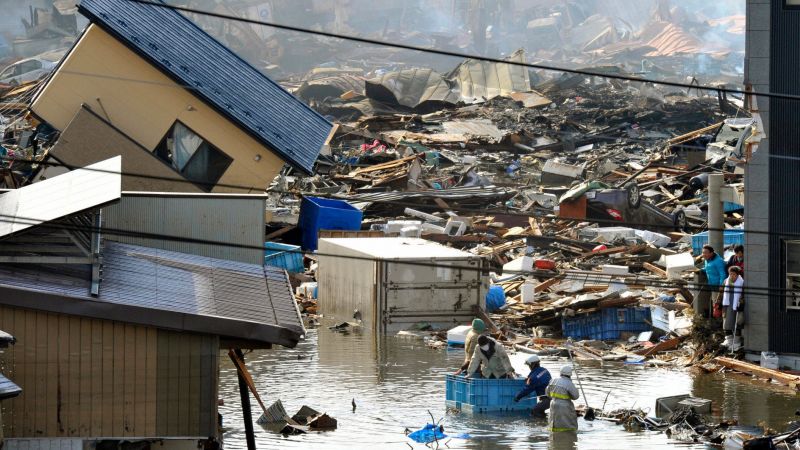
Japan isn t quite where it once – On March 11, 2011, a devastating 9.0 magnitude quake struck Japan, triggering catastrophic tsunamis and a nuclear disaster that claimed thousands of lives. However, the event also left an unexpected mark on the nation’s geography. GPS data revealed that nearly the entire country shifted eastward by a minuscule but permanent amount—between 5 to 6 millimeters, or roughly 0.20 to 0.24 inches—just 15 minutes after the initial tremor. This subtle movement, which went largely unnoticed or dismissed as a technical anomaly, has now been identified as evidence of a groundbreaking seismic phenomenon.
Unearthing a New Seismic Mechanism
University of Chicago geophysicist Sunyoung Park, who spearheaded the research, suggests that the recorded data pointed to something more than just typical ground displacement. The movement, which spanned the length of mainland Japan—from Hokkaido to Kyushu—did not align with the timing of the main earthquake or its subsequent aftershocks. Instead, it occurred as a result of seismic waves traveling deep into Earth’s core and reflecting back to the crust, a process that repositioned four major tectonic plates. This discovery challenges previous assumptions about how seismic energy propagates through the planet.
“Unlike aftershocks, which are unpredictable, this core rebound phenomenon follows a predictable pattern,” explained Park. “The seismic waves traveled 3,600 miles through the Earth, bouncing off the outer core, and returned to the surface in a way that caused a uniform shift across such a vast region.”
The Scale and Significance of the Event
While the displacement itself was modest, its geographic scope is unprecedented. The phenomenon affected areas spanning approximately 1,800 miles, making it the broadest recorded seismic shift in history. The energy released by this event, though less intense than the main earthquake, was comparable to that of a 7.5 magnitude quake. This raises intriguing questions about how such a large-scale movement can occur without the same level of visible destruction.
A Remarkable Discovery in Earth’s Core
Prior to this study, seismologists believed that waves from major earthquakes would lose their energy as they passed through Earth’s liquid outer core. However, Park and her team found that these waves could retain enough force to rebound and cause displacement at the surface. “This isn’t just a minor adjustment—it’s a fundamental rethinking of how seismic waves interact with the Earth’s interior,” Park noted. The process, she said, could one day be used to predict future events, offering a new tool for disaster preparedness.
The Aftermath of a Major Earthquake
The March 2011 quake, which originated 231 miles northeast of Tokyo, remains one of the most powerful natural disasters in recorded history. Beyond the immediate devastation, it exposed vulnerabilities in Japan’s infrastructure and emergency systems. Yet, the recent findings highlight an overlooked aspect of the event: the waves generated by the quake not only caused surface tremors but also triggered a chain reaction deep within the planet. “The mainshock’s energy might have set off a delayed response in the Earth’s core,” said Park, emphasizing the complex interplay between different layers of the Earth.
Implications for Seismic Hazard Management
Policymakers are now being urged to consider this newly discovered mechanism when assessing seismic risks. Unlike aftershocks, which are erratic and hard to forecast, the core-reflected waves follow a consistent timeline, potentially allowing for earlier warnings. However, because the energy is spread over a vast area, the effects might be less severe than those of a localized magnitude 7.5 earthquake. “Even if damage occurred, it would be challenging to differentiate it from the main event’s impact,” Park warned, underscoring the need for updated models in disaster response planning.
Global Relevance and Future Research
Japan’s extensive network of seismic and satellite monitoring stations made this discovery possible, according to Vedran Lekić, a professor at the University of Maryland. “The precision of their data allowed us to detect something so subtle,” he said. “This could be a game-changer for understanding how earthquakes influence the Earth’s structure.” While the 2011 event is a landmark case, Lekić suggests similar phenomena might occur in other regions with less advanced monitoring systems. “This kind of wave interaction might be happening elsewhere, but we haven’t recognized it yet,” he added, highlighting the potential for further research.
Revisiting the Mechanics of Tectonic Plates
Tectonic plates, the rigid segments of Earth’s crust, are known to shift slowly over time, but the 2011 event demonstrated how a single quake can momentarily alter their positions. The core-reflected seismic waves not only reactivated the fault zones near the main earthquake but also triggered movement along distant plate boundaries. For instance, the Pacific and Okhotsk plates, which intersect beneath Japan, experienced displacement alongside the Philippine Sea and Eurasian plates. This suggests that the energy from the quake could have propagated across multiple fault systems, amplifying its effects.
Preparing for the Unseen
Ekstrom, a geophysicist at Columbia University, pointed out that the initial quake’s intense shaking played a role in facilitating the core’s rebound. “The mainshock’s energy might have acted as a catalyst, allowing the deep waves to reach the surface and cause additional movement,” he said. This revelation could lead to new strategies for mitigating seismic risks, especially in regions where tectonic activity is less understood. “If we can predict these core-related events, we might be able to prepare for them more effectively,” Ekstrom added.
The study also emphasizes the importance of long-term data analysis. Park and her colleagues spent years examining GPS and seismic records before identifying the pattern of the core-reflected wave. “It took time to notice that this movement wasn’t just an aftereffect—it was a separate phenomenon,” she said. This discovery could reshape how scientists model earthquake behavior, particularly in areas where tectonic interactions are complex and poorly mapped.
As researchers continue to explore the implications of this finding, the focus shifts from immediate disaster response to long-term geological forecasting. The 2011 event serves as a reminder that even the most catastrophic earthquakes can leave hidden, yet significant, footprints on the planet’s structure. By understanding these mechanisms, scientists hope to better anticipate future seismic risks and improve the resilience of communities worldwide.
Japan’s experience underscores the value of comprehensive monitoring systems, which can detect subtle changes that might otherwise go unnoticed. However, the study also highlights the need for global collaboration to address seismic events in regions lacking such infrastructure. “This phenomenon could be happening in other parts of the world, but we need more data to confirm it,” said Lekić. With continued research, the hope is that these core-reflected waves will become a key factor in predicting and preparing for earthquakes in the years to come.
