
It’s a 6-3 Supreme Court: Ideological splits mount ahead of major end-of-term rulings
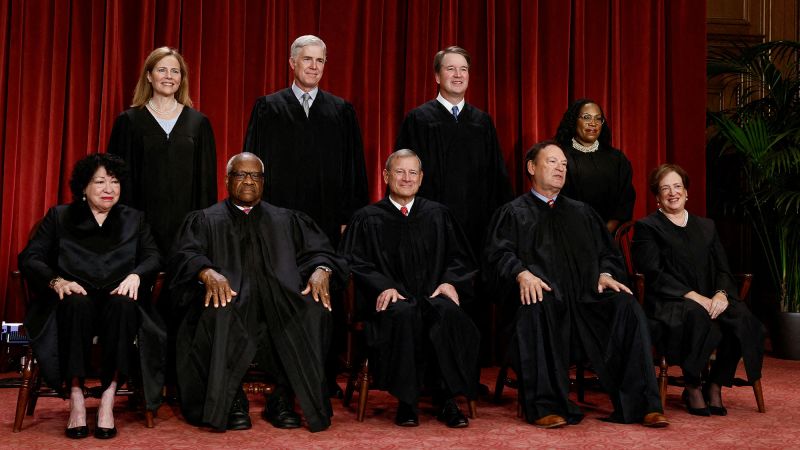
Supreme Court’s Ideological Divide Intensifies as Term Nears End
It s a 6 3 Supreme – As the Supreme Court approaches the conclusion of its current term, it has become increasingly evident that ideological divisions are shaping its rulings with remarkable frequency. This trend has already surpassed the number of 6-3 decisions recorded during the previous term, which ended in 2025. The court’s recent rulings, often splitting along conservative and liberal lines, reflect a growing partisan influence in its decisions, particularly on contentious issues such as executive authority and civil rights. With major cases related to presidential power and transgender rights pending, the justices’ alignment along ideological fault lines has sparked debate about the institution’s impartiality and its role in American governance.
Partisan Rulings Reflect Deepening Political Polarization
Over the past several months, the court has issued seven rulings that split 6-3, a stark contrast to the more balanced decisions seen earlier in the term. These cases, ranging from disputes over federal agency officials to interpretations of constitutional rights, highlight how the justices are increasingly diverging in their legal philosophies. For instance, a recent ruling denied a Rastafarian man the right to sue prison officials after his dreadlocks were cut, citing a federal law that prioritizes institutional efficiency over religious practices. Similarly, the court allowed Exxon to pursue legal action against the Cuban government for property seized in 1960, emphasizing historical precedent in its reasoning.
One of the most pivotal 6-3 decisions this term occurred in April, when the court struck down a key provision of the Voting Rights Act. This ruling, which effectively weakened the law’s ability to prevent discriminatory redistricting, enabled Republicans in Southern states like Louisiana and Alabama to redraw electoral boundaries in a way that favored their party. The decision’s impact was immediate, influencing the outcome of midterm elections and further entrenching the court’s reputation as a political arbiter.
Critics and Supporters Highlight the 6-3 Pattern
The prevalence of 6-3 decisions has become a focal point for both the court’s detractors and proponents. David Cole, a Georgetown Law professor and former ACLU legal director, argues that the justices’ reliance on partisan lines undermines the court’s legitimacy. “The justices are supposed to be guided by law, not politics,” Cole stated, emphasizing that while ideological differences may inform legal interpretations, the consistent 6-3 splits suggest a growing politicization of the bench.
“Even if many divides reflect differences in legal worldview, not politics, the more they divide along party lines, the less credibility the court has as an institution,” Cole added.
However, the court’s conservative justices have defended the pattern, noting that a significant portion of its decisions are still unanimous. Justice Amy Coney Barrett, appointed by President Trump, recently acknowledged the focus on 6-3 rulings but dismissed concerns about their accuracy. “The share of opinions decided unanimously is not the narrative that’s portrayed in the media,” she said at the George W. Bush Presidential Center, highlighting that 40% of the court’s cases are resolved without partisan division.
Justice Neil Gorsuch, another Trump appointee, echoed this sentiment at the Reagan Library. “Nine justices appointed by five different presidents over 30 years, and we are able to resolve cases unanimously 40% of the time,” Gorsuch remarked. “I think that’s something.” His point underscores the idea that while the court’s ideological splits are prominent, they do not dominate all rulings, especially those involving technical legal questions.
A Shift in the Court’s Ruling Dynamics
Despite the rise in 6-3 decisions, the court has also seen moments of bipartisan agreement. In February, the justices invalidated Trump’s global tariffs with a majority of three conservatives and three liberals, demonstrating that ideological unity is possible on certain issues. Last week, the court unanimously ruled that the Second Amendment protected a Texas man from being disarmed for frequent marijuana use, reinforcing a shared constitutional interpretation across the bench.
Yet, these unanimous rulings often address less controversial matters, leaving the more significant cases to split along ideological lines. For example, the court’s emergency docket has seen frequent divisions between the liberal and conservative wings, further complicating its image as an impartial arbiter. Analysts note that the number of 6-3 decisions has not only increased but also intensified the court’s role in shaping national policy through politically charged rulings.
According to data from SCOTUSblog, the court’s ideological splits have grown from 14% of its merits decisions between 2020 and 2024. This statistic aligns with the current trend, where the justices’ alignment on major cases has become more pronounced. With a dozen cases still pending, the likelihood of unanimous rulings in the final days of the term appears slim, raising concerns about the court’s ability to maintain its credibility in the face of political polarization.
The evolving dynamics of the Supreme Court’s decision-making process reflect a broader shift in American jurisprudence. As the justices navigate the complexities of a divided nation, their rulings increasingly serve as a barometer for ideological trends. Whether this pattern signifies a necessary adaptation to modern political challenges or a threat to judicial independence remains a subject of intense scrutiny. For now, the 6-3 split stands as a defining feature of the court’s work this term, with its implications extending far beyond the confines of the courtroom.
The Road Ahead: A Polarized Judiciary?
With the court’s next batch of opinions set to be released this week, the ideological divide shows no signs of abating. The justices’ tendency to align on major issues has fueled criticism from both sides of the political spectrum, with opponents accusing the court of overstepping its role and supporters praising its decisive action. As the term concludes, the question remains: Will the court’s 6-3 rulings solidify its status as a partisan institution, or will they be seen as a reflection of broader legal principles in a politically charged environment?
The stakes are high, and the outcomes of the remaining cases could further define the court’s legacy. From questions about executive power to challenges on civil rights, the justices are poised to deliver rulings that will resonate across the nation. While some may argue that ideological splits are inevitable in a polarized era, others fear that the court is losing its ability to act as a unifying force in American law. As the final decisions approach, the narrative around the Supreme Court’s role in shaping the nation’s future will continue to evolve, influenced by the 6-3 pattern that has come to define its recent term.
