
Inside an exclusive ‘man camp,’ where one woman is trying to save men from themselves
Inside an Exclusive ‘Man Camp,’ Where One Woman is Trying to Save Men from Themselves
The Valley of Transformation
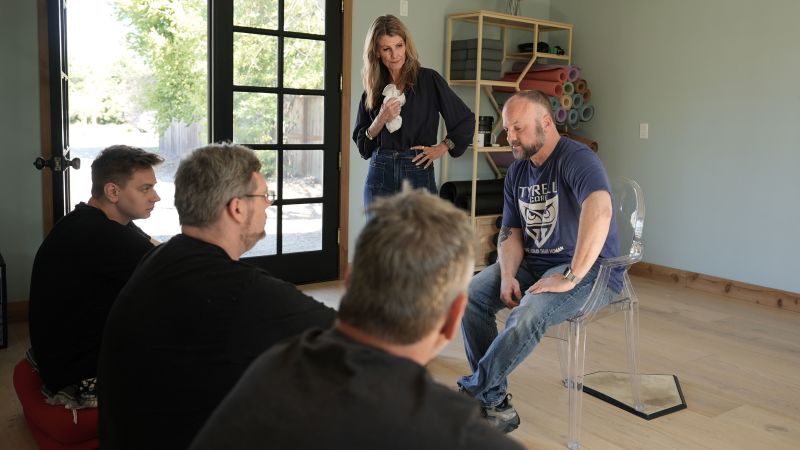
Inside an exclusive man camp where – This region, nestled in the heart of California’s wine country, has long been a crucible for human resilience. Its volcanic soil carries the weight of decades of patience and struggle, much like the lives of the men who gather here. The grapes cultivated in these fields are a metaphor for their journey: harvested too soon, they turn bitter; left too long, they shrivel under the sun. Winemakers in the area understand the risk of miscalculation, and so do the participants of Lori Jean Glass’s retreat. Three men, each at a crossroads, have paid a steep price—over $5,000 each—to embark on a five-day experiment in self-renewal. They arrive with heavy hearts, seeking to shed old habits and embrace a new understanding of masculinity.
Behind a high wall and a sprawling estate, the retreat operates like a sanctuary for male vulnerability. Here, men are encouraged to cry, embrace, and confront their inner demons. The environment is designed to mirror the challenges they face in the broader world: a place where emotional openness is not a weakness, but a strength. Glass, the retreat’s founder, sees this as a counterbalance to the rigid ideals of manhood that have taken root in modern culture. “Men are drowning in a sea of silence,” she says, her voice steady but passionate. “They’ve been taught to suppress their emotions, to equate strength with stoicism.”
A Feminine Vision in a Masculine Space
Glass’s approach is uniquely feminine. While the manosphere—a hyper-masculine online movement—promotes dominance and stoicism, her retreat is led by a woman and her team of mostly female coaches. The contrast is stark. “This isn’t just a camp,” she explains, clasping her hands as if to emphasize her point. “It’s a revolution in how we define manhood.” For over a decade, Glass has been at the forefront of male mental health initiatives, working with hundreds of men to reclaim their emotional lives. Initially, many signed up under the pressure of their spouses, drawn by the success of her women’s retreats. But today, the demand is growing, with men choosing this path on their own volition.
Recent years have seen a troubling shift in masculinity. With fewer employment prospects and a culture that rewards emotional toughness, many men feel isolated. They are expected to endure without complaint, to prioritize work over feelings, and to embody the alpha male archetype. “They’re losing touch with who they are,” Glass argues. “The manosphere is like a tidal wave—pulling them further into a narrow, toxic definition of manhood.” Her camps, she says, offer a lifeline: a space where vulnerability is not a flaw but a tool for growth.
From Loneliness to Connection
The retreat’s structure is deliberate. Each day begins with yoga, a practice designed to center the mind and open the body. Morning sessions are followed by one-on-one therapy, group exercises that test emotional endurance, and experiential activities like art therapy and role-playing. Participants are guided through a process that blends psychological theory with real-world application, aiming to dismantle barriers to self-expression.
“Men are struggling,” Glass tells CNN. “They’re not just failing in relationships—they’re failing in life.” A 2023 Gallup report found that 25% of young men felt lonely the day before the survey, a figure that has doubled since 2011. Meanwhile, the Survey Center on American Life reported in 2021 that nearly 17% of men claimed to have no close friends, a number five times higher than it was three decades ago. These statistics paint a picture of a society where men are increasingly disconnected from both community and their own emotions.
Competing with the Manosphere
Glass’s work faces an uphill battle. The manosphere, with its influencers like Andrew Tate, Adin Ross, and Myron Gaines, has become a powerful force in shaping modern masculinity. These figures promote a vision of manhood rooted in financial success, physical perfection, and emotional control. “They’re not just men—they’re marketers,” Glass says. “They sell a version of manhood that’s loud, aggressive, and unyielding.”
Her camps, in contrast, are a haven for those seeking a different path. “We’re not about competition,” she explains. “We’re about connection. We’re about understanding that it’s okay to be human.” Yet, the scale of the manosphere’s influence is daunting. For every five men who embrace her message, tens of millions are drawn to the allure of red-pilling—adopting a mindset that frames emotional vulnerability as weakness. “They’re not wrong to feel like they’re being pulled in that direction,” Glass admits. “But they’re missing the point.”
Stories of Change
Among the participants, the stakes are deeply personal. Matt Sanders, 61, arrived after the death of his father, grappling with grief and a sense of purposelessness. Jason Owens, 52, faced a similar crisis after losing his wife. Both men saw the retreat as a chance to reconnect with their emotions and rebuild their identities. “I used to think crying was a sign of failure,” Sanders says. “Now I realize it’s part of being alive.”
Younger men also find their place here. A 30-year-old software developer, who asked to remain anonymous, joined after a breakup and a job loss left him feeling adrift. “I was living for the next paycheck, not for myself,” he says. “This camp helped me see that I didn’t have to choose between being a provider and being a person.” The retreat’s focus on emotional intelligence, communication, and self-compassion resonates with men across generations, offering a blueprint for a more balanced approach to masculinity.
The Fight for a New Masculinity
Glass’s journey is not without its challenges. Her past is marked by personal tragedies—losses that shaped her vision for this work. Yet, she remains undeterred, believing that the future of masculinity lies in its ability to evolve. “I want this process taught in every high school,” she says. “I want boys to grow up understanding that it’s okay to feel, to ask for help, to be imperfect.”
As CNN reporters Rob Picheta and David Culver observed, the retreat is as much about the participants as it is about the system they’re trying to change. Immersed in the daily rhythms of the camp, they witnessed the emotional labor of men who had spent years hiding their pain. “It’s not just about therapy,” one participant noted. “It’s about rebuilding trust in yourself and others.” Glass’s methods, rooted in psychology and empathy, have proven effective for many, but she acknowledges the uphill battle against a culture that rewards emotional armor.
The retreat’s success hinges on its ability to create a safe space for men to confront their fears. While the manosphere thrives on projection and competition, Glass’s camps emphasize introspection and collaboration. “We’re not here to outdo each other,” she says. “We’re here to outgrow our old selves.” For men who have spent years feeling invisible, the camp is a beacon of hope—a reminder that masculinity can be both strong and tender, rigid and flexible, a force for connection rather than isolation.
“Men are having a hard time. They’re trapped in a cycle of loneliness and silence, and the manosphere is just one of the things that keeps them there.”
Glass’s vision is clear: a return to a more authentic form of masculinity, one that values vulnerability and emotional depth. As she continues to challenge the status quo, her work stands as a testament to the power of one woman to reshape the narrative around what it means to be a man in a world that has forgotten how to listen. For now, the camp remains a small but significant step toward a broader movement—one that seeks to redefine strength, not through dominance, but through understanding.
