
No fuel, no weapons: How Ukraine’s new drone strategy is mauling Russian supply lines
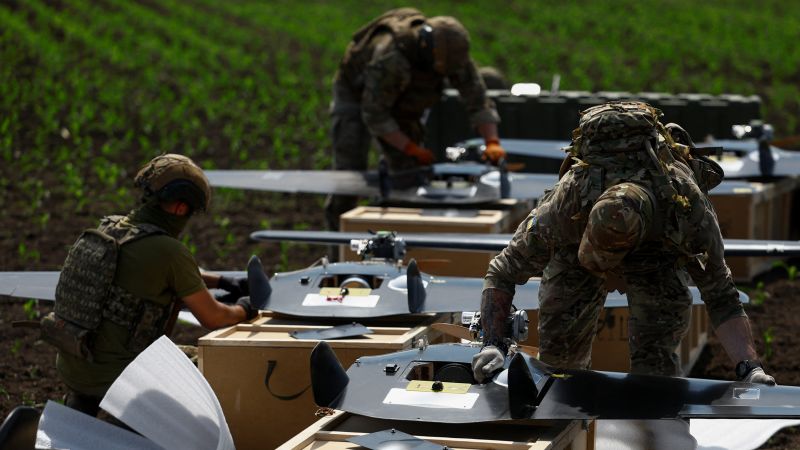
Strategic Shift: Ukraine’s Drone Campaign Targets Russian Supply Networks
No fuel no weapons – Over the past year, Ukraine has intensified its use of mid-range drones to cripple Russia’s logistical infrastructure, particularly in the south. This strategy, which has seen a dramatic escalation in strike missions, is now disrupting critical supply routes and fuel lines, forcing Moscow to rethink its operations. Analysts and military observers note that the impact is significant, with strikes targeting everything from bridges to trains, creating a cascade of challenges for Russian forces. The campaign has not only weakened the enemy’s ability to move resources but also forced them to divert attention to defending these vital arteries.
Mid-Range Drones: A Game Changer in the War Effort
Ukrainian mid-range drones, such as the FP-2 and the Behemoth, are now a cornerstone of the country’s anti-logistics strategy. These drones, developed entirely within Ukraine, have a range of 50 to 300 kilometers and can carry a 70-kilogram warhead, enabling them to strike targets deep behind the front lines. According to French analyst Clément Molin, the drones are being used to sever connections between Crimea and mainland Ukraine, creating a “kill zone” that stretches far beyond traditional battlefronts.
“Ukrainians have gained the capability to launch a large-scale drone campaign, cutting Crimea from its main supply routes and complicating Russia’s logistics across the entire frontline,” Molin told CNN.
The Behemoth, in particular, has drawn attention for its speed—cruising at 180 kilometers per hour—and precision. These attributes make it highly effective against moving targets like fuel tankers and armored vehicles. The drones are not just tools of destruction; they are also psychological weapons, sowing uncertainty among Russian commanders who must now defend routes that were once considered secure.
Surge in Strikes: A New Dimension of Warfare
Since early May, there has been a marked increase in drone strikes targeting Russian logistics. Geolocated videos and images analyzed by the open-source OSINT group Geoconfirmed, along with CNN’s team, reveal over 150 attacks on fuel trucks, trains, and other vehicles. These strikes have been concentrated in key areas, including Crimea and southern Ukraine, where Russia’s hold is most tenuous. However, experts suggest the actual number may be even higher, as many attacks remain undocumented.
The Ukrainian military’s Unmanned Systems Forces, which oversee drone operations, reported a staggering 28-fold rise in mid-range strike missions over the past year. This surge reflects a strategic pivot toward targeting supply chains rather than just frontline positions. The goal, as stated by the military branch, is to stifle Russia’s offensive momentum by creating logistical bottlenecks and depleting critical resources. By focusing on fuel depots and transportation hubs, Ukraine is aiming to weaken the enemy’s ability to sustain prolonged operations.
Impact on Russian Operations: Fuel Shortages and Fragmented Supply Lines
The consequences of Ukraine’s drone strategy are already evident. Russian forces in southern Ukraine are facing severe fuel shortages, as many supply routes have been rendered unusable. This has left frontline troops struggling to maintain their positions, further complicating Moscow’s plans for a summer offensive. One Russian military blogger acknowledged the damage, stating that “links connecting the peninsula to the mainland are being severed one by one.”
Freight traffic on the Chonhar bridge, a vital link between Crimea and occupied territories, has dropped by 71% in just two weeks, according to Robert Brovdi, commander of Ukraine’s drone forces. The bridge, which connects the area near the village of Chonhar to the broader occupied region, has been hit repeatedly, leaving it riddled with large craters and rendering it nearly impassable. Russian-backed authorities in Kherson have admitted to the damage, with traffic frequently suspended and temporary pontoon bridges erected to compensate. However, these makeshift solutions are far less efficient, prolonging delays and increasing vulnerability.
Targeting Critical Infrastructure: Bridges, Trains, and Ports
Ukraine’s drone campaign has expanded beyond traditional military assets, now targeting infrastructure that supports Russia’s logistical network. Bridges, trains, and port facilities have become primary objectives, as their destruction disrupts the flow of supplies. For example, geolocated footage from May shows Ukrainian forces striking at least 35 Russian trucks and other vehicles near highways in Crimea and southern Ukraine. These strikes have forced Russian military units to reroute supplies, creating additional strain on their already overburdened transportation systems.
The Institute for the Study of War corroborates this trend, noting that the pattern of drone attacks has become increasingly coordinated. Analyst Mick Ryan, a former Australian army officer and author of the blog Futura Doctrina, highlights that three coastal highways linking Crimea to mainland Ukraine have been taken under aerial control by Ukrainian drones. This has not only damaged physical infrastructure but also disrupted the flow of troops and equipment, compounding Russia’s challenges.
Reinforcing the Strategy: A Logistical Lockdown
Ukrainian Defense Minister Mykhailo Fedorov has described the current situation as a “logistical lockdown,” emphasizing the systematic nature of the drone campaign. “We are destroying Russian capabilities far behind the front lines and depriving them of the ability to conduct active assaults,” he stated in a recent address. This approach is designed to cut off the enemy’s ability to reinforce positions or replenish supplies, effectively reducing their operational tempo.
“Enemy forces will no longer feel safe, even at a considerable distance from the line of contact,” Fedorov added.
Molin’s research underscores the effectiveness of this strategy. By mapping hundreds of drone strikes, he found that the “kill zone” has expanded to 300 kilometers from the front lines, a depth previously unattainable with conventional weaponry. This extended range allows Ukraine to strike deep into Russian territory, targeting not just military equipment but also fuel depots and transport hubs. The result is a fragmented supply network that leaves Russian forces struggling to maintain cohesion and mobility.
Challenges for Russian Air Defenses
Russian air defenses, which were once seen as a formidable obstacle, are now struggling to keep up with the scale of drone attacks. The Behemoth and FP-2 drones, with their high speed and maneuverability, have proven difficult to intercept, leaving Russian防空 systems overwhelmed. This has led to a situation where even critical infrastructure like bridges and highways is vulnerable to sustained attacks.
The effectiveness of Ukraine’s strategy is also evident in the number of trains targeted. Since January 2026, at least 20 trains have been struck, many of them fuel-laden, across the entire front. This has not only disrupted rail transport but also forced Russia to rely more heavily on road networks, which are now under constant threat. The combination of aerial and ground attacks has created a multifaceted challenge for Moscow, requiring them to deploy resources in multiple directions.
Broader Implications for the War
As the war enters its fifth year, Ukraine’s drone strategy is reshaping the battlefield. By targeting logistics, the country is not only weakening Russia’s immediate operational capacity but also eroding its long-term strategic options. Analysts warn that this pressure could force Moscow to divert troops and resources away from the southern front, altering the balance of power in the region. The ability to strike deep into enemy territory while minimizing risk to Ukrainian forces highlights the evolution of modern warfare, where drones have become a critical asset in the fight for control over supply lines.
The success of this campaign may also have psychological effects. Russian forces, accustomed to dominating the battlefield, are now facing a relentless drone threat that complicates their every move. This has led to increased caution in deploying troops and equipment, as well as a growing reliance on alternative routes. With each strike, Ukraine is not just attacking a target—it is altering the dynamics of the conflict itself, forcing Russia to adapt or face prolonged logistical paralysis.
