
JD Vance Fast Facts
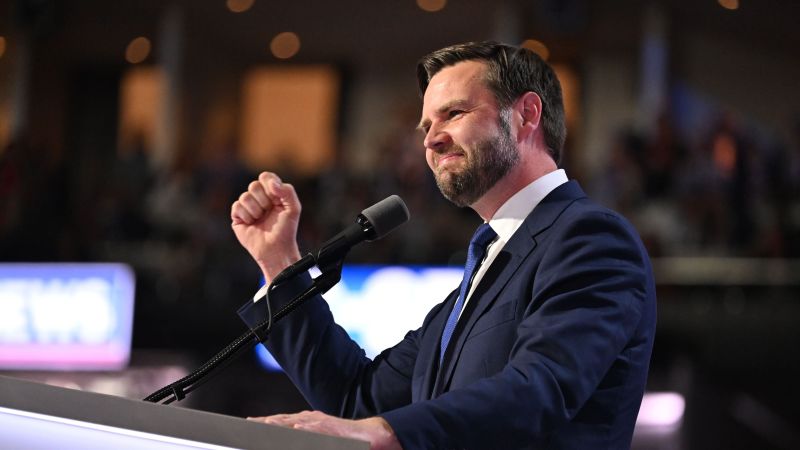
JD Vance Fast Facts
Early Life and Family Background
JD Vance Fast Facts – James Donald Bowman, later known as JD Vance, was born on August 2, 1984, in Middletown, Ohio. His parents, Donald Bowman and Beverly Aikins—a nurse—raised him in a small Rust Belt town. However, Vance’s early years were marked by instability, as his mother grappled with drug addiction, leading to his upbringing being largely overseen by his maternal grandparents. This formative experience later inspired his 2016 memoir, Hillbilly Elegy, which explores the challenges of working-class life in America. The book became a cultural phenomenon, shedding light on the struggles of his family and the broader Appalachian community.
Throughout his childhood, Vance underwent multiple name changes. Initially, he was known as James Donald Bowman, but after his mother remarried, his name was adjusted to James David Hamel. Finally, upon his marriage to Usha Chilukuri Vance in 2014, he adopted the last name Vance, a decision that also marked a symbolic shift in his personal identity. This evolution of his name reflects the dynamic nature of his family’s journey, intertwined with themes of resilience and reinvention.
Education and Professional Journey
Vance pursued higher education at Ohio State University, where he earned a bachelor’s degree in 2009. He later attended Yale Law School, graduating with a Juris Doctor in 2013. During this time, he began his legal career as a litigator at Sidley Austin, a prominent law firm, before moving to Mithril Capital Management, a private investment company, in 2016. His work in finance and law laid the groundwork for his growing influence in political and cultural circles.
After leaving Mithril Capital Management in 2017, Vance joined Revolution LLC as a partner, further solidifying his role in the political arena. The same year, he founded Narya Capital, a venture that focused on strategic investments. His career trajectory showcased a blend of academic rigor, professional adaptability, and a deep connection to the values of his working-class roots.
Political Ascent and Controversies
Vance’s political career gained momentum in 2021 when he announced his candidacy for the Ohio Senate seat following the resignation of a sitting senator. His campaign was fueled by his personal narrative and critiques of the Trump administration, which positioned him as a key figure in the “Never Trump” movement during the 2016 presidential election. He became a vocal critic of then-President Donald Trump, often highlighting policies he believed exacerbated economic and social divides in the Midwest.
Despite his earlier opposition to Trump, Vance’s political alignment shifted in 2024. On July 15, 2024, former President Donald Trump selected him as his vice-presidential running mate, marking a significant turning point. This decision sparked discussions about Vance’s transformation from a Trump critic to a key ally. In the lead-up to the 2024 presidential election, Vance’s public statements evolved, reflecting a more conciliatory stance toward Trump’s policies.
His political journey was not without controversy. In March 2025, a
statement from The Atlantic editor in chief Jeffrey Goldberg revealed that Vance had been inadvertently included in a Signal group chat containing operational details of U.S. military strikes on Yemen. The chat, initiated by National Security Advisor Mike Waltz, also featured Defense Secretary Pete Hegseth and Secretary of State Marco Rubio. While the group downplayed the sensitivity of the information, the incident raised questions about security protocols and the potential influence of personal connections on official decisions.
Another notable event occurred in January 2026, when a man was arrested for vandalizing the Ohio home of JD Vance. The Secret Service clarified that the individual was detained for damaging property, including breaking windows at the residence. At the time, Vance’s family was not present in the state, which added to the intrigue of the incident. Meanwhile, Vance and his wife, Usha Vance, shared the news of an upcoming pregnancy, making it the first time a second lady in office had announced a child while serving in the U.S. Senate.
Public Life and Cultural Impact
From the outset of his public career, Vance’s work as a writer and commentator has been central to his identity. His memoir, Hillbilly Elegy, published on June 28, 2016, became a bestseller and a critical analysis of the struggles faced by working-class families in the Rust Belt. The book’s success brought national attention to his personal story and its broader implications for American culture and politics.
In 2020, the narrative of Hillbilly Elegy expanded with a Netflix adaptation, further cementing its place in popular discourse. Vance’s media appearances, including his critiques of Trump, were extensively covered by CNN’s KFile, which noted his consistent anti-Trump remarks between 2016 and 2018. However, as his political aspirations grew, he deleted some of his earlier tweets criticizing Trump ahead of his 2021 Senate campaign, signaling a strategic recalibration.
Vance’s personal life has also been a subject of public interest. In 2026, he and Usha Vance announced the birth of their fourth child, adding to the family’s legacy. His journey from a Rust Belt upbringing to the U.S. Senate and ultimately to the vice presidency illustrates a remarkable trajectory of self-reinvention and public service. The publication of his second book, Communion, in June 2026, chronicled his spiritual conversion to Catholicism, a theme that resonated with his earlier reflections on family and faith.
As of January 2025, Vance was sworn in as the 49th vice president of the United States, a role that has further amplified his visibility in national politics. His ability to navigate personal and professional challenges, from name changes to public criticism, underscores his adaptability and commitment to his evolving vision. The events of 2025, including the Signal chat controversy and the subsequent political appointments, have shaped his public perception and highlighted the complexities of his rise to power.
Legacy and Future Prospects
JD Vance’s career remains a testament to the interplay between personal experience and political ambition. From his early days as a litigator to his role as a vice president, he has consistently drawn on his upbringing to frame his policies and public persona. His memoir and subsequent works have provided a lens through which to understand the challenges of working-class communities, while his political decisions have sparked debates about loyalty, ideology, and the role of personal narrative in shaping public policy.
As he assumes the vice presidency, Vance’s legacy is being written in real time. The controversy surrounding his inclusion in the Signal group chat and the recent vandalism incident have underscored the scrutiny he faces in both personal and professional spheres. Yet, his ability to balance past criticisms with present alliances suggests a pragmatic approach to leadership. With the 2024 presidential election victory and his subsequent ascension to the vice presidency, Vance has become a pivotal figure in the Trump administration, symbolizing the merging of personal history with national politics.
His journey from a small Ohio town to the highest levels of government continues to captivate observers, blending themes of resilience, reinvention, and the enduring influence of one’s roots. As he prepares for the challenges of the vice presidency, the narrative of JD Vance remains as dynamic as the political landscape he now inhabits.
