
Why Trump’s proposal for Syria to fight Hezbollah will send shudders across Lebanon
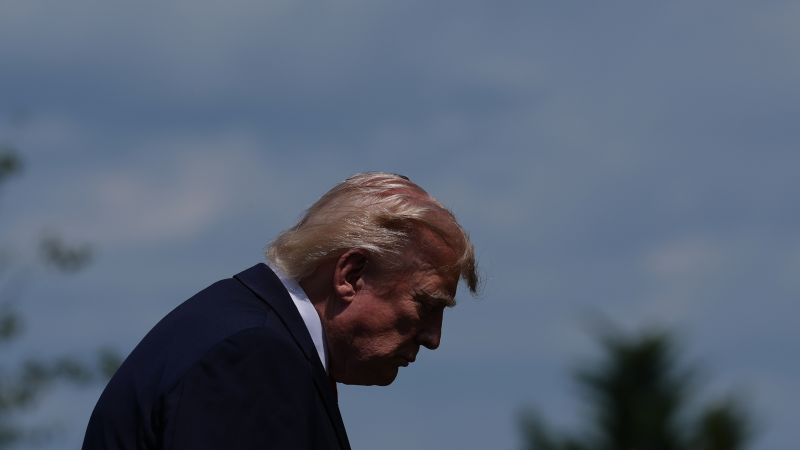
Trump’s Syria-Hezbollah Initiative Fears Lebanon’s Stability
Why Trump s proposal for Syria – Why Trump’s proposal for Syria – the idea of allowing Syria to engage Hezbollah independently – has sparked widespread concern in Lebanon. President Donald Trump introduced this strategy twice this month, suggesting that Damascus could better handle the conflict than Israel. This approach has unsettled Lebanese political leaders, as it risks reigniting Syria’s deep involvement in the nation’s affairs and destabilizing the delicate balance of power.
Historical Context and Syrian Influence
Syria’s footprint in Lebanon traces back to 1976, when its military forces were deployed as peacekeepers. Over time, this presence evolved into an occupation, with Syria maintaining control for decades. The country’s civil war, which ended in 1990, did little to curb Syrian influence, as tensions persisted. Many Lebanese recall the period when thousands vanished or were killed, fostering a legacy of distrust that continues to shape today’s politics.
Hezbollah’s alliance with Syria has been a cornerstone of Lebanon’s internal dynamics. As an Iran-backed militia, Hezbollah supported Bashar al-Assad during Syria’s civil war, ensuring vital supply routes to Tehran and Baghdad remained open. This partnership fortified Assad’s regime but also linked Lebanon’s security to Syria’s fate. With Assad’s 2024 ouster, his successor, President Ahmad al-Sharaa, a former al-Qaeda figure, has sought to break ties with Iran. Trump, however, sees Syria’s potential resurgence as an opportunity to reduce regional friction.
Expert Warnings and Sectarian Risks
“The sectarian risk here is significant. It could fracture Lebanon’s unity and create chaos. Sharaa would be making a grave error by letting Syria take the lead,”
Michael Young, a Lebanon specialist at the Carnegie Middle East Center, highlighted the dangers of Trump’s plan. He argued that Syria’s military intervention might deepen the country’s religious divisions, pitting Shiites against Christians and Druze. This could lead to a scenario where even groups that oppose Hezbollah might support its presence to avoid Syrian dominance. Young also warned that a Syrian-led effort could inadvertently bolster Hezbollah’s influence, undermining Lebanon’s quest for independence.
The uncertainty around al-Sharaa’s control over Syria’s forces complicates the situation. While he aims to align with Western powers, his ability to manage the military remains unclear. A Syrian incursion into Lebanon could entangle the nation in regional conflicts, challenging its efforts to reclaim sovereignty. This dilemma underscores the fragility of Lebanon’s political equilibrium, which has long been balanced between competing factions.
Geopolitical Motivations and Regional Impact
Trump’s proposal also reflects his frustration with Israeli Prime Minister Benjamin Netanyahu. The president has criticized Netanyahu for his relentless attacks on Hezbollah, which he believes hinder U.S.-Iran negotiations. By shifting the focus to Syria, Trump may seek to ease tensions with Iran and reduce the pressure on Lebanon. However, this could also embolden Syria to reassert its dominance, potentially reigniting hostilities with Israel.
Netanyahu, in turn, has defended his actions, claiming that targeting Hezbollah is essential for Israel’s security. His government’s attacks on Lebanese forces have drawn criticism from Trump, who views them as counterproductive. This clash highlights the broader challenge of reconciling regional interests with Lebanon’s fragile political structure. If Syria’s forces enter Lebanon, it could create a new axis of power, further complicating the country’s stability.
The proposal’s implications extend beyond immediate military action. It signals a shift in U.S. strategy, prioritizing Syria’s role in the Middle East conflict. Analysts warn that this could lead to a prolonged engagement between Syria and Hezbollah, with Lebanon caught in the crossfire. The country’s government, already struggling to assert control, may find itself sidelined in a new regional rivalry. Such a scenario would test Lebanon’s ability to maintain neutrality and protect its citizens from the fallout.
