
‘I love the inflation’: Breaking down the Vance vs. Whoopi debate about what Trump said
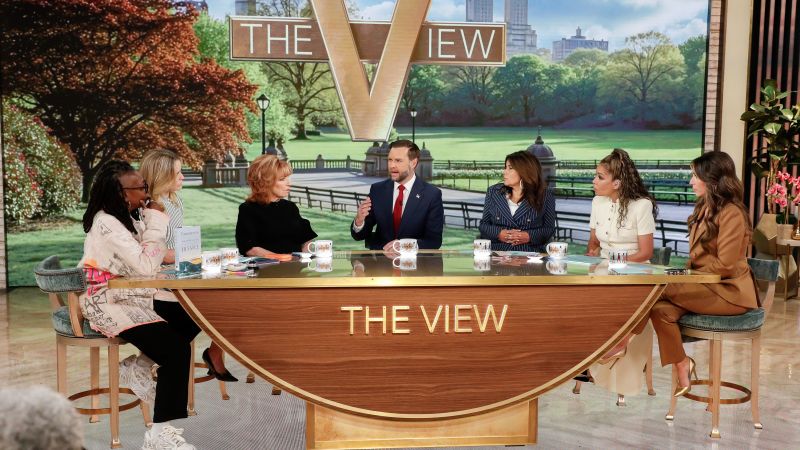
Trump’s ‘I Love the Inflation’ Remark Sparks Debate Over Interpretation
I love the inflation – During a recent political discussion, President Donald Trump’s statement “I love the inflation” ignited a flurry of reactions, particularly from Vice President JD Vance and co-host Whoopi Goldberg. The phrase, seemingly simple, became the focal point of a heated exchange over its intended meaning. While Vance provided a specific interpretation, Goldberg challenged its accuracy, highlighting the ambiguity that often surrounds Trump’s remarks. This disagreement underscores the broader debate about how to parse the president’s often disjointed and metaphorical language.
The Context of Trump’s Comments
Trump’s remarks occurred during a media appearance where he was asked about the latest inflation data. The Consumer Price Index (CPI) report, released in May 2026, showed a 4.2% increase in prices since May 2025, marking the highest rate in three years. Despite this, Trump expressed enthusiasm, stating, “No, I love it. The numbers were great.” His excitement seemed to contrast with the economic concerns many had raised, but his wording left room for multiple interpretations.
As the conversation unfolded, Trump began a lengthy explanation that included anecdotes about military actions. He mentioned the U.S. military’s operations in the Strait of Hormuz, claiming that oil prices had risen to $85 a barrel due to the attacks. “We took out 22 ships,” he said, “late at night, with no lights, because they don’t have any radar.” This narrative, while dramatic, appeared to serve as a pivot to his broader argument about the war’s impact on inflation.
Vance’s Defense and the Controversy
Vice President JD Vance, in a Tuesday interview on ABC’s “The View,” offered a different perspective. He asserted that Trump’s statement was not about enjoying the current inflation but about anticipating its decline after the war. “What he said is that he loves the fact that the inflation is going to come down when this war is over,” Vance explained, attempting to frame the president’s words as a forward-looking endorsement of economic recovery.
“Because as soon as this war is over, the inflation is going to come down.”
However, Whoopi Goldberg, one of the show’s co-hosts, quickly disputed this interpretation. “That’s not what he said,” she remarked, pointing to the original remarks as evidence. The video of the event, which was later reviewed, confirmed Goldberg’s claim: Trump never explicitly tied his affection for inflation to the war’s conclusion. Instead, he appeared to praise the current inflation numbers while introducing a series of unrelated points about military operations.
Vance’s interpretation, while plausible, was based on an unfinished sentence. Trump’s remarks were part of a rambling monologue that often included abrupt shifts in focus. The vice president argued that Trump’s statement was a deliberate statement, but critics pointed out that the president’s style is characterized by sudden asides and loosely connected ideas, a tactic he refers to as “the weave.” This technique, according to Trump, allows him to maintain momentum in his speeches, though it can obscure the original message.
The Full Picture of Trump’s Statement
Revisiting the full context of Trump’s remarks reveals a pattern of verbal looping. The initial statement, “I love the inflation,” was followed by an elaboration that focused on the war’s impact on oil prices. “You know why?” he asked the reporter, then launched into a story about the U.S. military’s operations, which he claimed were instrumental in driving up oil costs. “We took out millions of barrels of oil,” he said, “and nobody knows it until right now.”
“We buried it, very hard to get. But now we had to make the second move.”
This narrative, though framed as a cause-and-effect explanation, seemed to veer into a self-congratulatory account of his leadership. Trump highlighted the pre-war economic conditions, including record stock market gains and high 401(k) balances, before pivoting to justify the attack on Iran. “I hate to do this to you guys,” he said, “but Iran’s going to have a nuclear weapon very soon. We have to go and attack.”
Despite his claims of economic success, the war’s timing and the subsequent rise in oil prices raised questions about its impact on inflation. While Trump framed the conflict as a necessary step to control costs, the data suggested otherwise. The CPI report indicated that inflation had remained stubbornly high, challenging his assertion that it would soon decrease. This disconnect between his rhetoric and the data highlights the complexity of interpreting his statements.
The Debate Over Language and Intent
Vance’s defense of Trump’s statement rested on the idea that the president’s words were part of a larger argument. He suggested that Trump was attempting to communicate that the war would lead to a reduction in inflation, even if the sentence was incomplete. This interpretation allowed Trump to present himself as a forward-thinking leader, anticipating economic recovery through military action.
On the other hand, Goldberg’s rebuttal emphasized the importance of literal accuracy. She argued that Trump’s statement, as recorded, was a direct expression of approval for inflation rather than a conditional statement. “You know what I really love?” Trump said, “I love the inflation.” This phrasing, devoid of qualifying words like “when” or “because,” seemed to leave little room for ambiguity. Yet, the president’s habit of leaving sentences unfinished and shifting topics mid-paragraph meant that his intended message could be open to interpretation.
The debate over the statement reflects a broader tension in political discourse: the balance between rhetoric and reality. While Trump’s words may have been crafted to align with his narrative of economic strength, Vance’s interpretation aimed to soften the impact of the president’s remarks. This exchange not only illustrates the challenges of parsing Trump’s speech but also underscores how different perspectives can shape the same statement into vastly different meanings.
As the discussion continued, Trump’s remarks expanded into a detailed account of the war’s progression, including the destruction of Iranian military assets and political leaders. He boasted about the effectiveness of the attacks, claiming they were “totally successful” and “very hard to get.” However, none of these points directly linked to his original assertion about inflation. Instead, they reinforced his image as a decisive leader, even if the connection between the war and the economy was tenuous.
This incident serves as a microcosm of the challenges faced by political analysts and journalists when interpreting Trump’s statements. His tendency to use abrupt transitions and incomplete sentences creates a landscape where meanings can be shaped by context, tone, and the speaker’s intent. While Vance’s interpretation offered a narrative that aligned with the war’s economic consequences, Goldberg’s focus on the literal phrasing underscored the potential for misrepresentation.
In the end, the debate over Trump’s remark highlights the importance of clarity in political communication. Whether the president was expressing genuine affection for inflation or weaving a narrative about its decline, the way his words were framed played a crucial role in shaping public perception. As the discussion continues, the key will be to determine whether his intent was to convey a specific economic message or to embrace a more metaphorical approach to the issue.
The full transcript of Trump’s remarks, available for reference, includes additional commentary on Venezuela, the U.S. stock market, and the aftermath of the military strikes. While these points are distinct from the inflation discussion, they contribute to the overall impression of a leader who is as much a storyteller as an economist. The controversy surrounding his statement, therefore, is not just about the words he used but about the broader implications of his communication style in shaping public understanding of complex issues.
