
Jay Wright molded Jalen Brunson and the Nova Knicks. In their moment of glory, he was watching – on his phone, from his car
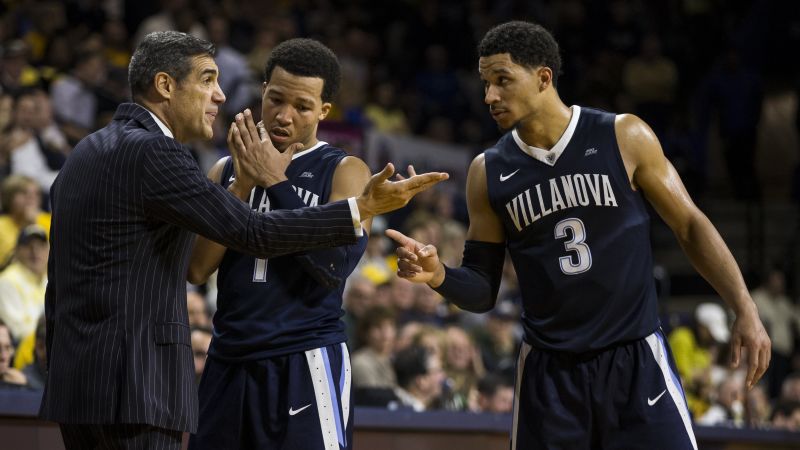
Jay Wright molded Jalen Brunson: Knicks’ Triumph from the Sidelines
Jay Wright molded Jalen Brunson, a cornerstone of the Knicks’ recent success, as he watched the final moments of the NBA Finals from a car in Red Bank, New Jersey. On Saturday night, the former Villanova coach was at a wedding reception, seated beside his wife, Patty. While the world celebrated the Knicks’ hard-fought championship, Wright remained in the background, embodying the humility that has defined his career. His influence on Brunson and the team’s journey to victory was evident, even as he declined to take center stage. The contrast between his off-court presence and the on-court glory highlighted the quiet legacy of a mentor who shaped not just one player, but an entire team.
A Coach’s Quiet Triumph
Wright’s mentorship of Jalen Brunson began years before the Knicks’ historic run, during their time at Villanova. As a coach known for fostering discipline and unity, Wright transformed Brunson into a leader, instilling the same values that propelled his Wildcats to multiple championships. His philosophy of teamwork over individual accolades became a blueprint for the Knicks, whose collective effort mirrored the lessons from his past. Even during the playoffs, Wright avoided the spotlight, choosing to observe from a distance rather than dominate the narrative. This decision underscored his belief that the Knicks’ success was a shared achievement, not a personal triumph.
Despite the accolades, Wright remained focused on the process. “They understood that we’re in this process and we have to learn,” he said. “There’s no celebrating the previous game. It’s that mental toughness, that’s why they won.” This mindset, honed through years of coaching, became central to the Knicks’ identity. Players like Brunson and Josh Hart exemplified this approach, prioritizing the team’s mission over personal recognition. Wright’s role was to guide them, not to claim the spotlight—his presence at the wedding was a reminder of his role as a coach who shapes futures, then steps back to let them shine.
The Villanova Blueprint
Wright’s coaching style, rooted in the Villanova tradition, emphasized relentless work ethic and a culture of “attitude.” This term, central to his philosophy, was more than a slogan—it was a mindset that drove his teams to excellence. At Villanova, players were rewarded for effort, from diving for loose balls to taking charges, creating a legacy of accountability. These principles, now embedded in the Knicks’ DNA, helped transform a group of underdogs into champions. The team’s success was not just a product of talent, but of the culture Wright helped cultivate, ensuring that each player’s growth aligned with the collective goal.
When the Knicks rose to prominence, their journey echoed the strategies that defined Wright’s career. The 2010s saw Villanova’s dominance through disciplined play and mental toughness, traits that now fuel the Knicks’ rise. Jalen Brunson, once a standout at Villanova, carried that same intensity to the NBA, where his leadership became pivotal. Wright’s ability to mold athletes into leaders extended beyond the court, as his mentorship influenced the Knicks’ mindset and their ability to thrive under pressure. The blend of structure and adaptability, a hallmark of his coaching, allowed the team to overcome challenges and secure their first title in decades.
A Legacy Beyond the Spotlight
As the Knicks’ victory unfolded, Wright’s role remained understated. He often spoke of the players’ own intelligence and resilience, crediting them for the final outcome. “There are certain things we taught them,” he admitted, “but with their own experiences and the families around them, they took it to another level.” This perspective reflects his deep belief in the players’ agency, even as the Knicks’ triumph reminded the world of his impact. The term “Nova Knicks” itself, a nod to their unexpected rise, encapsulates the journey Wright helped shape—a story of growth, perseverance, and collective success.
Wright’s absence from the celebration was intentional. By staying in the background, he allowed the team to take ownership of their achievement, a lesson he had long practiced. His presence at the wedding symbolized this balance: a moment of personal joy, yet tethered to the broader narrative of the Knicks’ journey. The legacy of his work with Jalen Brunson and others is now etched into the fabric of the team’s success, proving that the greatest impact often lies in the quiet moments of guidance and belief. As the Knicks bask in their glory, Wright’s role as a mentor remains a testament to the power of leadership that prioritizes growth over recognition.
