
US-Iran agreement takes the heat off Kevin Warsh
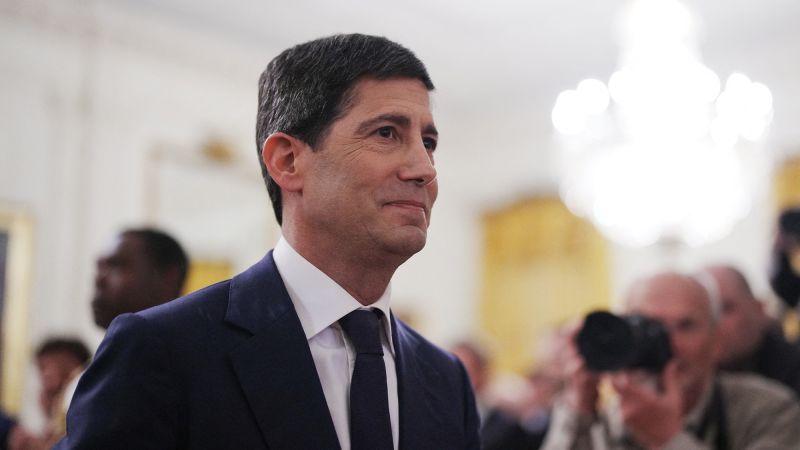
US-Iran Agreement Eases Pressure on Federal Reserve Nominee Kevin Warsh
US Iran agreement takes the heat – Kevin Warsh, the Republican nominee for the Federal Reserve chairman position, has seen a significant shift in his economic challenges following the recent US-Iran accord. The agreement, which aims to halt the 15-week-long conflict and reopen the Strait of Hormuz, has reduced the immediate pressure on Warsh to navigate a dual crisis of weakening employment and surging inflation. While the Fed’s mandate requires balancing job growth with price stability, the temporary ceasefire in the Middle East has eased fears of a prolonged inflationary surge, offering the central bank a clearer path forward.
Initial Strains: A Fragile Labor Market and Rising Costs
When President Donald Trump announced Warsh’s nomination in January 2026, the US economy was grappling with its most challenging labor market in decades. Unemployment rates had climbed, and job creation had slowed to a crawl, raising concerns about the Fed’s ability to stabilize the economy. Compounding these issues, the ongoing war with Iran caused global energy prices to spike, with crude oil, diesel, and gasoline reaching record highs. This volatility created a precarious situation for the central bank, as officials debated whether to cut interest rates to boost employment or raise them to curb inflation.
“The economy was in a state of tension, with two opposing forces pulling in different directions,” said Krishna Guha, a senior economist at Evercore ISI. “Warsh faced the daunting task of steering the Fed through this uncertainty without causing further disruption.” The conflict in the Persian Gulf, which disrupted oil shipments and drove up energy costs, heightened fears of a sustained inflationary spike. At the time, analysts warned that the Fed might have to implement aggressive rate hikes, risking a slowdown in economic activity. However, the latest developments suggest a more measured approach is now on the table.
Market Reactions: Oil Prices Drop, Inflation Concerns Ease
The easing of tensions between the US and Iran has already begun to reshape market dynamics. On Monday, oil futures hit three-month lows, signaling a cooling trend in energy prices. Gasoline costs, which have been a key driver of consumer inflation expectations, fell for 25 consecutive days, reaching two-month lows. These declines are expected to alleviate pressure on the Fed to act swiftly, particularly in the context of June’s inflation data.
“The downward movement in oil prices means the inflationary threat is less severe than initially feared,” Guha noted in a client note. “This reduces the urgency for rate increases and allows the Fed to adopt a more patient stance.” The agreement also appears to diminish the risk of supply chain disruptions, which had been a persistent concern during the war. “The re-opening of the Strait of Hormuz is a positive development, but the full impact will take time to materialize,” Guha added.
Strategic Implications for the Fed: A More Confident Outlook
For the Federal Reserve, the US-Iran deal marks a turning point in its policy considerations. While the immediate economic environment remains complex, the agreement has provided a buffer against abrupt shocks. “The Fed is now in a stronger position to manage its dual mandate,” said Benson Durham, a former Fed official and founder of DASM LLC. “The worst-case scenario of aggressive rate hikes is less likely to materialize.”
Durham emphasized that the agreement has given the central bank a sense of certainty. “It means the Fed can focus on long-term stability rather than reacting to short-term volatility,” he explained. This shift aligns with the views of dovish officials within the Fed, who have advocated for a gradual approach to monetary policy. “The agreement supports a wait-and-see strategy, which is crucial for maintaining economic momentum,” Durham said.
Remaining Challenges: Internal Dynamics and Policy Uncertainty
Despite the relief from external pressures, Warsh still faces internal hurdles within the Federal Reserve. The new chairman must navigate the diverse perspectives of his colleagues, some of whom had previously criticized his approach. “Kevin is a strategic thinker with a strong understanding of economic fundamentals,” said Eric Rosengren, former president of the Federal Reserve Bank of Boston. “His ability to connect with peers will be key to securing support for his policies.”
Rosengren, who worked alongside Warsh during the 2008 financial crisis, highlighted the importance of personal rapport in Fed decision-making. “Even though he was critical of some policies in the past, his intelligence and approachability make him a formidable leader.” However, the Fed’s outlook remains cautious. “The formal signing of the agreement isn’t until Friday, so we can’t yet be certain about the long-term implications,” Rosengren cautioned. “The market is still watching for signs that the conflict has truly been resolved.”
Looking Ahead: A Balanced Path for the Fed
While the US-Iran deal has eased immediate concerns, the Fed’s path forward remains nuanced. “The agreement is a positive signal, but it doesn’t eliminate all risks,” Durham stated. “There’s still uncertainty about how the deal will affect global oil markets and geopolitical stability.” For instance, while Brent crude prices are projected to stabilize in the coming months, the futures market suggests a return to $75 per barrel may take until 2028. This timeline underscores the need for continued vigilance, even as the central bank gains a reprieve.
“The Fed is not out of the woods yet, but it has a clearer roadmap,” said Rosengren. “The agreement allows for a more flexible response to inflation, which is essential given the current economic climate.” This flexibility could be critical in addressing other challenges, such as rising consumer debt or potential slowdowns in the housing market. However, the central bank must also prepare for the possibility of renewed tensions, which could again disrupt energy prices and inflation trends.
Conclusion: A Strategic Win for Warsh
The US-Iran agreement has proven to be a strategic advantage for Kevin Warsh, helping him avoid a high-stakes dilemma in his first weeks as Fed chairman. While the broader economic landscape remains challenging, the deal has provided the central bank with a reprieve, allowing it to focus on structural reforms rather than emergency interventions. “This agreement is a game-changer,” said Guha. “It gives the Fed the breathing room to make more informed decisions.”
As the Federal Reserve prepares for its next policy meeting, the shift in energy prices and geopolitical stability offers a renewed sense of optimism. “The key takeaway is that the Fed can now approach inflation with a more measured hand,” Durham said. “This is a welcome development for both the economy and the central bank’s credibility.” However, the success of Warsh’s tenure will ultimately depend on his ability to balance short-term stability with long-term growth, a task that requires both skill and adaptability. For now, the agreement has taken the heat off him, but the test of his leadership remains ahead.
