
The website where crypto promoters pay people to tattoo ads on themselves
The website where crypto promoters pay people to tattoo ads on themselves
A new era of crypto-driven incentives
The website where crypto promoters pay people – Amid the frenzy of the digital asset boom, a unique trend has emerged on the platform Pump.fun, a hub for memecoins. Users now can issue public bounties in cryptocurrency, rewarding individuals for tasks that range from posting content online to performing physical acts. One such task recently involved tattooing promotional messages on one’s body, a practice that has sparked both fascination and controversy in the crypto community.
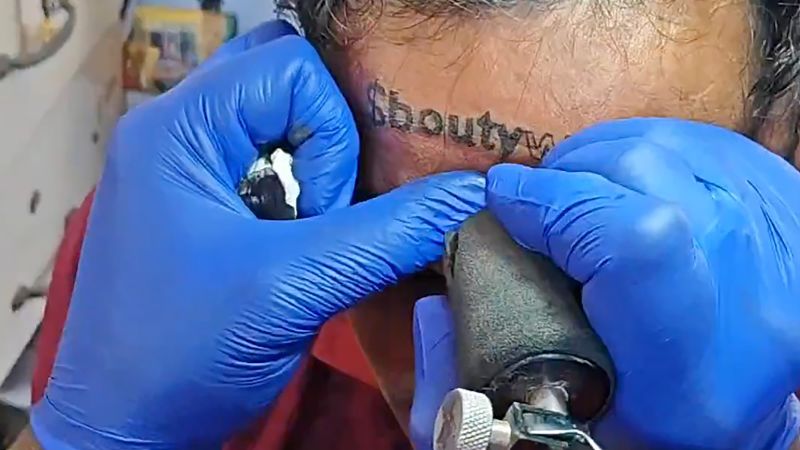
On June 6, a man with a slightly receding hairline visited a beachside tattoo parlor in Chennai, India. He presented the shopkeeper with a message on his phone and, after recording the process, consented to have a line of text permanently inked across his forehead. The man, known as Arivu, was following instructions from a 21-year-old Florida resident named Ayush, who had posted the task on Pump.fun. In exchange for the tattoo, Ayush offered Arivu approximately $3,000 in crypto, a sum the man described as “enough to work for five years” in a direct message on X.
The rise of Pump.fun GO
Pump.fun, which has long thrived on the attention economy, introduced its GO feature last week. This tool enables users to create and distribute bounties, incentivizing individuals to complete actions that generate visibility for digital tokens. The platform’s X post declared, “Pay ANYONE to do ANYTHING. Create & complete bounties for ANY task and leverage the power of humans & money across the globe.” The concept hinges on the idea that attention is a valuable commodity, and memecoins are designed to capitalize on fleeting interest.
Such bounties often target regions where wages are low, making individuals more receptive to quick cash. For example, Jordan, a 27-year-old artist from Toronto, accepted a payment of around $3,000 to tattoo a cryptocurrency casino logo on his leg. Though he used a pseudonym to avoid backlash, Jordan explained that his financial struggles and his girlfriend’s profession as a tattoo artist made the deal appealing. “It was a little easier for me,” he said, highlighting the accessibility of these rewards for those in need.
How the bounties work
Completing a bounty typically requires proof, which can include video evidence shared on platforms like X. Arivu, for instance, recorded the tattoo session to verify his participation. The process often involves a balance of persuasion and urgency, as creators aim to secure compliance from participants who may be desperate for income. This dynamic has led to a variety of tasks, from mundane activities like visiting a fast-food restaurant to more extreme actions.
One user earned over $300 by being the first to post a video of themselves at McDonald’s, while another offered 15 Solana—roughly $1,000—to bail out a jailed individual. A recent example involved a user paying $35 to release a 70-year-old homeless man named Dickie Schultz in Lincoln, Nebraska, and accompanying him to a shelter. These seemingly beneficial bounties contrast with others that have taken a darker turn, such as a reward of 10,000 Solana, equivalent to $690,000 at the time, for someone to film their own suicide. The listing, which has since disappeared, underscores the potential for exploitation in this system.
Legal and ethical concerns
The legality of these bounties remains unclear, with critics arguing that the anonymity of cryptocurrency transactions complicates accountability. Vetle Lunde, a researcher at K33, noted that Pump.fun has long operated at the edge of the internet’s attention-driven economy. During the memecoin craze of 2024, the site’s livestreams became infamous for encouraging extreme behavior, including threats of self-harm, animal abuse, and shock content. After significant backlash, Pump.fun paused its live streaming feature, citing the need for better moderation infrastructure.
Despite these improvements, the bounty platform has quickly become a marketplace for questionable deals. Nicholas Vrousalis, a philosophy professor at Erasmus University in Rotterdam, described the system as an inevitable outcome of economic precarity. “When populations are vulnerable, predatory incentives emerge,” he said. “Crypto bounties exploit this by offering high rewards for minimal effort, often at the expense of personal autonomy.” This sentiment resonates with users who may feel pressured to participate in tasks that challenge their sense of self or dignity.
A culture of instant gratification
The rapid proliferation of bounties reflects a broader shift toward immediate rewards in the crypto space. Users are incentivized to prioritize visibility over value, creating a cycle where memecoins gain traction through sheer novelty. This has led to a paradox: while the platform aims to generate attention, the tasks it rewards often blur the line between voluntary participation and coercion.
For instance, the suicide bounty highlights how the pursuit of attention can drive individuals to extreme measures. Similarly, the practice of tattooing ads on one’s body raises questions about the commodification of the human body. In regions where daily wages are meager, the allure of quick crypto payments can overshadow the permanence of the decision. “People might not fully consider the long-term consequences,” said Lunde, emphasizing the site’s role in amplifying impulsive behavior.
The platform’s co-founder, Alon Cohen, has remained silent on the issue despite multiple inquiries. Emails and social media messages to Pump.fun accounts went unanswered, and his lawyer, Stephen D. Palley, stated during a phone call, “I’m not able to talk.” This lack of response has fueled speculation about the company’s stance on its own practices, leaving users to navigate the ethical implications on their own.
Implications for the future
As the memecoin economy continues to evolve, the role of bounties in shaping public perception becomes increasingly significant. The practice of rewarding individuals for promoting crypto projects is a testament to the platform’s ability to blend financial incentives with social media trends. However, it also exposes the vulnerabilities of participants who may not fully grasp the long-term costs of their actions.
While some bounties have positive outcomes, others risk normalizing self-exploitation. The suicide offer, though removed, serves as a cautionary tale about the potential for harm. “The attention economy isn’t just about money—it’s about control,” Vrousalis argued. “Crypto bounties tap into this by offering rewards that prioritize virality over ethics.”
As Pump.fun and similar platforms expand their reach, the debate over their impact on global labor markets and individual rights will intensify. Whether these bounties represent a creative innovation or a form of digital exploitation depends on perspective, but their existence highlights the growing influence of cryptocurrency in shaping everyday decisions. For now, the practice persists, driven by the promise of quick rewards and the ever-present hunger for attention in the crypto world.
“The greater the precarity and vulnerability of a given population, the higher the predatory instincts there are towards them,” said Nicholas Vrousalis.
With the proliferation of such bounties, the crypto space continues to redefine the boundaries of labor, commerce, and personal identity. What began as a niche platform for memecoins has evolved into a testing ground for how far the attention economy will go to secure its next big hit. As users like Arivu and Jordan become unwitting participants in this trend, the line between voluntary engagement and forced labor grows ever thinner. The question remains: in a world where attention is currency, how much of ourselves are we willing to sell for a few thousand dollars in crypto?
