
Tehran lambasts US ‘obstruction’ of Iran’s soccer team as players land in Mexico ahead of World Cup
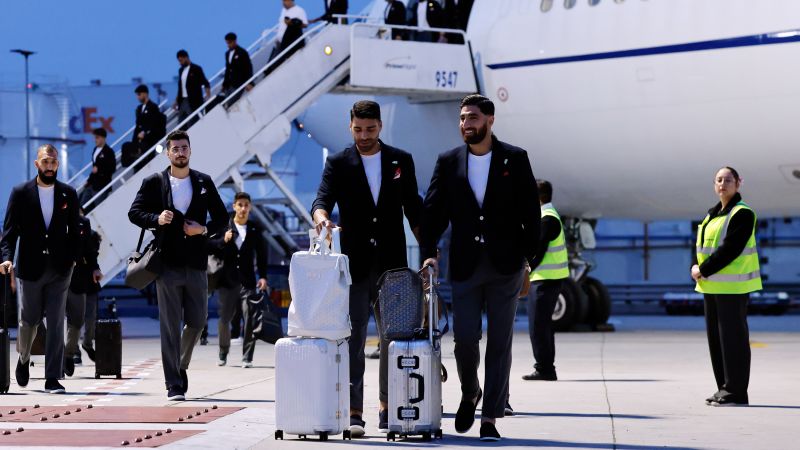
Tehran Critizes US Obstruction of Iran’s World Cup Soccer Team
Tehran lambasts US obstruction of Iran’s soccer team as the national squad arrives in Mexico to prepare for the World Cup. The Iranian government has accused the United States of unfairly delaying visa approvals, which are critical for the team’s participation in the tournament. This incident has intensified diplomatic tensions, with officials in Tehran claiming the restrictions are politically motivated and detrimental to the team’s readiness. Iran’s national football team, which had initially planned to compete in the United States, now faces challenges in adapting to a new location just days before their first matches.
Visa Delays and Political Motives
Iranian officials argue that the U.S. visa policies have been deliberately timed to create obstacles for the team. “The Americans are obstructing Iran’s team with calculated delays,” said Mehdi Taj, president of the Iranian Football Federation, in a statement reported by semi-official media. “This reflects a lack of fairness in the tournament’s organization.” The visas, granted only a day prior to the team’s matches, are seen as a strategic move to undermine Iran’s sports diplomacy. Meanwhile, the U.S. maintains that its visa process is designed to ensure security, citing concerns about potential threats from individuals linked to terrorism.
“What kind of treatment is this? I hope this situation is corrected,” remarked Amir Ghalenoei, Iran’s head coach, as he addressed the logistical hurdles faced by his team.
Geopolitical Rivalry on the Pitch
The World Cup has become a stage for broader geopolitical rivalry, with Iran and the U.S. clashing over visa access. Iranian state media emphasized that the tournament represents a chance to showcase national pride, even amid international conflict. Mexican President Claudia Sheinbaum recently welcomed the Iranian team to the country, positioning it as a neutral ground for competition. This arrangement, however, does not fully alleviate Tehran’s frustrations, as the U.S. continues to cast doubt on Iran’s ability to participate under normal conditions.
With the World Cup serving as a backdrop for political tensions, the Iranian team’s journey has taken on symbolic significance. The focus keyword “Tehran lambasts US obstruction of Iran” appears here again, reinforcing its relevance. Analysts note that such political interference in sports has historical precedents, yet the current situation highlights a new level of strategic maneuvering by the U.S. to assert influence over Iran’s international presence.
Logistical Hurdles and Team Adjustments
Iran’s soccer team is now based in Tijuana, Mexico, where they will face New Zealand, Belgium, and Egypt in upcoming matches. Despite the visa delays, the team remains determined, with players and staff adjusting to the new environment. However, some management personnel and media representatives have yet to secure visa clearances, according to Tasnim news agency. These challenges have sparked discussions about the impact of political decisions on sports logistics and team morale.
“The team should not be penalized for the geopolitical situation,” said an Iranian sports official, as the focus keyword reappears in the context of broader criticism.
International Reactions and Soft Power
The controversy has drawn attention from international observers, with some highlighting the role of soft power in global sports. Iran’s national team is viewed as a symbol of resilience, and their participation in the World Cup is expected to boost national morale. However, the U.S. obstruction has raised questions about the balance between security and sportsmanship. As the tournament approaches, Tehran continues to voice its concerns, ensuring the focus keyword remains central to the narrative.
While the World Cup is primarily a sporting event, its political dimensions cannot be ignored. The Iranian Embassy in Ankara reiterated its stance, accusing the U.S. of using visa restrictions as a tool for interference. This ongoing dispute underscores the complex interplay between sports and geopolitics, with the focus keyword anchoring the discussion throughout the article. The situation is likely to remain a point of contention as the tournament progresses.
