
Lawsuit aims to stop UFC fight at the White House
White House UFC Fight Faces Legal Challenge Over Authorization
Lawsuit aims to stop UFC fight – As the United States marks its 250th birthday, President Donald Trump’s plan to host an Ultimate Fighting Championship (UFC) event on the White House grounds has sparked a legal battle. A pair of Virginia-based individuals have initiated a legal action to halt the fight, which is part of a broader celebration for the nation’s bicentennial. The lawsuit, filed Saturday by the Public Integrity Project, centers on the claim that the structure erected on the presidential estate lacks proper authorization and environmental compliance.
Unauthorized Use of Presidential Property
The plaintiffs argue that the temporary setup on the White House South Lawn does not meet the required standards for public use. They emphasize that the event’s setup—specifically a large, purpose-built fight cage—has not been approved by Congress or subjected to an environmental review. This legal challenge comes as the administration asserts that the UFC match falls under a congressional mandate for events celebrating American heritage. However, the lawsuit disputes this, contending that the event’s primary purpose is commercial rather than historical.
According to the complaint, the use of the White House grounds to stage a profit-driven sports spectacle transforms a public space into a backdrop for private enterprise. The plaintiffs highlight that UFC President Dana White and Trump stand to gain financially from the event, citing a spring report that revealed Trump had purchased $50,000 worth of stock in the parent company of the UFC. This financial interest, they argue, undermines the event’s public benefit and raises concerns about the prioritization of private interests over national significance.
Symbolism and Public Reaction
On June 14, the White House will host the main event, coinciding with Trump’s 80th birthday. The day prior, a weigh-in for the fighters will take place at the Lincoln Memorial, a site revered for its historical and cultural importance. Plaintiff Paul Romano, a retired Air Force sergeant and Vietnam veteran, has expressed strong opposition to the use of this sacred location for a for-profit fight. “The Lincoln Memorial is a place of honor, where the sacrifices of those who served are remembered,” Romano stated in a news release. “Allowing it to serve as a backdrop for a private event that generates revenue for the president and his allies is a betrayal of its purpose.”
“Using it as a backdrop for a for-profit cage fight so the President and his friends can make money is a desecration.”
The lawsuit further challenges the administration’s narrative that the event is a celebration of American history. Instead, it frames the fight as a marketing opportunity for the UFC’s brand and Trump’s personal legacy. The plaintiffs suggest that the event’s focus is more on promoting the UFC and the 80th anniversary of Trump’s birth than on commemorating the 250th year of American independence. This critique has drawn attention to the perceived disconnect between the event’s promotional angle and its public significance.
Expansion of the Fight Cage and Infrastructure
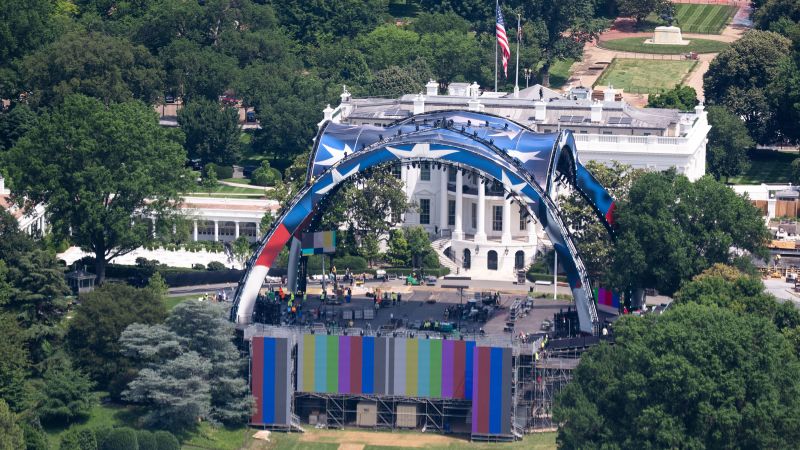
While the White House is now overshadowed by a massive arched lighting grid dubbed “The Claw” by the UFC, the event’s infrastructure includes a fight cage constructed on the South Lawn. The setup, which is expected to draw significant media and public interest, has already begun taking shape. The organizers have emphasized that the event will be “the greatest show on Earth,” a phrase Trump has used to describe his vision for the occasion. Yet, critics argue that this grandeur comes at the expense of public trust and the symbolic value of the White House.
The Public Integrity Project, the group representing the plaintiffs, has called the event a “profoundly corrupt scheme to enrich the President and his allies.” Founder Brendan Ballou added that if the fight proceeds, it could set a precedent for the commercialization of national landmarks. “Our national monuments will become little more than branding opportunities for the wealthy and influential,” he warned. This sentiment reflects broader concerns about the use of government property for private gain, particularly in light of the UFC’s VIP packages, which range from $1 million to $1.5 million. These packages, the lawsuit suggests, are designed to maximize profits for the event’s organizers.
“If this fight is allowed to proceed, it will be only the beginning, and our national monuments will become little more than branding opportunities for the rich and well-connected.”
Historical Context and Legal Implications
The event’s timing—right at the height of the bicentennial celebrations—has intensified scrutiny over its authorization. While the administration points to congressional approval for events commemorating national milestones, the lawsuit argues that the UFC match is more of a self-promotional venture than a true celebration of American history. This debate underscores the tension between public spectacle and private enterprise, with critics questioning whether the White House is being used as a stage for commercial interests.
Historically, the White House has been a venue for significant events, from presidential speeches to diplomatic gatherings. However, the UFC fight represents a departure from this tradition, as it is a high-energy, profit-driven spectacle. The plaintiffs believe that the event’s placement on the South Lawn diminishes the historical weight of the space and turns it into a platform for personal and corporate gain. This perspective has resonated with some citizens, who view the fight as an affront to the symbolic value of the presidential estate.
Public and Private Interests in Conflict
The legal challenge highlights a broader issue: the balance between public and private interests in the use of national landmarks. The UFC’s ability to secure such a high-profile venue raises questions about transparency and accountability in the event’s planning. With construction crews already setting up the fight cage and the lighting grid, the debate is likely to intensify as the event approaches. The White House’s role as a symbol of national identity is now at the center of this controversy, with the lawsuit seeking to preserve its integrity against what it calls a commercial invasion.
CNN has contacted both the White House and the UFC for comment on the lawsuit, aiming to clarify the event’s legal basis and the administration’s stance. The UFC has defended the event as a legitimate celebration of American history, while the plaintiffs argue that the financial incentives for Trump and White overshadow its patriotic purpose. As the June 14 event nears, the question remains: does this fight represent a meaningful tribute to the nation’s heritage, or is it a calculated move to leverage public spaces for private benefit?
The controversy has also sparked discussions about the role of private entities in public events. While the UFC has framed the fight as part of the bicentennial festivities, the lawsuit suggests that the primary motivation is financial. This dynamic has led some to question whether the event will be a shared moment of national pride or a tool for personal enrichment. The weigh-in at the Lincoln Memorial, in particular, has become a focal point, as it combines historical reverence with the commercial allure of the UFC’s brand.
As the fight draws closer, the legal and public discourse surrounding it is expected to grow. The plaintiffs’ arguments about unauthorized use and financial exploitation are gaining traction, with the potential to reshape how such events are perceived. Whether the White House remains a symbol of national significance or becomes a venue for corporate branding will be a defining question of this moment in American history. For now, the event stands as a testament to the intersection of politics, sports, and public space, with its outcome poised to impact future celebrations of the nation’s milestones.
CNN has updated this story with additional details, including the financial stake Trump has in the UFC. The report underscores the personal and political dimensions of the event, adding fuel to the debate over its legitimacy. Devan Cole, a CNN reporter, has contributed to the coverage, ensuring that the public is informed about the evolving legal landscape. The lawsuit, while focused on the immediate event, also serves as a broader commentary on the potential for national landmarks to be repurposed for private interests.
