
From ‘The Wave’ to ‘Ole, Ole, Ole’: Mexico’s World Cup soccer traditions explained
From ‘The Wave’ to ‘Ole, Ole, Ole’: Mexico’s World Cup Soccer Traditions Explained
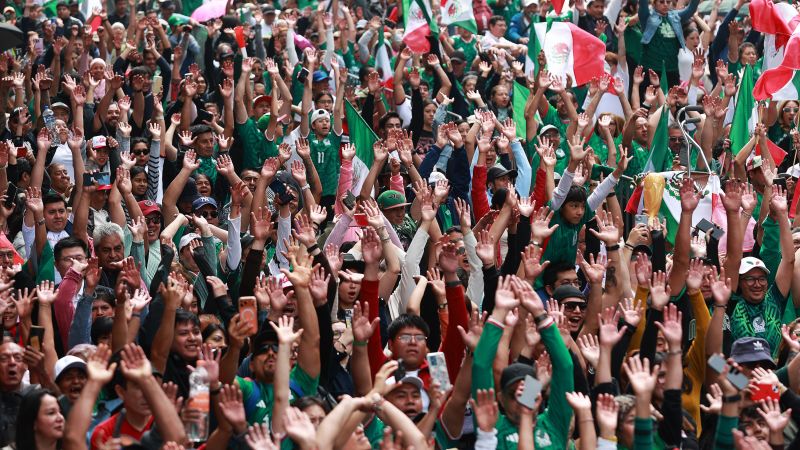
From The Wave to Ole Ole Ole – While numerous nations pride themselves on their soccer fervor, Mexico stands out as a global ambassador for one of the sport’s most iconic traditions: The Wave. More than four decades after the country transformed this ritual into a worldwide spectacle during the 1986 World Cup, local authorities claim they have just shattered the record for the largest wave ever seen. The achievement, made during a practice event on Saturday, coincides with the upcoming 2026 World Cup, which will feature 13 matches hosted in Mexico. The event on Paseo de la Reforma in Mexico City, where thousands of spectators synchronized their movements for several minutes, has drawn attention from international observers. CNN has sought confirmation from Guinness World Records to validate the record, which underscores the nation’s enduring role in shaping the culture of football.
A Symbol of Unity and Passion
For many, soccer in Mexico is not merely a game but a shared experience that transcends individual rivalry. The wave, a phenomenon now recognized globally, has become a defining feature of the country’s football culture. Its roots, however, remain a subject of debate. Some believe it originated in the United States during the late 1970s or early 1980s, while others argue that it was refined and popularized in Mexico. Regardless of its beginnings, the 1986 World Cup marked a turning point, when millions of viewers abroad first witnessed the spectacle and began referring to it as the “Mexican Wave.”
Experts emphasize that the wave is more than a physical act—it is a cultural expression. Fernando Vizcaíno, a researcher at the National Autonomous University of Mexico (UNAM), notes that when fans perform the wave, they are channeling a collective identity. “There’s no ball there, (fans) are not on the field, sometimes there’s no goal, and strictly speaking, there are no players involved. However, that movement, that wave, that successive ripple represents Mexico,” he explains. This sentiment resonates with the broader Mexican experience of soccer, where the atmosphere often feels more like a celebration than a competition.
On the eve of the 2026 World Cup, the spirit of Mexican football was palpable. The Toluca stadium, which hosted a friendly match between Mexico and Serbia on Thursday, was a hub of energy. Drums, horns, and cumbia music—known for its vibrant brass and accordion-driven rhythms—echoed through the stands, turning the venue into a bustling dance club. Fans chanted “Olé, Olé, Olé” in unison, their voices blending with the sound of spinning matracas, wooden flags that create a sharp clacking noise, and plastic horns called cornetas. These instruments, integral to the country’s soccer culture, were banned at the World Cup this year to curb excessive noise. Mexican authorities cited concerns that they could be used as weapons by unruly spectators, a precaution that has reshaped the traditional fan experience.
The Rhythm of the Game
The soundscapes of Mexican soccer matches are unlike any other. Chants, cheers, and songs are universal elements of the sport, but in Mexico, they are amplified and intensified. Gabriela, an operations coordinator at an auto parts store, described the atmosphere as “like a concert.” She noted that the combination of music and vocal energy makes the stadiums feel alive. “Believe me, with any genre of music, people immediately start partying,” she said, adding that certain styles—such as banda, corridos, and grupera—resonate particularly strongly with fans. These genres, rooted in Mexican folk traditions, have become the soundtrack of national pride.
The use of music and sound extends beyond mere entertainment. It serves as a unifying force, connecting fans across generations and regions. In Toluca, for example, the rhythmic beats of cumbia and the melodic calls of “Olé” created a sense of communal joy. This energy was on full display even before the 2026 World Cup officially kicks off, as the opening match between Mexico and South Africa on June 11 is already anticipated as a focal point of the event. The wave, along with these chants and musical elements, will likely play a central role in welcoming visitors from around the world to Mexico’s stadiums.
Yet not all vocal expressions are positive. FIFA has previously fined the Mexican Football Federation for the use of offensive chants, which have occasionally included slurs. In response, the federation has launched awareness campaigns to promote more inclusive and respectful fan behavior. Despite these efforts, some chants remain controversial. One of the most criticized is a four-letter word widely used in Mexican soccer culture. While the exact origin of such phrases is unclear, they reflect the intensity of the nation’s passion and the sometimes volatile nature of the sport’s fandom.
Legacy and Global Influence
The Mexican Wave’s legacy is a testament to the country’s ability to export its cultural flair to the global stage. Although its origins are contested, its popularity in the 1986 World Cup solidified Mexico’s reputation as a leader in football traditions. The event, held in Mexico City, became a landmark moment for the sport, as millions of viewers from North America and beyond marveled at the coordinated sea of fans rising in unison. This moment not only brought international attention to the wave but also highlighted the unique way Mexicans engage with the game.
As the 2026 World Cup approaches, the wave is once again at the forefront of the nation’s preparations. Mexico City’s tourism department has described it as “a universal symbol of joy, brotherhood and euphoria,” framing it as an essential part of the country’s identity. The recent record attempt on Paseo de la Reforma, where thousands of people created a massive ripple of movement, exemplifies the scale of this tradition. Such events are not just about sports—they are about community, history, and the shared experience of collective celebration.
For local fans, the wave is a source of pride and connection. Christian, who attended the Mexico vs. Serbia friendly in Toluca, likened the atmosphere to hosting a personal party. “It’s like when you have a party at your house and you invite your friends over. Now it’s our turn to be the hosts,” he said. This perspective captures the essence of Mexican football culture, where the stadium becomes a stage for collective expression and joy. As the World Cup nears, the hope is that this spirit will continue to thrive, drawing fans from across the globe to experience the unique energy that defines Mexican soccer.
The combination of music, chants, and synchronized movements creates an immersive environment that is hard to replicate elsewhere. In the past, fans would use matracas and cornetas to keep the momentum alive, but this year’s restrictions have forced them to rely on other forms of expression. Still, the core elements of the tradition remain intact. The “Olé, Olé, Olé” chant, for instance, has become a powerful rallying cry, its repetition echoing the rhythms of cumbia and other traditional music. Even the most raucous chants, like “Chiquitibum,” which gained fame through a beer commercial during the 1986 World Cup, are a testament to the creativity and enthusiasm of Mexican supporters.
As the world turns its attention to Mexico for the 2026 World Cup, the nation’s traditions are set to take center stage. The wave, the chants, and the vibrant musical backdrop will not only entertain spectators but also serve as a reminder of Mexico’s deep cultural ties to football. Whether it’s the synchronized movements of fans or the infectious energy of their cheers, these elements are more than just part of the game—they are a celebration of national identity. For visitors and locals alike, the experience promises to be unforgettable, reinforcing Mexico’s reputation as a soccer nation that knows how to turn every match into a festival of passion and unity.
