
India’s youth are fuming. A Boston University graduate wants to fix that
India’s Youth in Outrage: A Boston University Alumnus Aims to Spark Change
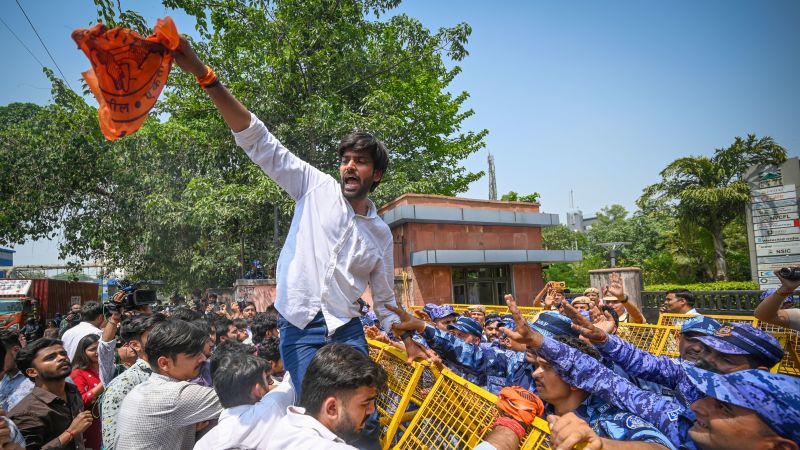
India s youth are fuming A Boston – India’s youthful demographic, numbering over 360 million individuals between the ages of 15 and 29, is growing increasingly restless. For years, students have grappled with exam irregularities, persistent joblessness, and a sense that their aspirations are slipping through their fingers. This mounting dissatisfaction has now transformed into widespread online outrage and street demonstrations, with demands for accountability echoing across the nation. Abhijeet Dipke, a 30-year-old graduate from Boston University, has decided to take matters into his own hands. Having witnessed the discontent from afar, he recently arrived in New Delhi, ready to channel the frustration of his peers into tangible action.
A Movement Born from Digital Fury
The Cockroach Janta Party, a satirical group that has gained traction on social media, is at the heart of this growing movement. With over 10 million Instagram followers, the group has become a symbol of youth frustration, using memes and sharp wit to critique systemic issues. Its name, a reference to a remark by India’s Chief Justice Surya Kant, initially sparked controversy. The justice had described the country’s unemployed youth as “cockroaches,” a metaphor that resonated deeply with many. While he later clarified the statement to refer to individuals using fake degrees, the image of young people as expendable remained powerful, fueling the party’s rise.
Dipke, the founder of the Cockroach Janta Party, has been at the forefront of organizing protests. On Saturday morning, he arrived at New Delhi’s airport under a heavy security guard, a precaution that reflects the high stakes of his mission. Despite the fear of potential arrests, he remains undeterred, stating that the country’s future is at risk. “How long can I fear jail? This nation belongs to all of us, not just one party,” he remarked in an Instagram post earlier this week. His goal is clear: to demand the resignation of Education Minister Dharmendra Pradhan, a call that has found support among thousands of students.
The Burden of High-Stakes Exams
A key catalyst for the youth’s anger is the intense pressure surrounding India’s university entrance exams. These tests, often seen as the gateway to success, are more than just academic hurdles—they are life-defining moments that shape the trajectories of millions. For many, the system is a source of immense stress, with leaks and technical glitches adding to the uncertainty. Families invest heavily in their children’s futures, only to face the possibility of unfulfilled promises.
Veronica Madan, a 24-year-old who has taken the highly competitive medical school entrance exam twice, shares this sentiment. She explains that the pressure begins long before the test day. “It starts months, even years, in advance,” she says. The constant anxiety of underperforming can be overwhelming, as the stakes are so high. Madan, who fell short of securing a place at one of India’s top medical colleges, now pursues a master’s degree in forensic science. “That rejection became my redirection,” she notes, highlighting how the system’s flaws can lead to unexpected opportunities.
India’s population of 1.4 billion people includes one of the youngest demographics globally, a fact that underscores the urgency of addressing these challenges. The transition from education to employment, however, remains a formidable obstacle. According to a report by Azim Premji University in Bengaluru, nearly 40% of graduates under the age of 25 are unemployed, while around 20% of those aged 20 to 29 are without work. These figures reveal a stark reality: despite their education and digital skills, many young Indians struggle to find meaningful jobs, exacerbating feelings of disillusionment.
From Online Criticism to Street Protests
The Cockroach Janta Party has not only captured attention online but has also inspired real-world action. Its virtual cockroach mascot, depicted through AI-generated images, has flooded social media platforms, becoming a visual representation of the youth’s struggle. This symbol has also made its way into mainstream media, appearing on news channels and in print publications. Now, the group aims to take its message beyond the digital sphere, bringing its demands to the streets.
Dipke’s protest at the Jantar Mantar monument this weekend is a prime example of this shift. The monument, a historic site in New Delhi, has become a focal point for political demonstrations, symbolizing the intersection of tradition and modern activism. By organizing such gatherings, Dipke hopes to rally support and put pressure on the government to address the root causes of youth discontent. “Our future is getting ruined,” he asserts, emphasizing the personal stakes involved in the movement.
The party’s success is a testament to the power of social media in amplifying youth voices. Within a single week, it garnered over 22 million followers, a rapid growth that highlights the shared frustrations of a generation seeking change. The blend of humor and critique has allowed the group to resonate with a broad audience, turning outrage into a movement. For many, the Cockroach Janta Party represents a new form of political engagement—one that is both creative and direct.
A Generation on the Brink
India’s young population is not just restless; it is also adaptable and innovative. Classrooms, startups, and digital platforms have become breeding grounds for upward mobility, with young people leveraging technology to create and connect. Yet, this optimism is tempered by the harsh realities of economic inequality and systemic inefficiencies. Inflation, rising living costs, and a growing perception of being overlooked by leaders have further fueled the discontent.
As the movement gains momentum, it challenges the status quo and calls for a redefinition of ambition in a rapidly evolving society. The Cockroach Janta Party’s viral success has not only highlighted the youth’s anger but has also sparked conversations about the future of education and employment in India. While the party’s leaders are optimistic about their impact, they acknowledge the need for sustained efforts to translate online energy into real-world change.
With the support of a growing number of followers, the movement continues to evolve. Dipke’s determination to lead protests underscores the resolve of a generation that is no longer content to wait for change. As the Youth Janta Party gains traction, it may redefine the political landscape of India, offering a new voice for those who feel their potential is being stifled. The road ahead is uncertain, but the passion of these young activists is a clear sign that the fight for a better future is far from over.
CNN has reached out to India’s Ministry of Education and the ruling Bharatiya Janata Party (BJP) for comments on the protests and the party’s influence. The response remains pending, but the message is clear: India’s youth are no longer silent. They are demanding accountability, transparency, and a future that reflects their capabilities and aspirations.
In a nation where ambition is often tied to academic and professional success, the Cockroach Janta Party represents a powerful statement. It is a reminder that the struggles of young people are not just personal but collective, and that their voices must be heard. As Dipke and others continue to mobilize, the movement may serve as a catalyst for broader reforms, ensuring that the next generation of Indians is not just surviving but thriving in the face of adversity.
