
Exclusive: Iran supreme leader’s adviser says talks deadlocked over $24 billion and warns of wider war
Exclusive: Iran’s Supreme Leader’s Adviser Says Talks Deadlocked Over $24 Billion, Warns of Wider War
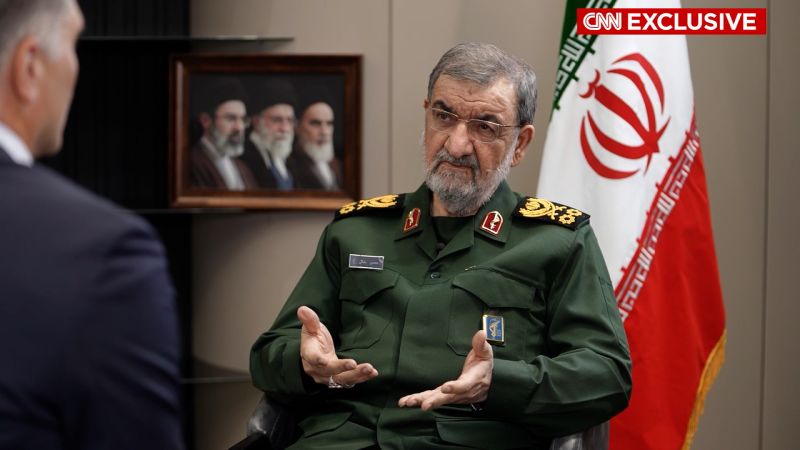
Exclusive – Iran’s military adviser, Mohsen Rezaei, has stated that a peace agreement between the United States and Iran depends on the Trump administration releasing $24 billion in frozen Iranian assets. In an exclusive interview conducted in Tehran, Rezaei emphasized that the current negotiations are at a standstill, with the decision now resting with Trump. “If the United States continues its current path, it will enter a dark corridor,” he warned, suggesting that resuming hostilities could lead to broader conflict.
Iran’s Financial Demands and U.S. Concerns
Rezaei outlined Iran’s demands during the talks, which include the immediate release of $12 billion in frozen funds once an interim agreement is signed. Another $12 billion is expected to be unfrozen at a later stage. U.S. officials, however, are wary of releasing these funds early, as they fear it could eliminate a critical leverage point over the Iranian regime. Trump has insisted that any deal must be far more robust than the 2015 nuclear accord, aiming to prevent what he calls “pallets of cash” from being handed over to Tehran.
Rezaei’s remarks offer insight into Iran’s strategic mindset, particularly regarding its postwar objectives and the role of the Strait of Hormuz. The Iranian leadership views the current conflict as a defining moment in its 47-year history, with Rezaei highlighting its significance. “This is the first time Iran has emerged victorious in wars, while in previous wars Iran has always been defeated,” he stated, framing the recent military actions as a turning point for the country.
Rezaei’s Background and Influence
As a member of the Islamic Revolutionary Guard Corps (IRGC)’s old guard, Rezaei played a pivotal role during the Iran-Iraq War. He led the force from 1981 to 1997, helping solidify its position as one of the Islamic Republic’s most formidable institutions. His career has been marked by a blend of hardline ideology and pragmatic approach, reflecting his deep roots in Iran’s security apparatus. Rezaei later joined the Expediency Council, which advises the Supreme Leader, and served as a vice president under former President Ebrahim Raisi.
Despite his political ambitions, Rezaei has never won a presidential election. He ran for the position four times but was unable to secure victory. This interview, conducted during a tense period of conflict, underscores his continued influence within Iran’s leadership. His close ties to the Supreme Leader, Ayatollah Mojtaba Khamenei, who has been absent from public view since sustaining injuries from an Israeli attack that killed his father on the war’s first day, add weight to his statements.
During the 40-day US-Israeli conflict that began in late February, Iran launched a series of retaliatory strikes targeting multiple countries across the region. These attacks included military installations, energy infrastructure, and civilian sites, demonstrating the country’s strategic reach. Tehran also reportedly aimed missiles at Diego Garcia, a US-UK military base in the Indian Ocean, to showcase its capability to strike distant targets.
Strategic Implications of the War
Rezaei cast doubt on the durability of a nuclear agreement with Trump, citing the former president’s decision to withdraw from the 2015 Iran nuclear deal. He criticized Trump’s approach, which he described as “ambiguity” in diplomatic talks. “If negotiations fail, Iran will be prepared for a potential US invasion,” he said, asserting that the country’s land power is significantly greater than its missile arsenal. This perspective suggests that Iran views itself as capable of defending its territory against any American military action.
Rezaei’s comments also reflect Iran’s broader ambitions. He emphasized the importance of the Strait of Hormuz, a vital waterway for global oil trade, as a key strategic asset. The Islamic Republic’s actions during the war have been designed to assert control over this region, potentially disrupting international supply chains and signaling its growing influence in the Gulf. The choice to strike military and energy facilities highlights Iran’s dual strategy of both military deterrence and economic leverage.
In the interview, Rezaei’s tone was firm yet measured, underscoring the gravity of the situation while maintaining an air of confidence. He spoke of Iran’s resilience and the strategic advantages it holds, particularly in the face of external threats. “The world will understand Iran’s true capabilities,” he said, when discussing the potential for a US invasion. This statement implies that Iran is not only prepared for war but also believes its military might can serve as a powerful deterrent.
Rezaei’s remarks provide a window into the decision-making processes within Iran’s leadership. As a senior figure in the security establishment, his insights carry substantial weight, especially given his proximity to the Supreme Leader. The interview, conducted under the conditions of CNN’s operations in Iran with government permission, highlights the delicate balance between editorial independence and political alignment. Rezaei’s statements were carefully crafted to reflect Iran’s stance without compromising the integrity of the report.
The Path Forward
With the negotiations in a deadlock, Rezaei suggests that the fate of the talks will be determined by Trump’s willingness to meet Iran’s financial demands. The former president’s insistence on a stronger agreement than the 2015 deal has created a significant hurdle for the Iranian side. Rezaei’s interview underscores the urgency of resolving the impasse, as prolonged conflict could lead to escalating tensions beyond the immediate region.
The $24 billion figure, which divides into two phases, represents a critical component of Iran’s strategy to secure its interests. By tying the release of funds to specific milestones, Tehran aims to ensure that any agreement will reflect its strategic gains. Rezaei’s warning of a wider war serves as a reminder of the potential consequences of a failed negotiation, with Iran prepared to escalate its efforts if needed.
As the interview concludes, Rezaei’s words echo the determination of Iran’s leadership. The country’s actions during the war have been a testament to its resolve, and the standoff with the US continues to shape the geopolitical landscape. Whether the talks will break the deadlock remains uncertain, but Rezaei’s statements provide a clear sense of Iran’s priorities and its readiness to defend them.
Editor’s Note: CNN operates in Iran only with the permission of the government but maintains full editorial control of its reports.
