
NASA directs its ISS crew members to board spacecraft amid leak repair attempt
NASA Directs ISS Crew to Seek Shelter Amid Leak Repair on Russian Module
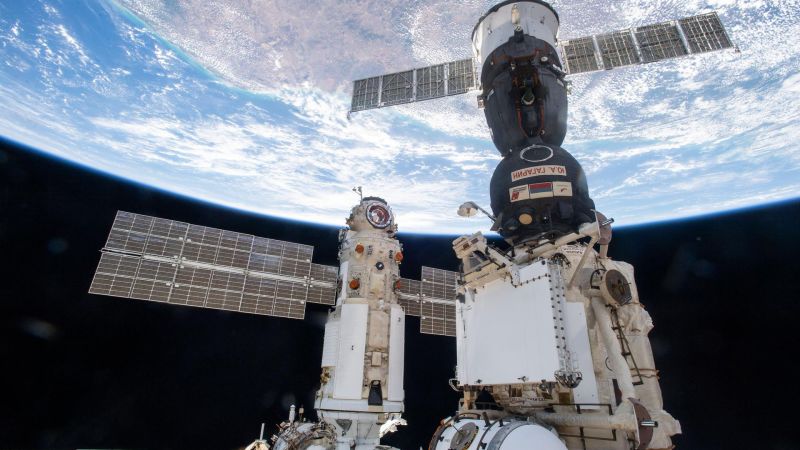
NASA directs its ISS crew members – On June 5, 2026, five astronauts were ordered to take refuge inside a spacecraft as Russian space officials initiated a significant repair operation on the Zvezda module. The move was prompted by newly discovered leaks in the transfer tunnel connecting the Russian-controlled Zvezda segment to the station’s docking port. NASA, through its press secretary Bethany Stevens, emphasized the need for heightened caution, urging the Crew-12 members and astronaut Chris Williams to secure themselves in the Dragon capsule during the maintenance work. The decision came as Roscosmos, the Russian space agency, proceeded with the repairs, which had been delayed due to earlier assessments of the situation.
“Following new leaks, Roscosmos has elected to proceed with a more extensive repair operation on Friday, June 5,” said NASA Press Secretary Bethany Stevens in a statement. “Out of an abundance of caution, NASA has directed all four of the agency’s SpaceX Crew-12 members and NASA astronaut Chris Williams to assume an elevated safety posture in the Dragon spacecraft while the repair is underway.”
The astronauts who moved into the spacecraft included the four crew members of the SpaceX Crew-12 mission and NASA’s Chris Williams. The Crew-12 group had arrived at the station via the Dragon capsule in February, and the same vessel now housed all five individuals as a precaution. This relocation was intended to prepare the crew for a potential emergency escape if needed. Such actions are standard procedure when the ISS encounters risks, such as proximity to space debris or structural failures.
While the initial shelter order was issued midday, it was later rescinded as Roscosmos paused its repair efforts. According to Russian state media, the agency decided to halt the operation to gather more data. “Roscosmos has paused Friday’s structural repair efforts … as more measurements and data is assessed,” a statement from the Russian space agency noted. It remains unclear when the repair work will resume, but the decision reflects the prioritization of crew safety over rapid intervention.
During an inspection, cosmonauts identified two possible air leaks. The first issue was addressed quickly, according to Zvezda media, but the second required further investigation. Roscosmos confirmed that the leaks do not currently endanger the crew, though the problem has been a persistent concern since 2019. The Zvezda module, which serves as a key component of the Russian segment, has experienced fluctuating air loss rates over the years, prompting ongoing scrutiny and maintenance efforts.
The leak issue escalated in 2024, with NASA and Roscosmos expressing differing opinions on the severity of the situation. NASA highlighted the potential for a “catastrophic failure,” while Roscosmos maintained that the problem was manageable. The repair attempts included addressing microscopic cracks in the module, which NASA described as “very small, not visible with the naked eye and have brackets and pipelines near them, making it difficult to get diagnostic tools into these areas.” Despite these challenges, the leaks had largely been contained within the Zvezda segment, with the rest of the station remaining unaffected.
Recently, the problem resurfaced, leading to an emergency directive that saw all but two Russian cosmonauts—Sergey Kud-Sverchkov and Sergey Mikayev—take shelter in the Dragon capsule. This development adds pressure to NASA’s plans for the station’s end-of-life phase. The International Space Station, now over 25 years old, has been continuously occupied since 2000. NASA has committed to maintaining operations until 2030, but Roscosmos has not guaranteed its continued involvement beyond 2028. The uncertainty surrounding Russia’s future participation raises concerns about the station’s long-term stability.
Scientists Discover New Method for Tracking Space Debris
While the ISS crew dealt with the leak crisis, a separate scientific breakthrough was reported. Researchers have identified an unconventional approach to monitoring space junk: using sonic booms generated by objects in Earth’s atmosphere. This method, which leverages sound waves to detect debris, could provide a new tool for tracking hazards that threaten the station. The discovery underscores the ongoing efforts to enhance safety measures for astronauts and spacecraft in orbit.
The recent repair efforts on the Zvezda module highlight the collaborative nature of ISS operations, even amid challenges. The Russian segment has long been a focal point for structural issues, with its transfer tunnel—a critical pathway between the Zvezda module and the docking port—experiencing periodic air losses. The problem has been compounded by the aging infrastructure of the station, which has prompted discussions about its future. With the end of the ISS’s operational life approaching, the need for reliable maintenance and emergency protocols has become more pressing.
As the situation unfolds, the decision to evacuate crew members demonstrates the proactive steps taken by NASA to ensure safety. The sheltering process, though temporary, serves as a reminder of the risks associated with long-duration space missions. The astronauts’ cooperation with Roscosmos during the repair work underscores the importance of international collaboration, even in the face of logistical and technical challenges. The incident also raises questions about the station’s ability to sustain operations without major disruptions, particularly as both NASA and Roscosmos navigate their respective commitments.
The Zvezda module’s ongoing issues have not only tested the resilience of the Russian segment but have also prompted a reevaluation of the ISS’s overall maintenance strategy. With the station nearing the end of its operational lifespan, the need for robust contingency plans has never been more critical. The recent shelter directive, combined with the station’s history of leaks, illustrates the delicate balance between routine operations and emergency preparedness. As the repair efforts continue, the outcome of this situation may shape the future of the ISS and its partnership between nations.
International Space Station operations remain a cornerstone of global scientific collaboration, but the recent incident highlights the vulnerabilities of this shared endeavor. The pause in repairs and the temporary relocation of crew members reflect the complexities of maintaining a space station that has served as a hub for research and exploration for over two decades. As the leak issue persists, the astronauts’ safety and the station’s continued functionality are central to the mission’s success. The future of the ISS will depend on the ability of all partners to address such challenges effectively.
