
Fact check: The many lies Trump told the New York Post
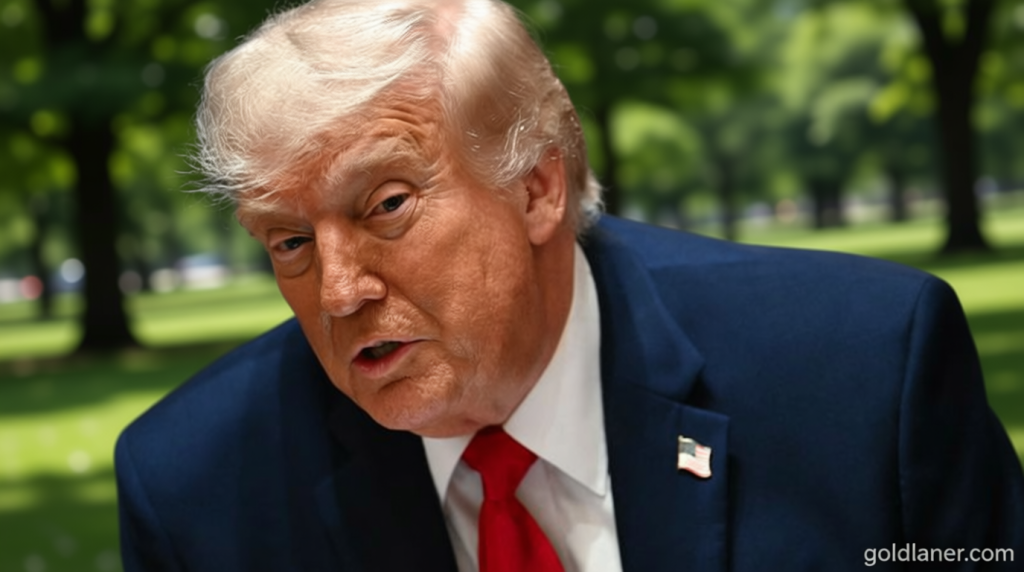
Fact-Checking Trump’s Claims in the New York Post Interview
Fact check – President Donald Trump’s recent conversation with Miranda Devine, a conservative journalist from the New York Post, highlighted a pattern of recurring falsehoods. The interview, which aired on Wednesday, featured claims about elections, economic policies, and immigration that have been repeatedly challenged by fact-checkers. While the remarks were similar to those made in a previous Fox News segment with Lara Trump, they lacked direct scrutiny during the broadcast. Here’s a detailed review of some of the key assertions Trump made and the evidence that refutes them.
Mail-In Ballots: A Global Phenomenon
During the discussion, Trump reiterated a claim that has become a staple of his rhetoric: “We’re the only country in the world that has mail-in ballots. No other country does it anymore.” This statement, however, overlooks the widespread use of mail-in voting in numerous nations. Countries such as Canada, the United Kingdom, Australia, Germany, and Switzerland have long allowed voters to cast ballots by mail, though their systems differ in implementation.
“We’re the only country in the world that has mail-in ballots. No other country does it anymore.”
Fact-checkers have consistently debunked this claim, showing that over 40 countries utilize mail-in voting in some capacity. The U.S. is not unique in this regard, and its system remains one of the most well-established examples globally.
The 2020 Election: Rigged or Not?
Trump’s persistent narrative that the 2020 election was “rigged” resurfaced in the interview, with him asserting, “it’s been proven to be rigged.” This claim, though familiar, lacks substantiation. The election was conducted with rigorous safeguards, and multiple audits confirmed the results. Joe Biden’s victory in 2020 was decisive, with 306 electoral votes to Trump’s 232.
“it’s been proven to be rigged.”
Despite this, Trump continued to suggest that the election was unfairly decided. He also claimed Biden “should have never been president,” emphasizing that the former candidate “lost the election in a landslide.” In reality, Biden secured over 7 million more popular votes than Trump, a margin that reflects broad public support.
Trump’s Election Performance: Three Wins or Three Losses?
Another point of contention was Trump’s statement about his electoral record. He claimed, “I won it three times,” which implies a triumphant legacy. However, this overlooks the fact that he only secured two presidential victories: in 2016 and 2024. His loss in 2020 to Joe Biden remains a defining moment in his political career.
“I won it three times.”
While Trump’s 2016 and 2024 wins are undisputed, the 2020 election was a clear defeat. The claim that he “won it three times” simplifies a more complex narrative, blending success with repeated allegations of election fraud.
The 2024 Election: Rigging or Legitimacy?
Trump’s victory in the 2024 election was described as “a great election,” yet he quickly followed with accusations of rigging. He said, “They had a lot of rigging going on there too,” and claimed, “There were areas that were just rigged. I could see it. In other words, rigged against me.”
“They had a lot of rigging going on there too. There were areas that were just rigged. I could see it. In other words, rigged against me.”
These remarks contradict the evidence of a legitimate electoral process. While some states may have experienced minor irregularities, there is no credible data to support the idea that the election was broadly rigged. Trump’s criticism of the 2024 results aligns with his long-standing strategy of questioning election integrity.
Democrats and Electoral Integrity
Trump also claimed that Democrats “couldn’t win” without cheating, stating, “If they didn’t cheat, they could not win because their policies are so bad.” He further remarked, “If they didn’t cheat you wouldn’t have them in.”
“If they didn’t cheat, they could not win because their policies are so bad.”
These assertions ignore the fact that Democrats have won elections through legitimate means for decades. The 2020 election, for instance, was a landslide victory for Biden, with no evidence of widespread fraud. Trump’s argument reduces the complexity of electoral systems to a simplistic claim of partisan bias, which is not supported by data.
California Ballots: Excess or Error?
In a recurring tactic, Trump attacked California’s voting system, claiming, “You know, in California, they mail out 38 — I think 38 million ballots.” He added, “And some people get three, four, five ballots. Republicans get, oftentimes, none.”
“You know, in California, they mail out 38 — I think 38 million ballots. And some people get three, four, five ballots. Republicans get, oftentimes, none.”
Fact-checkers have since clarified that California’s voter registration numbers were around 22.6 million as of two weeks before the last presidential election. By the time of the primaries, that figure had risen to approximately 23.2 million. The claim of 38 million ballots is inflated, and there is no evidence to support the idea that Republicans are systematically excluded from voting. Occasional administrative errors may occur, but these are not indicative of a general bias.
Talarico’s Mask: A Misleading Claim
Trump also targeted James Talarico, the Democratic Senate candidate in Texas, with the claim that he “wore a mask a couple of months ago.” This statement was part of a broader effort to question Talarico’s credibility. However, CNN found no evidence that Talarico was wearing a mask during the specified time.
“A couple of months ago, he’s wearing a mask.”
While Talarico did appear in a mask in a 2022 event, Trump’s claim of “a couple of months ago” was inconsistent with the timing of the interview. In May, he had previously stated that Talarico was wearing a mask “six months ago,” further demonstrating his tendency to manipulate timelines for rhetorical effect.
McConnell’s Re-election: A Strategic Ally?
Trump’s remarks about Mitch McConnell’s 2020 re-election were another example of his campaign to shift responsibility. He claimed, “Without me, he wouldn’t have been elected. It was my endorsement that got him elected. He was losing by a lot, I endorsed him, and he won the election quite easily along with everyone else.”
“Without me, he wouldn’t have been elected. It was my endorsement that got him elected. He was losing by a lot, I endorsed him, and he won the election quite easily along with everyone else.”
McConnell’s re-election was a safe victory, as he represented a state with a long history of Republican dominance. His margin of nearly 20 percentage points in the 2020 race was not a close contest, and Trump’s attribution of the win to his endorsement stretches the facts. McConnell’s victory was a reflection of his strong base, not a direct result of Trump’s support.
In summary, Trump’s interview with Devine underscored his reliance on familiar tropes to challenge the legitimacy of elections and political outcomes. While these claims may resonate with his base, they lack the empirical support needed to be considered factual. Each assertion, from mail-in ballots to the 2024 election, reveals a consistent pattern of misinformation aimed at sowing doubt about the electoral process. The absence of rebuttals during the interview highlights the ongoing influence of these narratives in shaping public perception.
