
Caves and tunnels with dark World War II pasts
Caves and Tunnels with a Troubled WWII Legacy
Hidden History Beneath Milan’s Grand Station
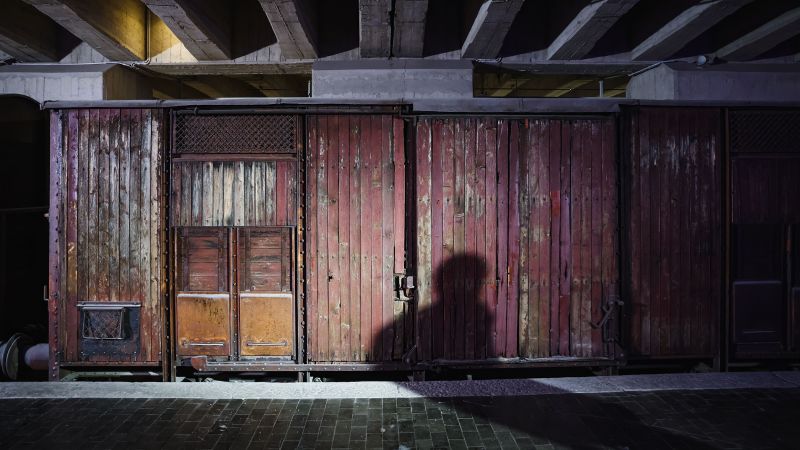
Caves and tunnels with dark World – Eighty years after the conclusion of World War II, the shadows of that era still cast long echoes across Europe. In the heart of Milan, the city’s primary train station, Milano Centrale, stands as a symbol of grandeur and modernity. Its sweeping arches and intricate carvings of winged horses and gargoyles draw visitors eager to admire its architectural splendor. Yet, beneath this bustling hub lies a chilling secret. During the war, a concealed platform served as a staging ground for Italy’s fascist collaborators and Nazi occupiers, who used it to send Jews and political dissidents to their deaths. This hidden space remains the sole intact site of Nazi deportations in Europe, a testament to the darker chapters of the war.
Although the station’s exterior may seem serene, its underground tunnels hold a grim reminder of wartime brutality. The platform, once a vital artery for the fascist regime’s campaign of persecution, now sits as a silent monument. Historians note that its preservation offers a unique glimpse into the mechanisms of mass displacement during the conflict. For travelers, it serves as a stark contrast to the station’s current vibrancy, where the hum of trains and the chatter of tourists drown out the echoes of a bygone era.
Peleliu: A Forgotten Battlefield in the Pacific
Nearly 82 years ago, the island of Peleliu in the Palau archipelago became the site of one of the most brutal and underappreciated battles of World War II. In September 1944, American forces landed on the island, believing it would be a quick operation to neutralize a Japanese airfield. However, they were unaware of the hidden fortresses the Japanese had constructed beneath the surface. These subterranean networks, filled with supplies and artillery, transformed the conflict into a protracted and deadly struggle.
What began as a straightforward military objective quickly spiraled into a two-month ordeal. The Japanese, entrenched in their underground strongholds, resisted fiercely, resulting in over 14,000 casualties on their side and nearly 10,000 American deaths. Today, the island attracts visitors from distant shores who come to honor the sacrifices of those who fought there. The remains of the battlefield, combined with its remote location, give it a haunting appeal that lingers in the minds of those who traverse its shores.
Mapping the Unseen: A Curious Point in the US
During the early 1900s, a group of American geodetic experts sought to determine the geographic center of the United States, then consisting of 48 states. Their unconventional method involved balancing a cardboard map of the country on a pin’s tip to identify its center of gravity. This pivot point, discovered in northern Kansas near the town of Lebanon, became a curious footnote in cartography. Though it lacks the historical drama of Milan or the battlefield of Peleliu, it highlights the ingenuity of early mapping techniques and the unexpected truths they reveal.
Fast forward to the present, and this geographical anomaly has taken on new significance. Null Island, a digital phantom located off the coast of West Africa, is the result of a common error in global positioning systems. It lies at the intersection of the equator and prime meridian, a point that doesn’t exist in reality. Despite its fictional status, Null Island has become a destination for cruise ships and curious travelers. For CNN subscribers, it’s a reminder of how technology can create new places, even if they are not rooted in physical reality.
Unconventional Destinations: A Journey Beyond the Expected
As travel trends evolve, some destinations gain attention not for their natural beauty or historical fame, but for their unique qualities. Canberra, the capital of Australia, offers a compelling case study. Unlike Melbourne’s coastal charm or Sydney’s iconic harbor, Canberra is often described as a city “plonked in the middle of nowhere.” Its design, a deliberate experiment in urban planning, prioritizes functionality over tradition. Yet, this “bush city” has carved out its own identity, boasting world-class food, cultural institutions, and expansive green spaces that make it a hidden gem for those seeking a different kind of experience.
Meanwhile, in Şanlıurfa, a city in southeastern Turkey, the intersection of faith and history creates a vibrant tapestry of cultural significance. Sacred sites linked to Abraham, the biblical patriarch, draw pilgrims from Jewish, Christian, and Muslim communities. These landmarks, along with prehistoric ruins and a rich culinary heritage, make Şanlıurfa a place where ancient and modern worlds collide. The Neolithic site of Göbeklitepe, 14 miles northeast of the old town, stands as a remarkable example of early human architecture, dating back to the Pre-Pottery Neolithic period. Its towering stone pillars, carved with intricate symbols, challenge our understanding of early civilizations and their artistic achievements.
Modern Travel Narratives: From Airplanes to Sailboats
While history often shapes travel experiences, contemporary stories also reflect the changing tides of modern exploration. Air New Zealand, for instance, is pioneering a new approach to long-haul travel by introducing bunk beds in economy class. This innovation aims to enhance passenger comfort, offering a more restful journey for those crossing vast oceans. The initiative has sparked discussions about the future of air travel, with some passengers praising the practicality of the design and others questioning its impact on space efficiency.
Travelers are also finding inspiration in unexpected places. A London-bound flight was diverted to Rome due to a power bank left charging in hold luggage. A passenger, who had forgotten the device, was later forced to file a lawsuit against the airline after their tap water was denied by a hotel. Italy’s top court ruled in favor of the hotel, underscoring the legal complexities that can arise from seemingly minor disputes. These stories, while varied in nature, illustrate how travel is increasingly shaped by personal experiences and modern challenges.
For some, the decision to move beyond traditional living is a bold step. A couple from Colorado recently sold their home to live aboard a sailboat, embracing a nomadic lifestyle that combines adventure with simplicity. “It’s not just sunsets and cocktails,” they explained, highlighting the deeper motivations behind their choice. Their journey mirrors the spirit of exploration that drives many travelers to seek out off-the-beaten-path destinations, whether it’s a remote island or a city designed to defy convention.
As the world continues to shift, so too does the way we experience it. From the tunnels beneath a European station to the subterranean caves of a Pacific island, the past and present intertwine in fascinating ways. Whether through historical landmarks, geographical curiosities, or personal narratives, these stories remind us that travel is more than just movement—it’s a journey through time, culture, and human ingenuity.
Reflecting on a Week of Travel
What do you recall from the week that was? A rescue mission in the Arctic, a record-breaking heatwave, and a basketball milestone all left their marks. But perhaps the most striking stories emerged from the stories we choose to tell. Whether it’s a hidden platform in a train station, a forgotten battlefield, or a phantom island, these locations remind us of the layered histories that shape our world. For those planning their travels in 2026, considering these off-the-radar destinations may offer a deeper connection to the past and a more enriching experience in the present.
