
Will Frontier learn from Spirit’s mistakes? Budget airlines face tough road ahead
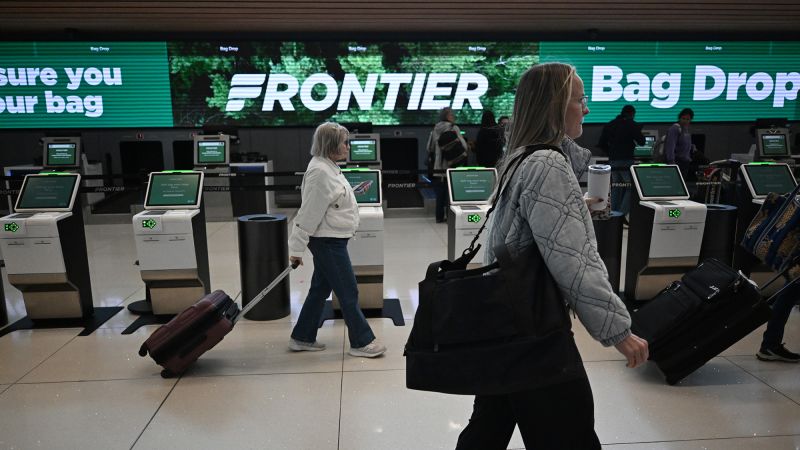
Frontier Airlines’ Chance to Learn from Spirit’s Collapse
Will Frontier learn from Spirit s mistakes – Will Frontier learn from Spirit’s mistakes? As the budget airline sector braces for challenges, Frontier Airlines finds itself in a pivotal moment, poised to either replicate or rectify the path that led to Spirit’s bankruptcy. The closure of Spirit on May 2, 2026, reshaped the competitive landscape, offering Frontier both an opportunity to expand and a cautionary tale to avoid. With similar business strategies centered on low base fares and ancillary charges, the airline has already tweaked its pricing to fill the gap left by its former rival. Yet, despite these adjustments, Frontier faces the same operational and financial hurdles that once threatened Spirit, putting its long-term viability to the test.
Summer Travel Season: A Crucial Trial for Frontier
The summer travel season is a critical period for airlines, and Frontier’s ability to capitalize on Spirit’s collapse will be put to the test. While the airline has bolstered its fares on overlapping routes, this strategy alone may not be enough to sustain growth. Industry experts warn that the low-cost carrier model is increasingly strained, with rising fuel and labor costs creating a delicate balance. “Frontier has a more robust cash reserve than Spirit,” said Shye Gilad, a Georgetown University business professor and former airline executive. “However, the market’s volatility and inflationary pressures could still tip the scales against it.”
Cost Challenges and Financial Instability
Frontier’s financial health is closely tied to its ability to manage rising costs, particularly in fuel and labor. Since the outbreak of the Iran war, jet fuel prices have climbed by 30%, significantly impacting airlines’ budgets. With fuel accounting for nearly half of operational expenses, the surge has forced carriers to raise fares and fees to maintain profitability. Frontier, which has posted annual losses since the pandemic, recorded a $137 million deficit in 2025 despite lower fuel costs. This year’s narrow profit in 2024 was a fleeting reprieve, highlighting the airline’s ongoing struggle to stabilize its finances.
“We were optimistic in Q1 before fuel prices spiked,” remarked CEO James Dempsey during an earnings call in early May. “Our trajectory was strong, but the current environment is unpredictable.” This statement reflects the uncertainty surrounding Frontier’s future, as it seeks to navigate a market where margins are razor-thin and competition is fierce. The airline’s survival hinges on its capacity to adapt quickly to cost increases while maintaining customer demand.
Service Reputation: A Key Weakness
Frontier’s reputation for poor service has long been a double-edged sword. While low fares attract price-conscious travelers, they also draw criticism for the airline’s customer experience. JD Power rankings consistently ranked Frontier at the bottom of the industry, even below Spirit, which had previously faced scrutiny for its subpar service. “Frontier’s issues are more about reliability than price,” noted Michael Boyd, an airline industry consultant. “Passengers choose it because of the fare, but they’re not loyal.”
As demand for better service grows, Frontier must address its shortcomings to retain customers. The three major U.S. carriers—Delta, United, and American—have built profitability on premium seat revenue, which Frontier lacks. To compete, the airline has introduced wider first-class seats and plans to launch Wi-Fi by 2027. These upgrades are part of a broader push to improve operational reliability and customer satisfaction, but their impact remains to be seen.
Strategic Reforms and Market Positioning
Frontier has acknowledged its service challenges and is implementing changes to strengthen its position. The airline restored call-in customer support in Spring 2024 after discontinuing it in 2022, signaling a commitment to better service. Additionally, it has introduced broader seating options and aims to enhance in-flight amenities. “Our focus is on creating a more reliable and enjoyable experience,” said a Frontier spokesperson. “We’re investing in initiatives that will differentiate us in a crowded market.”
While these efforts are promising, they must align with the airline’s core strategy of maintaining affordability. Frontier’s ability to balance cost efficiency with service quality will determine whether it can avoid the fate of its predecessor. As the aviation industry continues to face headwinds, the airline’s path forward depends on its capacity to innovate without compromising its budget-friendly appeal.
