
Drone hits apartment block in NATO member Romania during Russian attack on nearby Ukrainian port
Drone Attack in Romania Sparks Concern Amid Ongoing Conflict
Drone hits apartment block in NATO – During the night of May 28-29, a drone struck an apartment complex in Romania, causing an explosion and injuring two civilians, according to the country’s defense ministry. This incident occurred as Russia intensified its assault on a Ukrainian port located just across the Danube River, which separates the two nations. The ministry’s statement emphasized that the attack marked a continuation of Russian efforts to target civilian infrastructure and strategic locations near the border with Ukraine.
Escalating Tensions Along the Danube
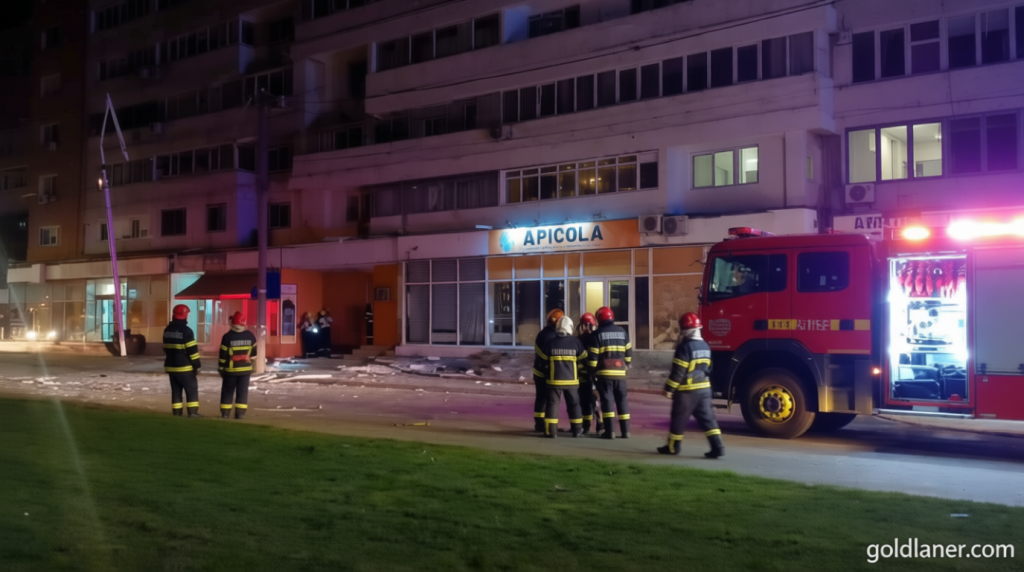
The drone that struck Galati, Romania’s southeastern border city, entered national airspace at approximately 1:54 a.m. and traveled toward the eastern part of the city. However, Romanian radar systems lost track of the drone south of Galati, leaving the exact path unclear. Video footage released by CNN affiliate Antena 3 CNN showed the roof of the apartment block in severe disarray, with visible signs of damage and smoke rising from the impacted area. Emergency teams and investigators were seen examining the site early Friday, documenting the extent of the destruction.
Galati, a key urban center, is situated just a few kilometers from the Ukrainian border. To the south lies Izmail, the location of Ukraine’s largest port along the Danube River, which has been a frequent target of Russian drone strikes. The port’s strategic importance as a logistics hub for military and commercial operations has made it a prime objective for Moscow’s attacks. Ukrainian authorities confirmed that the Izmail area was under drone bombardment around the same time the Galati incident occurred, underscoring the coordinated nature of the assaults.
Romanian Military Response and Context
Following the drone strike, Romania’s defense ministry activated its air defense protocols. Colonel Cristian Popovici, a spokesperson for the ministry, stated that Romanian radars had detected the drone within their airspace, prompting a rapid response. Two F-16 fighter jets were deployed as part of the alert, with pilots authorized to engage any potential threats. The ministry’s report noted that the drone’s trajectory suggested it had been launched from a location near the Ukrainian border, likely in support of the attack on the port.
Romania, a member of both NATO and the European Union, has found itself increasingly involved in the conflict as Russian drones and missiles frequently cross its borders. Since Russia began targeting Kyiv’s Danube ports, the country has recorded 28 instances of drone incursions into its airspace. This pattern of aggression has heightened the role of Romanian forces in NATO’s collective defense, as the alliance operates under the principle that an attack on one member is an attack on all. The recent strike has further intensified the alliance’s vigilance against Moscow’s military maneuvers.
Broader Implications for NATO
Recent incidents highlight the growing threat posed by Russian aerial activity to NATO members. In September 2025, Ukrainian forces reported a similar attack in which Russian drones breached Polish airspace, prompting NATO fighter jets to intercept and destroy multiple targets. The alliance condemned Moscow’s actions, calling them “absolutely dangerous” and escalating tensions with the Russian Federation. Days later, Romania joined the criticism, accusing Moscow of “irresponsible actions” after alleging a drone strike had entered its territory during an attack on Ukraine. This led to the immediate scrambling of Romanian fighter jets to neutralize the perceived threat.
The Galati and Izmail attacks are part of a broader trend of Russian military operations targeting Ukrainian infrastructure and civilian populations. These strikes, often conducted from the eastern bank of the Danube, have disrupted supply lines and forced evacuations in the region. The proximity of these attacks to Romanian territory has raised concerns about the potential for collateral damage and the need for heightened vigilance. Romanian officials have stressed the importance of maintaining a robust air defense system to protect both its citizens and strategic assets.
Historical Precedents and Current Strategy
Romania’s experience with drone attacks is not new. Since the start of the war, the country has faced repeated incursions into its airspace, with Russian drones operating near the Danube as part of broader campaigns against Ukraine. The ministry’s statement noted that these attacks have become more frequent, reflecting Moscow’s strategic focus on using aerial platforms to exert pressure on Ukrainian territory. The Galati incident, however, marks a significant escalation in the scale of these operations, as it resulted in direct harm to Romanian civilians.
Analysts suggest that the attacks on Izmail and Galati are interconnected, with Russia leveraging the Danube’s riverine access to launch coordinated strikes. The port in Izmail, a vital node for trade and military supplies, has been under constant threat, while Galati’s position as a border city makes it a critical target for intelligence and surveillance operations. The timing of the strikes—aligned with the attack on the port—implies a deliberate effort to disrupt both Ukrainian and Romanian defenses simultaneously.
While the immediate cause of the Galati drone strike remains under investigation, Romanian officials have indicated that the incident reflects a broader pattern of Russian aggression. The ministry has confirmed that drones were detected in its airspace, with the pilot’s authority to engage targets throughout the alert period. This response underscores the alliance’s commitment to defending its members, even as the conflict evolves beyond the frontlines. The use of F-16s highlights Romania’s role in NATO’s rapid reaction capabilities, which have become essential in countering Russian advancements.
International Reactions and Future Outlook
Experts have noted that the Galati strike has added urgency to NATO’s discussions about aerial defense strategies. With Russia’s drones becoming more sophisticated and harder to track, member states are investing in advanced radar systems and countermeasures to protect their borders. Romania’s experience in dealing with these threats has positioned it as a key player in the alliance’s efforts to counter Russian escalation.
The incident also raises questions about the sustainability of the war and the potential for further conflict in the region. As Russian forces continue to target Ukrainian ports and civilian areas, the risk of spillover into Romania and other NATO members increases. The ministry’s statement emphasized the need for vigilance, stating that the attack was a reminder of the ongoing threat posed by Moscow’s military operations. The damage to the apartment block serves as a stark symbol of the war’s reach, with its effects extending beyond Ukraine’s borders into the heart of NATO territory.
With the situation still unfolding, the defense ministry has called for continued monitoring of the airspace and collaboration with Ukrainian authorities to identify the origin of the drones. The incident has also prompted renewed calls for support from NATO allies, as Romania seeks to bolster its defense capabilities against potential future attacks. The Galati strike is a developing story, with updates expected as investigations progress and new details emerge.
As the conflict in Ukraine enters its third year, the border between Romania and Ukraine has become a focal point for Russian military activity. The recent drone attacks are part of a larger campaign to destabilize the region, with the Danube serving as a critical corridor for both offensive and defensive operations. Romania’s involvement in these efforts highlights the complex dynamics of the war, where the actions of one nation can directly impact the security of its neighbors. The strikes in Galati and Izmail are a clear indication that the conflict is expanding, with the potential for broader geopolitical consequences.
The incident has also sparked debates about the effectiveness of NATO’s current air defense measures. While the alliance has demonstrated its ability to respond to threats, the increasing frequency of Russian drone attacks has exposed vulnerabilities in border security. Romania’s experience with these incursions has prompted a reevaluation of defensive strategies, with officials urging for greater investment in early warning systems and rapid response capabilities. The Galati strike serves as a reminder of the ever-present danger, even as the war continues to unfold in unexpected ways.
With the conflict showing no signs of slowing, the role of aerial attacks in shaping the war’s trajectory is becoming more pronounced. The strikes on Galati and Izmail illustrate the evolving nature of the battlefield, where drones are now a critical tool for targeting both military and civilian infrastructure. As NATO members work to strengthen their defenses, the incident in Romania has added another layer of complexity to the alliance’s mission. The outcome of these attacks could influence the future of the war, as the pressure on Ukrainian forces grows and the risk of escalation increases.
