
40,000 residents under evacuation orders in Southern California as tank containing toxic chemical at risk of explosion
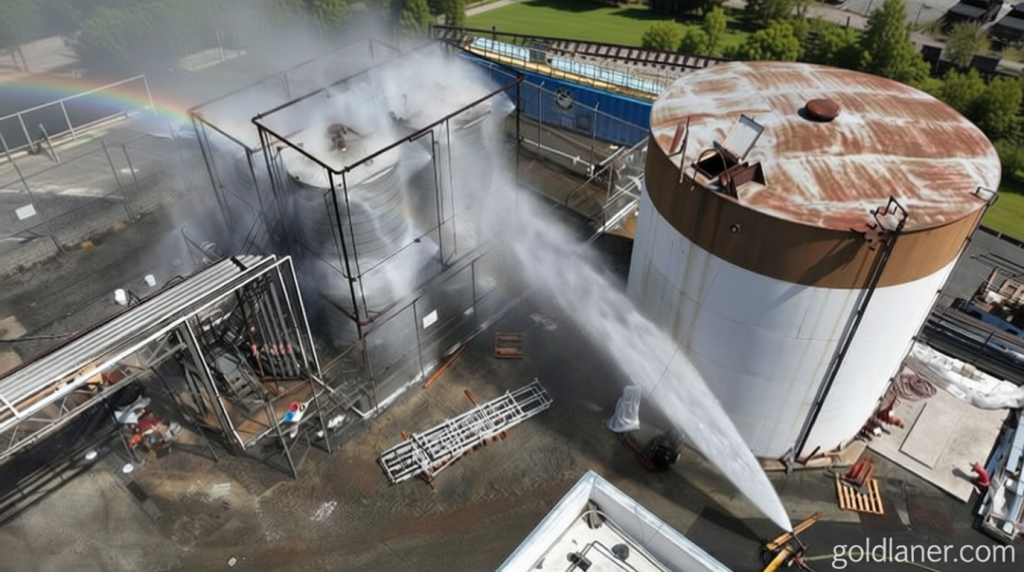
40,000 Residents Evacuated as Toxic Chemical Tank Nears Critical Threshold
40 000 residents under evacuation orders – On Friday evening, officials in Orange County, California, confirmed that approximately 40,000 people had been ordered to evacuate their homes due to a growing concern over a tank holding a hazardous chemical. The facility, located in Garden Grove, had become the focal point of a high-stakes situation after the tank began to overheat, raising fears of a possible leak or explosion. This decision came after two days of intense efforts by emergency crews to stabilize the situation.
Thermal Crisis and Cooling Measures
Division Chief Craig Covey of the Orange County Fire Authority described the tank’s temperature as a critical factor in the unfolding crisis. “We’ve managed to bring the temperature down to about 61 degrees,” he stated during an update. “The ideal range for the tank is around 50 degrees, so this is giving us a window to reassess our approach.” Covey emphasized that the cooling process has created an opportunity for teams to explore alternative strategies, such as deploying methods that were previously considered less conventional.
“
This thing is going to fail,” Covey warned, underscoring the urgency of the situation. His remarks came as crews continued to work through the night to prevent the tank from rupturing or releasing its contents into the environment.
Chemical Properties and Health Risks
The chemical in question, methyl methacrylate (MMA), is a key ingredient in the production of plastics and other synthetic materials. According to the Environmental Protection Agency, exposure to MMA can lead to respiratory distress, including irritation of the nasal passages and lungs, as well as symptoms like dizziness and nausea. While the chemical is not currently detectable in the air, officials have noted that it possesses a distinct, fruit-like odor, which could serve as an early warning sign.
Orange County Health Officer Dr. Regina Chinsio-Kwong provided additional context, highlighting the unpredictability of the situation. “We’re entering uncharted territory with limited data,” she explained in a later update. “Even though the air is currently safe, the effects of a potential explosion remain uncertain.” Chinsio-Kwong stressed the importance of maintaining distance from the evacuation zone to minimize risk.
“
This is going to happen unless someone here comes up with a solution,” Covey added, addressing the assembled media. “We’re doing everything we can, but the tank is still a threat.”
Evacuation Orders and Community Impact
Evacuation alerts were first issued on Thursday, affecting a 9-square-mile area surrounding the industrial site. By Friday, the situation had escalated, prompting officials to issue more stringent orders. About 15% of residents within the zone—around 6,000 individuals—chose to remain in their homes despite the warnings. Police had used reverse 911 calls to inform the public and shared updates via social media to reach a broader audience.
The evacuation efforts impacted not only residential areas but also local schools. Thirteen educational institutions and two facilities within the Garden Grove Unified School District were evacuated earlier that day, disrupting routines and causing confusion among families. Residents like Diane Chavira described the chaos, recounting her experience of being forced to abandon her home with her four dogs. “I was sleeping in my house until they told us to leave,” she told CNN affiliate KCAL/KCBS. “It’s been a complete mess, with everyone scrambling and no one knowing what to do.”
“
Just dealing with everybody coming and going and nobody knows anything,” said Jacqueline Riegos, who evacuated from Stanton. “Nobody can really give us any details about what’s going on. And we don’t know how long this is going to be.”
Initial Response and Tank Malfunction
Authorities initially responded to a vapor release from the MMA tank on Thursday, according to Interim Fire Chief TJ McGovern. One of the three tanks at the site had overheated, triggering a relief valve and overhead sprinklers to cool it. However, the process revealed a damaged valve, which prevented the chemical from being fully extracted. This discovery led to the reinstatement of evacuation orders, as the risk of a leak or explosion persisted.
McGovern noted that no vapor was emanating from the tank by Friday, signaling a temporary reprieve. “We’re keeping a close eye on air quality and monitoring conditions continuously,” he said. The manufacturer’s response team had exhausted all available measures, yet the situation remained precarious. Covey outlined the two primary risks: either the tank would crack and release 7,000 gallons of MMA into the surrounding parking lot or it would explode entirely.
Geographic Context and Safety Considerations
The industrial site, where the MMA tank is situated, lies approximately 5 miles from Disneyland and 4 miles from Knott’s Berry Theme Park, raising concerns about the potential impact on nearby areas. Covey mentioned that MMA is heavier than air, which could mean it spreads more slowly if released but still poses a significant threat. “The air should be safe outside the evacuation zone,” Chinsio-Kwong said, “but we can’t be certain until we have more data.”
Residents have been advised to stay away from the area until the situation is fully contained. While the immediate danger seems to have lessened, the potential for a large-scale incident remains a priority for officials. “This is a unique scenario,” Chinsio-Kwong explained. “We’re dealing with a chemical that we don’t have complete information on, and that makes every decision a gamble.”
“
Smelling the chemical doesn’t necessarily mean someone has been exposed to harmful levels,” Chinsio-Kwong added in another update. “But we can’t take any chances. The effects of an explosion could be far worse than we anticipate.”
Efforts to Mitigate the Crisis
Authorities have been working tirelessly to prevent the tank from reaching a critical state. The cooling measures have been a key part of their strategy, as the temperature drop offers a glimmer of hope. Covey acknowledged that the situation required creative solutions, such as testing unconventional methods to secure the tank. “We’re exploring every option,” he said. “The goal is to avoid the worst-case scenario.”
As the crisis unfolds, the community continues to grapple with uncertainty. While the immediate threat appears to be under control, the potential for a major incident looms. “We’re in a race against time,” McGovern stated. “Every minute counts, and we’re not taking any risks.” The ongoing efforts to stabilize the tank and assess its condition are crucial in ensuring public safety and preventing a larger disaster.
Residents and officials alike remain vigilant, aware that the situation could still escalate. With the tank’s temperature continuing to decrease, there is a cautious optimism that the worst might be averted. However, the stakes remain high, and the community’s response has been a testament to the importance of preparedness in the face of industrial emergencies.
