
High gas prices, cost of living send US consumer sentiment to all-time low
High Gas Prices, Cost of Living Send US Consumer Sentiment to All-Time Low
High gas prices cost of living – The University of Michigan’s latest survey reveals a dramatic shift in American consumer confidence, marking a new record low for the index in May. This decline follows a troubling trend of three consecutive months of downward movement, with the May reading settling at 44.2. This figure not only surpasses the previous record low of 49.8 recorded in April but also reflects a deeper erosion of optimism compared to prior economic downturns. The survey, which has tracked consumer sentiment since 1952, highlights a stark comparison: current levels of dissatisfaction are worse than those seen during the 1970s oil crisis, the aftermath of the 9/11 attacks, the Great Recession, and even the inflationary spike following the Covid-19 pandemic.
Drivers of the Crisis
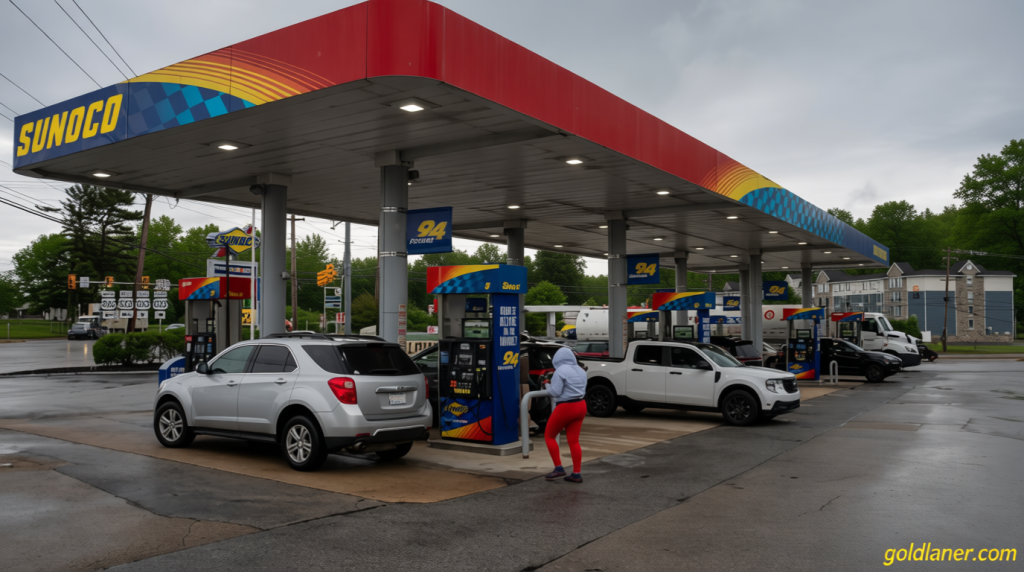
Multiple factors have converged to push consumer sentiment to its lowest point in decades. Chief among them are the ongoing war between the US and Iran, which has disrupted oil supplies and driven up prices, and the broader affordability crisis that has gripped households for years. The conflict has led to persistent oil supply disruptions, with the Strait of Hormuz—a vital shipping route—remaining blocked for nearly three months. This has created a perfect storm, as fuel costs continue to climb and consumers face mounting pressure on their budgets.
Joanne Hsu, director of the university’s Surveys of Consumers, highlighted the central role of living expenses in shaping public perception. “The cost of living continues to be a first-order concern, with 57% of consumers spontaneously mentioning that high prices were eroding their personal finances, up from 50% last month,” she wrote in a statement. This sentiment is echoed by the stark reality of declining household incomes: consumers’ personal finances dropped by 13% in May, according to Hsu. The combination of high inflation and rising essential costs has left many households struggling to keep up with their monthly expenses.
A Historical Perspective
The University of Michigan’s survey, which has been in operation since 1952, offers a long-term view of economic sentiment. The current reading of 44.2 is not just a monthly anomaly but a sign that Americans are feeling more financial strain than at any time in the past half-century. This includes periods of war, such as the Vietnam conflict, and major economic events like the 2008 financial crisis and the pandemic-related lockdowns. The index now stands as a benchmark for the most pessimistic period in recent history, indicating a level of frustration that has outpaced even the most challenging times.
Interestingly, the survey also highlights that the most pronounced declines in consumer sentiment have been observed among specific demographics. Lower-income individuals and those without college degrees are particularly affected, as their limited financial resources make them more vulnerable to the rising cost of fuel and other necessities. “The impact of price hikes is most severe for these groups,” Hsu noted. “They are bearing the brunt of the economic strain, which has been exacerbated by the ongoing conflict in the Middle East.”
Future Inflation Expectations
Consumer concerns are not limited to the present. The survey also sheds light on growing fears about future inflation, with both short-term and long-term expectations climbing. Year-ahead inflation forecasts rose to 4.8% in May, up from 4.7% in April, while five-year projections surged to 3.9%, compared to 3.5% in the previous month. These figures are now comparable to those seen late last year, when tariffs added to inflationary pressures and created a wave of uncertainty. The increase suggests that consumers are increasingly worried about the persistence of high prices across the economy.
Notably, certain political groups have shown more pronounced shifts in their inflation outlook. Respondents with independent or Republican leanings reported the highest jumps in long-term inflation expectations, with their forecasts exceeding twice the February 2025 levels. This indicates a growing belief among these groups that inflation may become a long-term issue rather than a temporary one. Hsu emphasized that these expectations are closely monitored by the Federal Reserve, which uses them to guide monetary policy. If consumers perceive that prices will keep rising, they may accelerate spending now, which could, in turn, drive further inflation through increased demand.
Contrasting Economic Trends
Despite the bleak consumer sentiment, the broader US economy appears to be holding its ground. Recent data shows resilience in key areas, including a strong stock market that has reached new record highs. This contrast is particularly striking, as many Americans are struggling with daily financial challenges while markets continue to thrive. “The stock market record highs are having no effect whatsoever on cheering consumers up,” Christopher Rupkey, chief economist at FwdBonds, stated in a Friday message to investors. “Most Americans have the money locked up in 401K retirement accounts that cannot be drawn on to make life easier now.”
Rupkey’s comment underscores a deeper issue: while the market is performing well, many households are not feeling the benefits. This disconnect is partly due to the timing of income tax refunds, which have already been spent or are no longer available to provide relief. As a result, consumers are left to manage rising costs with limited liquidity, creating a situation where their financial constraints are more pressing than the optimism of the stock market. The survey results, therefore, reflect not just economic conditions but also a sense of personal financial insecurity that has taken root among the general population.
The Road Ahead
With consumer confidence at its lowest point in the survey’s history, the question remains: will this trend reverse, or will it persist? The Federal Reserve has long relied on such data to make decisions about interest rates and monetary policy. If the current trajectory continues, the central bank may need to take further action to curb inflation and stabilize consumer spending. However, the challenge lies in balancing growth with price stability, as businesses and households navigate an increasingly uncertain economic landscape.
Ultimately, the survey serves as a barometer of public sentiment, revealing the extent to which the American consumer is affected by the cost of living. While the stock market and broader economic indicators suggest strength, the sentiment data tells a different story—one of anxiety, reduced spending, and a lack of confidence in the future. As gas prices near all-time highs and inflation expectations climb, the path forward for the US economy will depend on whether these concerns can be mitigated or if they will continue to shape consumer behavior and economic outcomes for the foreseeable future.
