
Protesters set Ebola treatment center on fire in DRC, demanding return of body
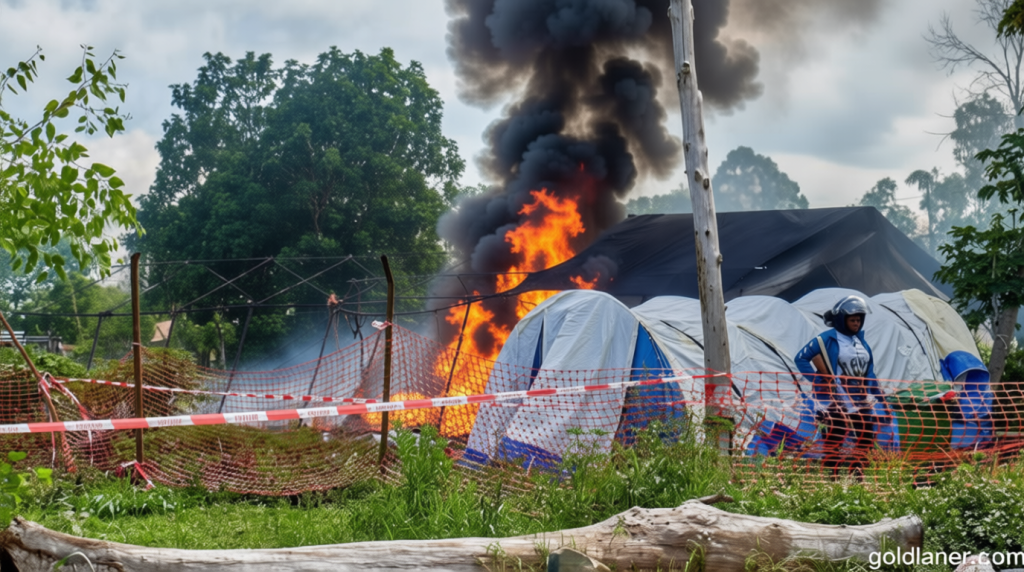
Protesters Set Ebola Treatment Center Aflame in DRC, Demand Return of Body
Protesters set Ebola treatment center on fire – On Thursday, unrest erupted at a health facility in the eastern region of the Democratic Republic of Congo (DRC), where protesters ignited a fire that destroyed two hospital tents. According to Luc Mambele, vice president of the Congolese political party A2RC, the incident followed a dispute over the body of a young man who succumbed to the Ebola virus. Family members attempted to retrieve the remains “by force,” leading to a confrontation that escalated into the blaze.
The Outbreak’s Spread and Severity
The DRC has been grappling with a severe Ebola outbreak, fueled by the Bundibugyo strain, which is known for its high fatality rate and lack of specific treatment or vaccine. As of Thursday, authorities estimated that at least 160 deaths are associated with the disease. Meanwhile, the government reported 13 new confirmed cases and 78 suspected cases in Ituri province, underscoring the rapid spread within local communities. The strain, which has no proven cure, has become a focal point for public health officials.
“The population is not sufficiently informed or made aware of what is happening. To members of the most remote communities, Ebola is a White man’s invention; it doesn’t exist,” Mambele remarked.
Health authorities initially denied access to the young man’s body, prompting family members to retaliate. They hurled projectiles at the medical tents operated by the Alliance for International Medical Action (ALIMA), igniting a fire that disrupted operations. ALIMA confirmed that six patients were treated in the tents at the time of the attack and are now being cared for in the hospital. The organization emphasized the need to combat “incorrect or unconfirmed information” spreading online, which it claims exacerbates fear and distrust in health facilities.
Government Response and Containment Efforts
Following the incident, a spokesperson for the DRC, Patrick Muyaya, condemned the attack, stating that locals had “exactly what they shouldn’t do.” National police officers were deployed swiftly to the scene, working to restore calm amid the chaos. Video footage shared with CNN depicted police firing warning shots to disperse the crowd, while a Reuters report showed the medical tents engulfed in flames, their charred frames still visible over blackened hospital beds in the aftermath.
The outbreak’s progression has been traced back to the first suspected case, which emerged on April 24. A healthcare worker in Bunia exhibited symptoms and later died at a medical facility, prompting further investigation. On May 5, the World Health Organization (WHO) was alerted to an “unidentified illness” with high mortality rates. After a rapid response team’s inquiry on May 13, the strain was officially identified as Bundibugyo on May 15. The WHO has since declared the outbreak a “public health emergency of international concern,” though global risks remain relatively low.
Misinformation and Public Perception
Mambele highlighted the role of misinformation in exacerbating the crisis. Many residents in Ituri province, he said, believe that “Ebola is a lie,” attributing the disease to external forces. This skepticism has led to community resistance against health interventions, with some families prioritizing their emotional needs over medical protocols. “The population is not sufficiently informed or made aware of what is happening,” Mambele added, describing how the lack of clarity has driven people to view the virus as a fabrication.
Despite the WHO’s declaration, the DRC continues to monitor the situation closely. As of Thursday, 64 cases have been confirmed, while 671 remain suspected. Over 1,260 contacts are being tracked nationwide, a critical measure to prevent further transmission. The virus has not only spread within the DRC but also reached neighboring Uganda, where health officials confirmed two laboratory-verified cases, including one fatality, in the capital, Kampala. A Ugandan female patient who tested positive has since returned two negative results, placing her “currently out of danger,” according to the Ugandan Health Ministry.
International Impact and Travel Restrictions
One American citizen, working in the DRC, has tested positive for the Bundibugyo strain and is receiving treatment in Berlin, Germany’s Health Ministry confirmed Wednesday. This case underscores the potential for the outbreak to cross borders, prompting heightened vigilance. In response, public transport, flights, and ferries between Uganda and the DRC have been suspended, and enhanced border security patrols have been established to monitor movement. The Health Ministry emphasized the need for coordinated efforts to prevent the virus from spreading further.
The incident at Rwampara Hospital has drawn attention to the fragile balance between public health measures and community trust. Mambele’s account of the event—where protesters were locked out and police used warning shots—reveals the intensity of the conflict. “Being locked down at the hospital as police fired warning shots to disperse protesters from the burning tents,” Mambele described, illustrating the tension between health workers and local residents. Such episodes highlight the challenges of managing an outbreak in regions where misinformation thrives.
As the DRC and its neighbors navigate this health crisis, the focus remains on containing the virus while addressing the root causes of public fear. The government’s swift action to suppress the fire, combined with the WHO’s global assessment, aims to stabilize the situation. Yet, the lingering doubts about Ebola’s authenticity and the lack of transparent communication continue to pose significant obstacles. With 160 deaths and 671 suspected cases, the stakes are high, and the need for accurate information has never been more urgent.
